
The White House wanted the IRS to audit someone — or stop auditing someone — and the Treasury’s top tax official said the law forbids it. So they fired him. This is the part where we pretend to be surprised.
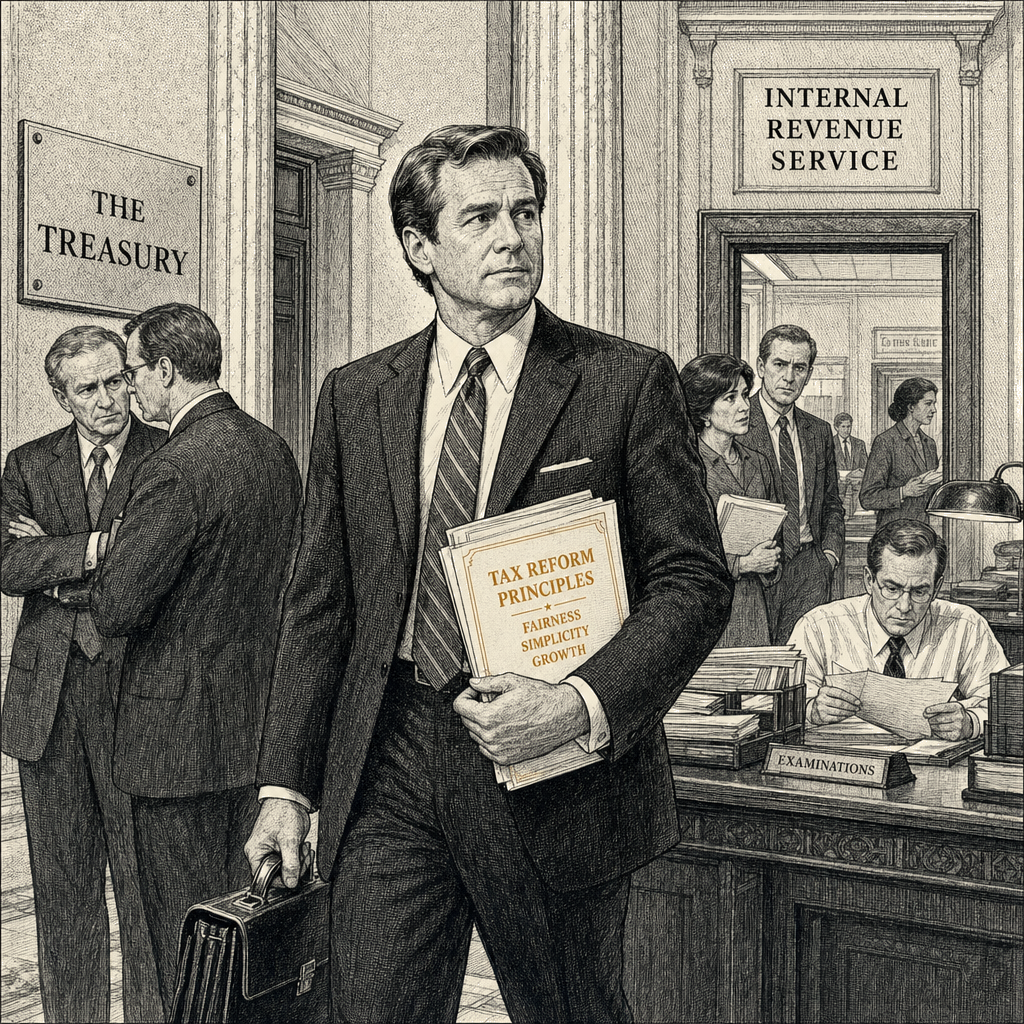
The official was Kenneth Kies, an assistant Treasury secretary who had the temerity to cite Section 7217 of the Internal Revenue Code, which prohibits the president, the vice president, and White House staff from requesting that the IRS conduct or terminate an audit. The penalty for violating it is up to five years in prison. Kies told the White House their request would violate it. He is now leaving his post.
The administration’s allies, after the Journal asked for comment, reached out to call Kies difficult to work with. He didn’t do enough to advance the president’s agenda. According to people familiar with his tenure, he was always citing IRS rules about audits, even when nobody was asking about particular companies or audits. Imagine — a tax official who keeps citing the tax code.
The 1998 law has never been tested in court, the article notes. That is the polite way of saying nobody has ever been prosecuted under it. The administration that fired the man who cited the law is also the administration that would have to enforce it. You can see how that works.
The IRS has already dropped the audits of the president, his family, and his businesses — a settlement that experts called unprecedented and that this publication documented in May. The man who oversaw the government’s tax litigation, as acting chief counsel, was the same man who just got fired for reading the law aloud. During his tenure, the IRS also agreed to share some tax data with immigration authorities — another instance of the tax agency bending to pressure from the executive branch. The carousel of Treasury officials turning over — Billy Long lasted less than two months as IRS commissioner, Michael Faulkender less than five months as deputy secretary, Brian Morrissey less than eight months as general counsel — has a new name on the list.
The pattern is not new. It is the oldest trick in the imperial playbook. Nixon tried to use the IRS to audit his enemies and was forced from office. Congress passed Section 7217 in 1998 to make sure it never happened again. The would-be Nixon fires the man who reads the statute, and the man walks, and the law stays unenforced. The 1998 law is not a suggestion; it is a criminal statute. The man who pointed this out is gone. The men who would have broken it are still in charge.
The law binds the out-group and protects the in-group. The in-group fires the people who read the law aloud. The out-group gets audited, and the in-group gets the man who cited the statute removed for being difficult.
Section 7217 carries up to five years. Nobody has ever been prosecuted under it. The man who cited it is gone. The men who fired him are still in charge of the enforcement.