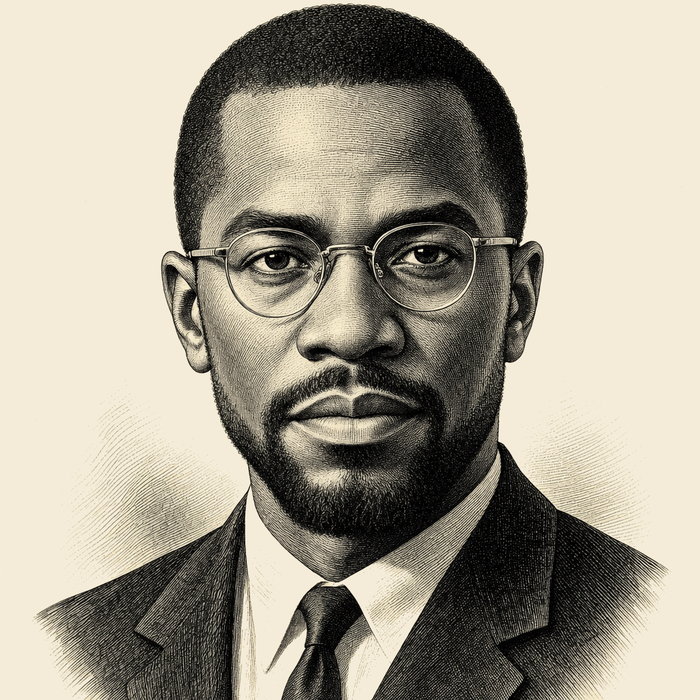
The memorial on Canal Street started the day Lorenzo Salgado Araujo died. Two neighbors nailed white roses to a utility pole. By nightfall, candles and carnations covered the sidewalk. By the seventh night, votive candles painted with the Virgin of Guadalupe lined the pavement, Mexican flags flew beside Texas ones, and a wooden cross ringed with photographs marked the corner where ICE agents shot a fifty-two-year-old husband and father as he drove to work on 7 July.
Salgado Araujo employed more than a dozen workers building homes across the Houston region. He was not the person the agents were looking for. He was driving with three colleagues through Magnolia Park — the neighborhood where his family had lived for years — when agents in unmarked vehicles opened fire on a public street. The apparatus said it was seeking other men. The U.S. attorney’s office confirmed it. Say that slowly enough and you hear what they are actually saying: the apparatus was pointed at specific targets and killed someone else entirely. Not because the agents mistook Salgado Araujo for the target — they tailed his vehicle, a deliberate operation, not a chance encounter. The apparatus identified a Latino man in a Latino neighborhood and determined that was sufficient.
The political apparatus that authorizes ICE’s enforcement posture does not need accurate operations. It needs visible ones. Every unmarked SUV cruising through a barrio, every masked agent extracting someone from a vehicle on a public street, every photograph of a raid circulated to demonstrate that the government is Doing Something — these are performance. They communicate to every Latino resident of every neighborhood like Magnolia Park that the apparatus can reach them at any time, for any reason, or for no identified reason at all. Salgado Araujo was not killed because he was the target. He was killed because the apparatus treated an entire community as the target and operated accordingly.
King’s framework at Riverside in 1967 named the triplet — racism, militarism, materialism — as a single three-headed pathology that cannot be addressed by attacking one head while feeding the other two. The ICE enforcement apparatus in Magnolia Park is all three at once. The racism is the racialized dragnet that treats a Latino man in a Latino neighborhood as presumptively removable. The militarism is the operational posture — unmarked vehicles, masked agents, lethal force deployed in a residential area during a morning commute. And the materialism sits underneath everything: a labor system that depends on undocumented workers to build the homes, staff the kitchens, and harvest the crops that keep the economy running, then periodically produces spectacular violence against those same workers to satisfy a political demand for the appearance of enforcement. The ICE budget that produced Salgado Araujo’s killing and the communities it terrorizes is the same arithmetic King was reading.
Magnolia Park has been losing ground for years. Once called Houston’s “Little Mexico,” settled more than a century ago by Mexican families recruited to build the docks and refineries that made the city rich, the neighborhood has watched its Hispanic population shrink by fifteen percent between 2018 and 2023, even as developers demolish century-old homes to erect townhouses costing half a million dollars or more. Rents climb. Services lag. The families who built the neighborhood watch it become unfamiliar by the year.
The ICE shooting is the enforcement arm of the same displacement. The gentrification that works slowly through the housing market works instantly through a federal agent’s trigger.
Magnolia Park has a memory of this violence that reaches back decades. In 1977, Joe Campos Torres — a twenty-three-year-old Vietnam veteran — was beaten by Houston police officers and drowned in Buffalo Bayou, not far from where Salgado Araujo was killed. The officers received probation. The sentence was so light it produced the Moody Park riot the following year, when decades of accumulated rage over policing in the barrio broke open. The historian Adela Cedillo said the community’s collective memory of Campos Torres’s killing shaped how quickly residents responded to Salgado Araujo’s. The stories, she said, are “marked by segregation, racial profiling, police harassment.”
That generational memory is doing analytical work the official record refuses to do. When a neighbor said she would not stop for unmarked vehicles with masked men inside — “I would think they’re trying to rob me, or that I’m probably the next victim that’s gonna be thrown into the bayou” — she was reading the historical record correctly. The Buffalo Bayou has been receiving the bodies of this community’s dead for longer than most of its residents have been alive.
The apparatus’s defenders will say enforcement requires force. They will say agents face danger. And they will say all of this while the specific facts of this case demonstrate that the system functioned precisely as designed — it reached into a neighborhood, killed a man who was not its target, and produced no accountability, no body camera footage, and no indication that anyone in the chain of command will answer for it. The ICE acting director promised body cameras after the shooting. That promise is itself an admission: the apparatus was operating without them. Masked agents, unmarked vehicles, no cameras, no identification, lethal force — the operational posture of a force that does not expect to be held accountable because it was never designed to be.
What the system cannot survive is the organizing. In ten days, Magnolia Park turned a killing into a demand. Neighbors are trading phone numbers. They are watching each other’s blocks. They packed city hall by the hundreds. JoAnna Rodriguez and her husband Jesse, who have lived in the neighborhood their whole lives, mobilized through Magnolia Park Arts and Community. Activists are demanding an independent investigation. The hundreds of strangers who filed past Salgado Araujo’s casket at the East End funeral home — many of whom had never met him — were performing the one act the enforcement apparatus cannot absorb: treating a single death as a structural indictment rather than an operational error.
The gentrification pulling Magnolia Park apart and the enforcement terrorizing it are the same system operating at different speeds. One removes people through rising rents. The other removes them through rising violence. And when the system kills a man who was building homes in the community he grew up in, it reveals what it actually is: a mechanism for the management of disposable lives, not a system of justice.
Ronaldo Salgado, twenty-nine, and Lorenzo Jr., twenty-seven, stood beside their father’s casket the entire evening of the public viewing. They did not speak. They did not need to. The presence of the community around them was the statement. The demand is due process, accountability, and the right to drive to work in the morning without being shot by agents who cannot identify who they are looking for. The apparatus killed their father for the crime of driving to work through his own neighborhood. It was not an operational error. It was the operation.