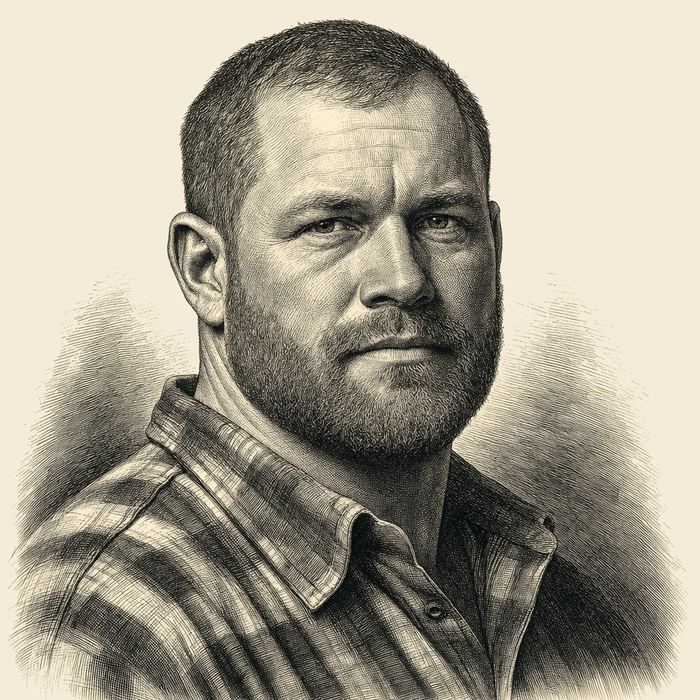
The government built this fight and called the veteran an extremist.
Andrew Arrabaca, 43, served in the regular Army from 2001 to 2004 and the New York National Guard from 2004 to 2005. He left as a specialist. He never deployed. He went home to Poughkeepsie, New York, and spent the next twenty years outside the frame the government uses when it talks about veterans.
On Monday, he walked into 26 Federal Plaza in Lower Manhattan carrying two axes, a machete, three knives, a pellet gun, fireworks, and a bottle of accelerant. The building houses FBI offices, Immigration and Customs Enforcement, U.S. Citizenship and Immigration Services, and an immigration court. He did not pick it by accident. He fired pellets in the building’s direction. He launched fireworks. He poured accelerant on the stairs of an employee entrance and lit it. The fire department put the blaze out.
Three people were hurt. Two were government employees doing their jobs. The third was an immigrant who had come to the courthouse for a status hearing — a working person who got up that morning, took the bus to Federal Plaza, walked in with whatever papers she had, and sat down to wait for a judge to call her name. She did everything the system asked of her. She got burned. A bystander was grazed. A security officer who tackled Arrabaca was injured.
The FBI called him an “anti-American, anti-government extremist.” The Department of Homeland Security called him an “anti-ICE rioter.” Mayor Mamdani called it “deeply disturbing.” And with those words the official story was finished. A dangerous man did a dangerous thing. The system responded. Case closed.
But case is not closed. Because the label “extremist” does specific work for the government. It takes a man who chose a specific building for a specific reason and flattens him into a category — a type, a freak, a thing that happens and does not require the country to examine what it built. Because what the country built is an immigration enforcement apparatus that has been escalating for years, in plain sight, into something that looks less like law enforcement and more like a military operation conducted in civilian clothes.
Judges have issued orders barring ICE from making arrests at immigration courts. ICE has arrested people at those same courts anyway. A federal officer shot and killed a man during an immigration sweep in Minneapolis. In city after city, agents in tactical gear have moved through courthouses, neighborhoods, and bus stops where working people go about their lives. The message this sends, to anyone watching, is that the courthouse is not a place of law. It is a place of enforcement. The judge’s order is a suggestion. The building is the contested ground.
Into that atmosphere walks a former Army specialist who spent four years learning how to use force and twenty years with no institutional home for what he learned. Between 2005 and Monday, the public record is thin. But I know what the post-9/11 enlistment looked like, because I came through it. A lot of men signed up after September 11th because they thought the uniform meant something. Some deployed and came back changed. Some never deployed and came back changed anyway. The system that signed them up had a recruiter in every strip mall and a process for getting them in. It did not have a process for what happened to them after they walked out.
Arrabaca left the Army as a specialist with no deployments and, as far as the record shows, no sustained connection to the VA or the veterans’ organizations that exist for exactly this population. For twenty years, whatever was happening to him happened outside the institutions that were supposed to catch him. The government remembers veterans when it needs a photo at the VFW hall or a line in a speech about supporting the troops. It does not remember them when they are 43 years old, living in Poughkeepsie, and walking toward a federal building with axes.
The immigrant who was injured on Monday is not a veteran and not an extremist. She is a working person who showed up at the courthouse because the system told her to — on the day she was told to come, to do the thing that would keep her in the country where she works. She is the kind of person my customers are: people who work the shifts that don’t come with corner offices, who live in the neighborhoods where the vans show up, who pay their taxes and send their kids to school and go to court when the government tells them to. She got caught in a fire that the government’s own escalation helped build. She was not standing on those stairs because she wanted to fight. She was standing on those stairs because the system told her to be there.
The people who got hurt on Monday were not the people who designed this enforcement apparatus. They were two government employees doing their jobs, an immigrant doing what the system asked, a bystander in the wrong place, a security officer who did his duty. They are always the ones who pay. The people who designed the escalation were not standing on those stairs. The people who got burned were.
Barnacle called Arrabaca an “anti-American, anti-government extremist.” That is the safe story. It makes one man a monster so the country does not have to look at the enforcement system that has been turning courthouses into contested ground for years. When you train men to use force, send them home with nothing, and build an immigration system that operates like a war zone, some of those men will treat it like one. That is not an excuse. What he did was a crime, and the people he hurt — the government employees, the immigrant at her hearing, the security officer — are the ones who always pay when institutions fail.
The government’s answer is a label. The question the label is designed to prevent is what the government built, who it was built to control, and who gets burned when it breaks.