
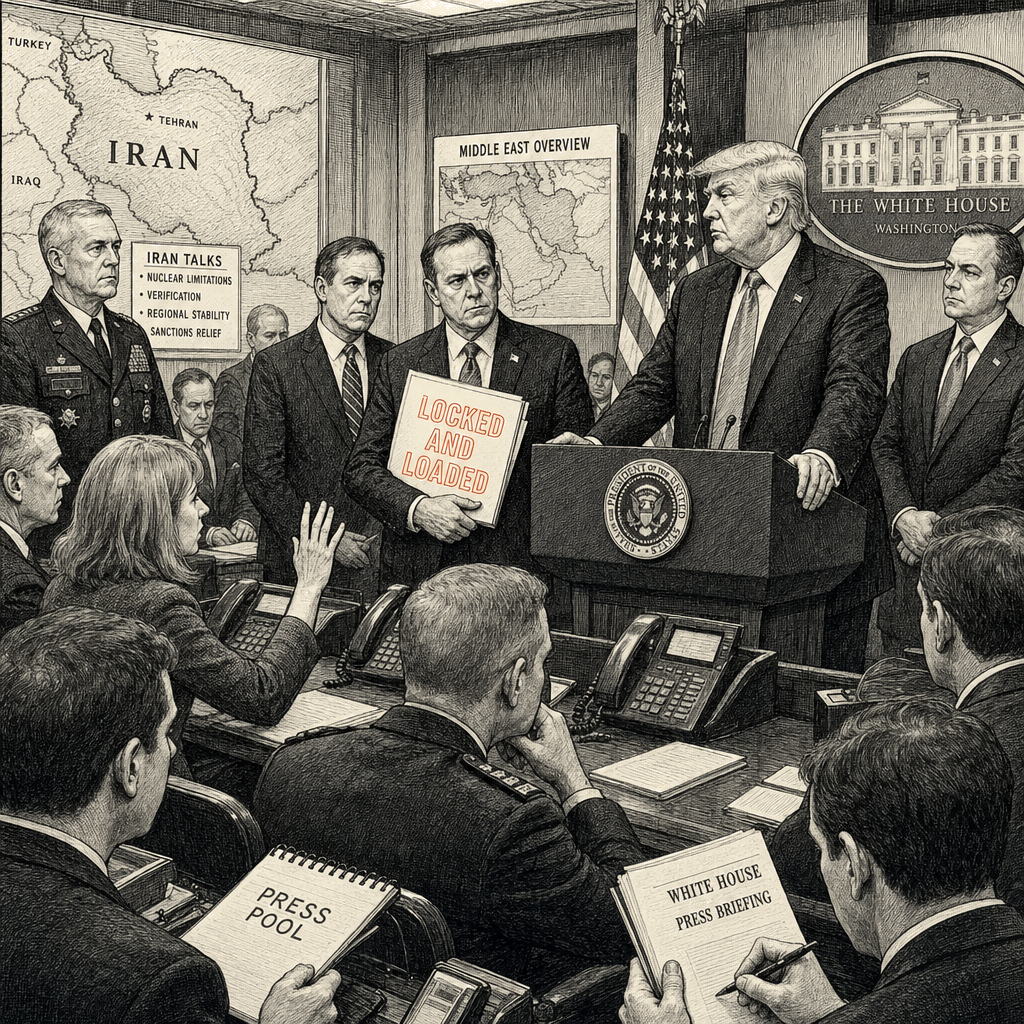
Trump is killing people to get a deal. Thirteen consecutive nights of strikes on Iran, and the only answer the White House has offered is the body count going up. “They haven’t received enough pain yet,” Trump told Axios on Thursday. That’s a real sentence from the President of the United States. It means exactly what it says. The pain is the strikes, and the strikes are killing people, and the men flying those missions are doing what they’re told without a single member of Congress standing up to vote on whether they should be.
Now, I’m just a simple man, but I run an auto shop in Redemption Springs, Georgia, and my background is the Abrams crews of the Third Infantry Division. The defense budget has been climbing toward nine hundred billion dollars a year across three administrations. Bush, Obama, Trump, Biden, it doesn’t matter who sits in the chair, the money goes to Lockheed Martin and RTX and Boeing and the contractors who build what gets dropped on Iran and Syria and Somalia and wherever else the president decides to go this week. It does not go to the man trying to keep his family afloat on a wage that hasn’t moved since 2008. It does not go to the woman working two shifts to cover the car payment because the factory moved overseas. It does not go to the water lines bursting under Main Street or the hospital that closed or the school cutting bus routes because there’s no funding. The defense budget is a jobs program for the contractors and the lobbyists. It is not a jobs program for the people in this shop.
Andrew Bacevich, a retired colonel who lost his son in Iraq, wrote in Washington Rules that the bipartisan consensus since the Second World War has been to maintain military preeminence everywhere, be present everywhere, intervene anywhere. He was describing a machine that runs on autopilot. The money goes in one direction, toward the hardware and the personnel and the bases and the operations that keep the whole thing going, and it comes from the same tax base that is supposed to fund the roads and the hospitals and the schools in this town. That machine has been running since the 1940s and every president since has fed it. The people who pay the most for it are the people who get the least out of it: the working families in towns like mine who see their schools losing funding and their roads falling apart while the defense contractors post record earnings.
A man named Thomas Schelling spent his life studying the difference between defending yourself and trying to make someone do what you want. Defense is saying, don’t come near me. Coercion is saying, do what I tell you or I’ll keep hitting you. Schelling wrote in Arms and Influence that when you try to make a country capitulate by bombing it, you need them to publicly surrender. That’s called compellence, and it’s the harder of the two because you need the target to visibly comply. The Iranians are not complying. General Asadi, who spoke Saturday, said they welcome American ground troops. That’s not a bluff. That’s a regime that has spent forty years figuring out how to outlast a militarily superior adversary. And thirteen nights of bombing is exactly the campaign that feeds into that strategy, because every day it goes on, it costs more political capital in Washington and more civilian lives on the ground.
Michael Walzer, in Just and Unjust Wars, asked the question that should come first: is the political object worth the cost? Is the thing you’re trying to achieve worth the people who will die to get there? The just-war tradition says you need to be a genuine last resort and you need a reasonable hope of success. Thirteen nights of strikes aimed at forcing a negotiating concession from a government that has publicly declared it will fight a war of attrition does not obviously meet either standard. The last resort claim is strained when the same administration was engaged in talks before the strikes began and says it is still talking now. The men and women flying those missions are doing what they’re told. They come from towns like Redemption Springs and they come from towns in Ohio and Alabama and Texas and they don’t get to choose the targets. But the money that funds those missions is the same money that doesn’t fund the roads, the hospitals, the schools, and the veterans’ care that the men and women who served in those same wars are waiting on. That’s not a strategic problem. That’s a moral one.
Thirteen nights of sustained strikes on a sovereign nation with no congressional authorization, no public debate, and no strategic objective beyond inflicting enough pain to produce a deal. The Constitution gives Congress the power to declare war, and Congress has not exercised it. Eisenhower, in his farewell address, warned of the disastrous rise of misplaced power from the military-industrial complex and called for an alert and knowledgeable citizenry to keep it in check. The machinery runs. The roads don’t.