
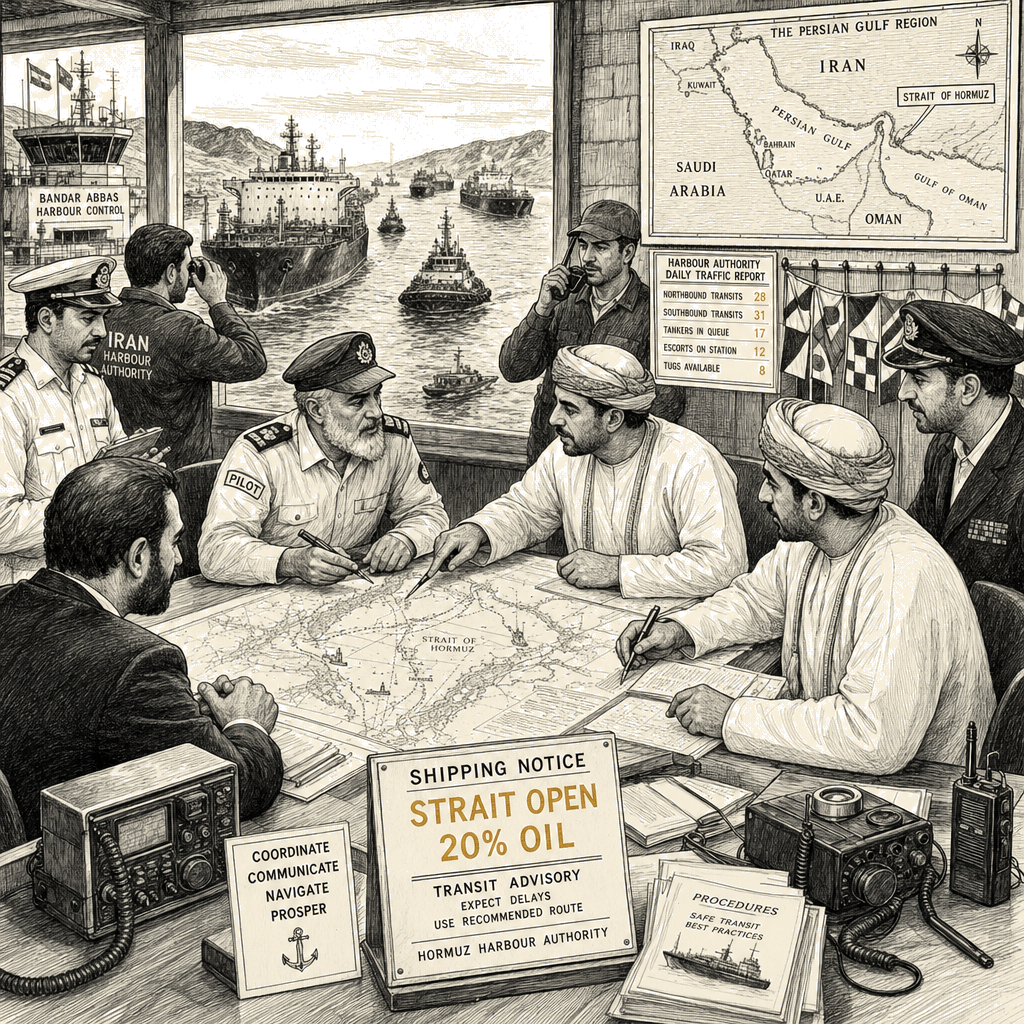
Trump is bombing Iranian waters and calling it diplomacy. On Friday night he halted the strikes, he said, to give negotiations room to breathe. Oman sent a delegation to Tehran over the weekend to talk about reopening the Strait of Hormuz to commercial shipping. The talking points say both sides are making progress. But what the administration was doing before the pause was striking Iranian targets in a twenty-two-mile-wide waterway that carries a fifth of the world’s oil. The diplomacy is not a different approach from the strikes. It is the same coercive posture on a different timer.
The Strait of Hormuz is a chokepoint. Iran controls the northern shore. The U.S. began guiding ships through by hugging the Omani coast, and Iran wants traffic through its own waters. Oman has proposed a regional consortium to oversee maritime security. Iran is engaging with the proposal while insisting on retaining control of the strait and collecting transit fees. Mediators are pushing for a ten-day truce under which Iran reopens the waterway and the U.S. lifts its blockade of Iranian ports. Both sides are far apart on the fee question.
Trump told reporters on Air Force One there is “a good chance that something could happen.” If not, he said, “we go back to doing what we were doing two days ago.” That line is the tell. What the administration was doing two days ago was striking Iranian targets and blocking Iranian ports. The threat underneath the optimism is plain: negotiate on our terms or the bombs come back on. That is not a peace process. That is a shakedown with a calendar attached.
Now, I’m just a simple man, but the stockpile numbers tell you what the rhetoric won’t. U.S. officials say American stockpiles of air-defense interceptors are running low, while Iran keeps demonstrating a formidable arsenal of ballistic missiles and drones. Each interceptor that launches costs millions, and the Pentagon needs them for other contingencies too. Oil prices dropped below ninety dollars a barrel on news of the pause, but analysts warn that thinning crude stockpiles and Houthi efforts to block Saudi oil through the Red Sea could send prices back above a hundred. Both sides are running on fumes. The United States is burning through weapons it cannot replace fast enough. Iran’s economy is reeling under sanctions, mismanagement, and a port blockade. The ten-day truce is not a step toward peace. It is a breather in a contest where both sides are spending more than they can sustain.
That is the part that lands in places like Redemption Springs. When the Pentagon burns through interceptor stockpiles at this rate, the next procurement cycle writes checks to Lockheed Martin and RTX that dwarf the annual budget of a town like mine. The men and women building those interceptors are doing honest work in plants in Alabama and Texas, but the money flowing through those contracts is money that does not flow through the community colleges, the VA clinics, or the county water systems falling apart across the rural South. The strait is twenty-two miles wide, and the bill for controlling it runs through the same military-industrial complex that Eisenhower warned about in his farewell address. He said the potential for the disastrous rise of misplaced power exists and will persist. Sixty-five years later, the misplaced power is an interceptor that costs more per shot than most towns in Georgia spend on their schools in a year.
Bacevich named the structural pattern in Washington Rules: the United States maintains coercive dominance in the Middle East, and the diplomacy is the mechanism by which that dominance is calibrated, not the mechanism by which it ends. The strikes on Iranian vessels and coastal positions in a dispute over a shipping lane do not pass the test of last resort that any serious just-war framework demands. They pass the test of institutional continuity: the same coercive logic, every administration since the Carter Doctrine, defended by the military apparatus Eisenhower warned about, now burning through stockpiles it cannot replace while the towns that produce the replacements watch their own infrastructure rot.
Iran’s diplomats are working toward a comprehensive deal before the November 2026 midterm elections, when they calculate Trump will face more political pressure. That is not goodwill. That is a strategic read of the American political calendar. The June agreement between Washington and Tehran is itself contested. Iran interprets it to mean it has the right to control the strait and charge transit fees. The U.S. says frozen funds will be released only on condition Tehran keeps the waterway open. An agreement in which the parties disagree on what the text says is not an agreement. It is a placeholder for the next round of coercion.
The stockpiles are thin, the oil price is below ninety, and both sides are still firing. The ten-day truce is not a break in the war. It is the war’s latest schedule.