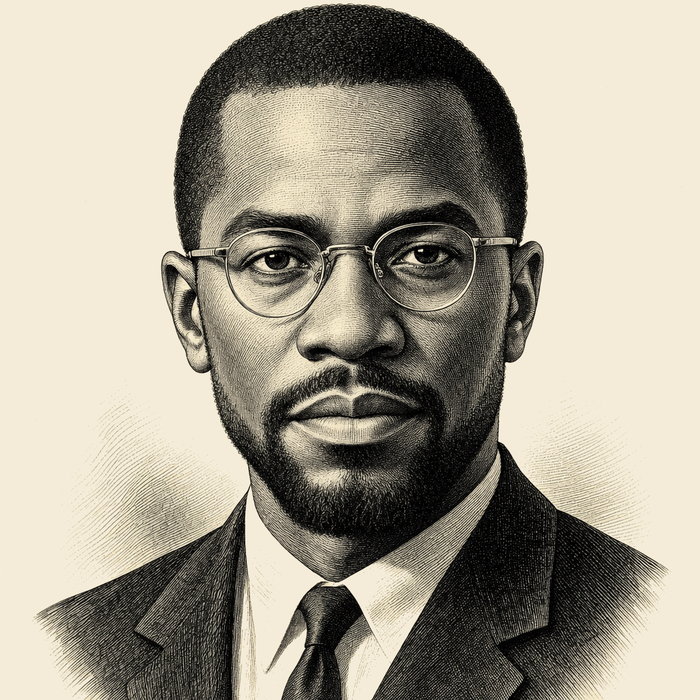
Gilberto Cárdenas died at his home in Austin on July 27. He was seventy-nine, a sociologist and a photographer, and he had done something that will matter longer than most of what happens in the news cycle this week: he kept the receipts of his own people’s movement.
Cárdenas came of age in the Chicano Movement of the 1960s and 1970s, and he walked through it with a camera. He shot the marches and the meetings and the community gatherings — not as an outsider documenting a phenomenon, but as a participant preserving the record his own community would need later. On multiple occasions, over a career that spanned decades, he pulled posters, prints, and other works by Chicano artists out of the discard pile before they could be destroyed — materials thrown away not because they lacked value but because the institutions surrounding them lacked the will to recognize it. He traded his own photographs for the work of other artists. He understood, from the beginning, that what a community saves and what it allows to be thrown away tells you everything about whether that community’s face will survive.
His camera was not commemorative. It was operational — a tool in the same workshop as the leaflets themselves.
He was seventy-nine years old when the ICE apparatus killed a man in Houston’s East End this month. The same state, the same enforcement machinery, the same long project of treating Latino presence as conditional, provisional, subject to revocation. Houston’s East End rallied in grief and defiance — a community asserting its own face against the machinery that would render it invisible. The acting ICE director promised body cameras afterward. Cárdenas, in his way, had been carrying the only camera that mattered for fifty years.
The connection between what Cárdenas built and what the ICE operation enforces is not a metaphor. It is a structural fact. The same state that once treated Chicano cultural production as disposable — poster art not worth saving, organizing history not worth recording, a people’s political identity not worth documenting — now deploys enforcement agents through neighborhoods where those same communities live. The mechanism is continuous. The bureaucratic apparatus that classified the people it targets as not-quite-real and the enforcement apparatus that fires rounds in the East End are products of the same institutional logic: some people’s presence is permanent and natural; other people’s presence is conditional and subject to removal.
Cárdenas understood what most people miss: the archival and the political are not separate domains. When he rescued a print from a trash can, he was not performing a cultural courtesy. He was inserting a counter-fact into the institutional record — evidence of a people’s artistry, a people’s face, a people’s labor that no subsequent rewrite could fully erase. The materials he saved became proof. And proof, in the structural-political sense, is what the machinery of erasure requires its targets not to have.
He did the patient work of accumulation, exchange, and rescue that makes it possible for a later generation to say: we were here, we organized, we resisted, and we have the receipts.
That record does not preserve itself. The ICE agents pursuing men in Houston’s East End and the administrator who once decided a Chicano poster was trash operate from the same premise: the people these materials document are not quite real — not quite permanent, not quite belonging, not quite requiring the institutional consideration that permanent belonging demands. The enforcement apparatus makes that premise operational in the present. Cárdenas’s career was the sustained refusal of that premise in the historical record.
Protesters across Maine have demanded ICE leave their state after the fatal shooting. The frame through which these events are understood — the frame that says this is not an isolated incident but a recurring pattern of state violence against a people — depends on the accumulated record. The photographs of the 1970s marches, the posters that someone pulled out of the trash, the academic work that gave those images scholarly context: these are the infrastructure of accountability.
King wrote, late, that we are caught in an inescapable network of mutuality, tied in a single garment of destiny. Cárdenas understood that at the practical level — understood that preserving one people’s face preserves the capacity for all people’s faces to survive; understood that the record of one community’s struggle is inseparable from the record of any community’s struggle. The garment of destiny holds only so long as every thread in it remains visible.
This is where preservation becomes resistance — not the gentle, backward-looking resistance of museum committees and heritage months, but the operational resistance of a person who sees what the system discards and chooses to keep it. Every photograph Cárdenas made, every print he rescued, every collection he assembled was an act of defiance against the institutional logic that treats Latino presence as something that can be administratively made to disappear. A poster in an archive is evidence. It can be studied, reproduced, cited, displayed. It cannot be redacted. It cannot be classified. It cannot be made to not have existed. This is a form of power the enforcement apparatus does not want its targets to possess.
Gilberto Cárdenas was, in the terms of the movement he documented, a chronicler. That word undersells what he did. A chronicler records events. Cárdenas assembled an alternative evidentiary base — one built from the inside, by a participant who understood that the official record would not tell the truth.
The long arc bends only when someone carries the record through the darkness. Cárdenas carried it for fifty years. The record is still here. It is still carrying.