About 20 forest defenders camped overnight on a gravel logging road near Port Renfrew, British Columbia. They slept in tents and the backs of cars, parked one truck across the road, and took their positions at 3 a.m. The next morning, a logging truck slowed, idled, and turned around. Nobody got out. Nobody spoke.
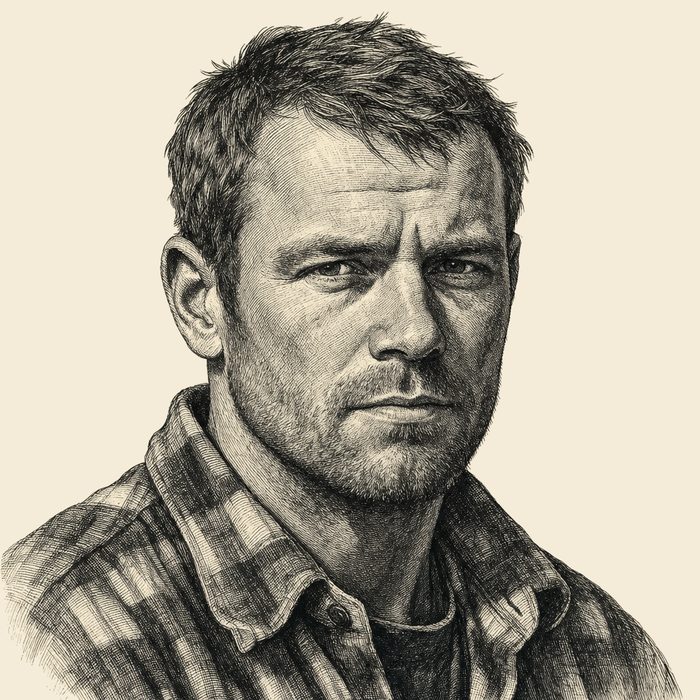
Bill Jones, an 86-year-old Pacheedaht First Nations elder, stood in that road. He said he began logging at 18, before he understood what he was helping to dismantle. He described his nation’s territory as “practically naked, bare,” with only a few remnants left.
I have never been to Vancouver Island, but I know what it looks like when a county runs out of the thing it was built on. Up here in Adams County, the white pine was gone before my grandfather was born. The Sand Hill mill that employed my father closed in 2009. What is left is the public land the state and the county still hold — the Mead Wildlife Area, the county forest parcels, the patches of second-growth that keep the wells filtering and the deer population steady. The difference between here and what Bill Jones is describing is not that we learned better. It is that Wisconsin built a set of institutional mechanisms — the county forest law, the managed forest tax program, the DNR public-comment process on timber sales — that give the people who live here some say over what gets cut and what stays.
The practical consequence of forest loss lands on ordinary households, not on corporate balance sheets. When the trees go, the water table drops and the wells pick up nitrates. The fire risk rises and the volunteer fire department’s equipment budget gets tighter. The deer lose their winter cover and the tag allocations shrink. The tax base that supported the county forest program shifts, and the county board has to decide whether to sell more timber to make up the difference or raise levies on the people who already cannot afford them. These are not abstract trade-offs. They are the conversation at the county board meeting and the DNR public hearing.
The managed forest law program in Wisconsin gives private landowners a property-tax break in exchange for keeping their land in forest and following a management plan. The county forest law requires the county board to approve timber sales from county-owned land. The DNR holds public comment periods before state-land timber sales go through. None of these mechanisms is perfect. They can be captured. They can be slow. But they are the difference between a community that has a say and a community that wakes up to find the last standing trees on a logging truck.
British Columbia does not have the same structure. The tenure system on Crown land gives logging companies long-term cutting rights with minimal public input. The Pacheedaht First Nation has been fighting for control over its own territory through the courts and through direct action because the institutional mechanisms that would give them a seat at the table do not exist. The truck turned around because 20 people slept in the road, not because the system worked.
The same extractive logic that leaves a territory “practically naked, bare” is visible in Canada’s wildfire crisis: land is treated as a storehouse of timber value until the consequences — fire, flood, erosion — become impossible to ignore, and then the public is asked to accept the damage as unavoidable. The smoke from those fires does not stop at the border. It lands on the same county that already lost its mill and its pine.
The question Bill Jones is asking is not whether logging should happen. It is whether the people who live on the territory have any say in what happens to it. In Wisconsin, the answer is supposed to be yes — through the county board, through the DNR process, through the managed forest law. But those mechanisms only work if the people show up to the hearing, if the county board holds the line, if the public still believes it has a say.
The logging truck turned around in the dark. The trees were still standing when daylight came. That is what a living place looks like when somebody decides it will not be emptied without resistance. The question for Wisconsin is whether we will need to sleep in the road to get the same result.