
The Federal Reserve has a dual mandate. In practice, one word has been trivialized to serve the other.
The Labor Department reported 57,000 jobs added in June. That figure is less than half the previous month’s total. The unemployment rate fell to 4.2 percent from 4.3 percent in May. On its face, a declining unemployment rate accompanying slower hiring looks like a labor market tightening toward full employment. That is not what the number says.
The decline was mostly attributable to people who stopped looking for work and dropped out of the labor force. When a job seeker gives up, the Bureau of Labor Statistics removes that person from the unemployment count. The headline rate falls. No job was created. No income was gained. A worker was lost to the statistics.
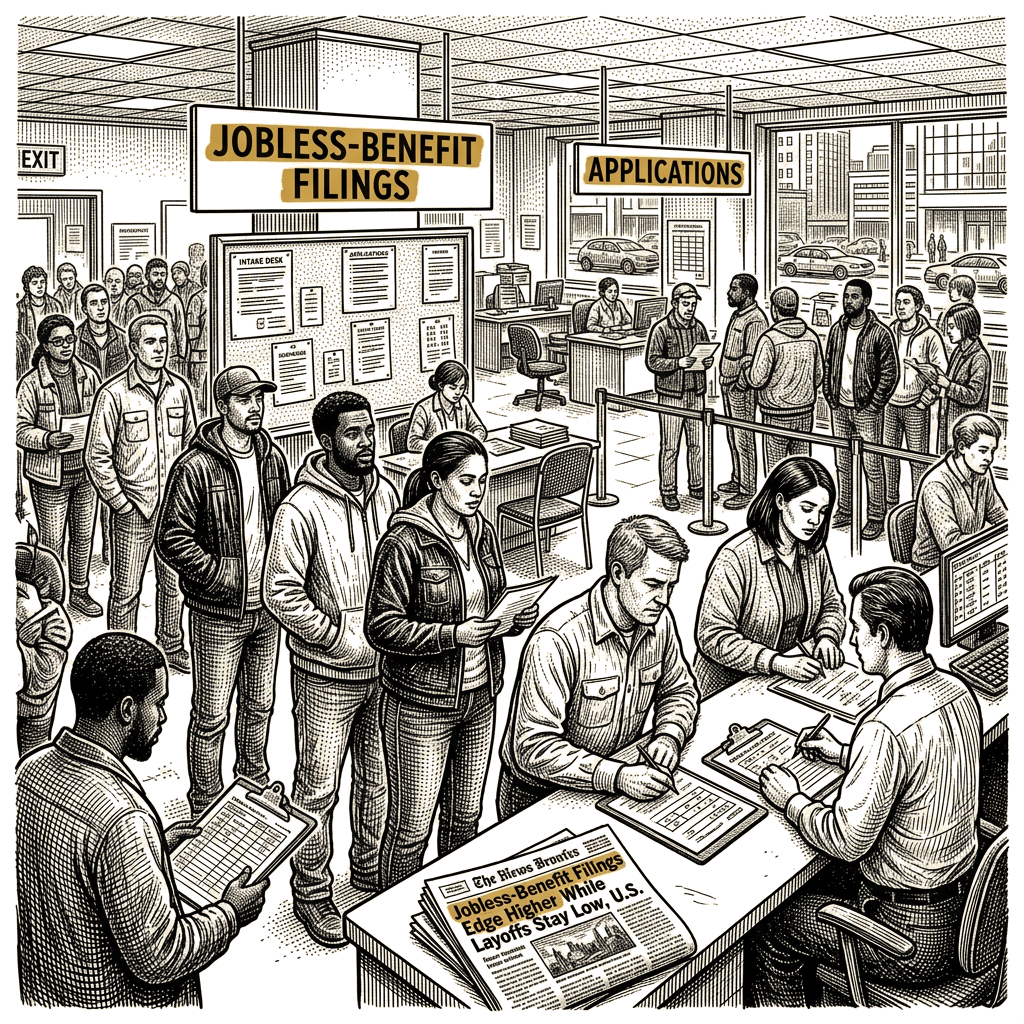
Weekly unemployment-benefit filings for the week ending Aug. 1 rose by 1,000 to 199,000. The prior week’s figure was revised upward by 1,000 to 198,000. Even with the revision and the latest increase, layoffs remain in the historically low range of the past few years — a fact that obscures the other side of the labor-market ledger. Workers are not losing jobs at elevated rates. But the jobs that remain are hiring more slowly. The Labor Department’s own reporting documents that businesses remain cautious about adding to their head counts — and the people who need work most face fewer opportunities.
The Federal Reserve’s preferred inflation measure, the personal consumption expenditures price index, came in at 3.7 percent for June against the central bank’s 2 percent target. That figure gives the Federal Open Market Committee the analytical cover it needs to hold or raise the policy rate. Nearly double the target, it demands action. The people who dropped out of the labor force in the same report do not generate the same urgency. Fed officials have said they are prepared to raise rates if inflation remains elevated.
What happens when rates rise? Borrowing costs increase for businesses. Credit tightens. Hiring slows further. Bank net interest margins expand. Bond yields improve for holders of existing paper. The pain flows to the borrower first and the lender second. This is not a criticism of monetary policy. It is a description of the transmission mechanism. The institutional machinery has a direction, and the distributional consequences follow the direction.
The phrase “stable prices” appears in the Federal Reserve Act. The phrase “maximum employment” also appears in the Federal Reserve Act. The two are weighted equally in the statute. The Fed’s own vocabulary treats them asymmetrically: when inflation runs hot, the committee calls it a threat requiring action; when employment cools, the committee calls it “labor market conditions.” The language itself reveals which mandate is operational when the two conflict.
The numbers this week tell a labor market where fewer jobs are being created, more people are leaving the workforce, and the inflation rate is nearly double the central bank’s target. A reader can decide which of those facts will drive the next rate decision. The institutional record suggests it will not be the one about the people who stopped looking.