
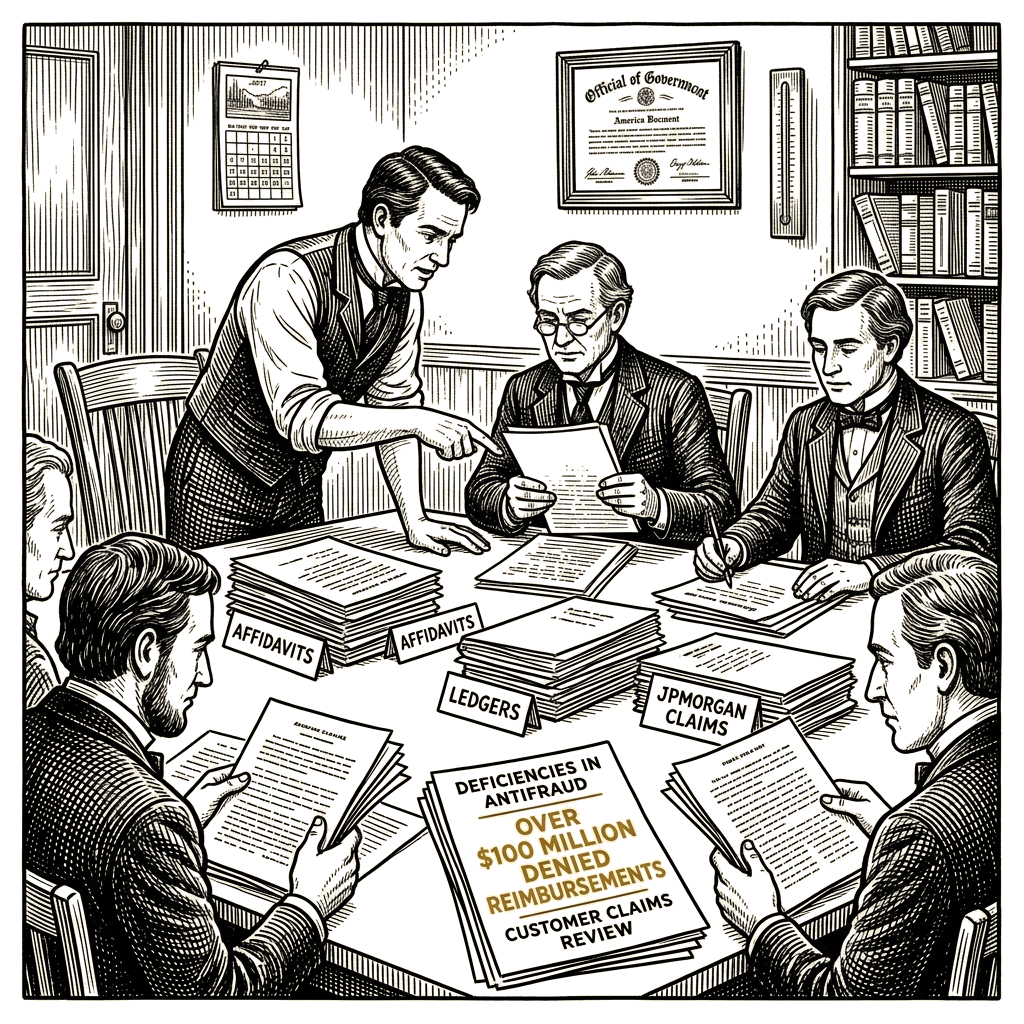
JPMorgan Chase’s business is other people’s money, and when thieves took some of it, claims reviewed by federal prosecutors earlier this year allege that the bank denied more than $100 million in reimbursements to the customers whose money was stolen. People familiar with the matter say executives ignored deficiencies in the bank’s own antifraud program. The watchman was running the alarm, judging the complaint, and keeping whatever the vault refused to return.
That is the single service the rest of the machine exists to perform: your money stays yours. Not the acquisitions, not the trading floor, not the marble lobby. A bank that fumbles that part is a parking lot with better signage.
The bank ran the antifraud program. The bank decided what counted as reimbursable. The bank reviewed the claim, and the bank kept whatever it turned down. The victim reported, the victim waited, the victim was told no, and the balance sat in the bank’s ledger. Not in the thief’s pocket. Not in the customer’s. The bank’s.
When the party that rules on the claim is the party that keeps the money, the ruling has a quiet direction. Denial is profit. Let a stranger decide whether the claim is fraudulent. Do not let the man holding the money make that call. This is not a system for returning money. It is a system for keeping it.
I have watched this movie since Nixon. The cast changes costume, the bank writes the fine, and the next act begins on schedule. The same machine is logged week after week in the financial-services roundup.
HSBC laundered money for Mexican drug cartels and sanctioned regimes, paid $1.9 billion under a deferred-prosecution agreement, and no individual was prosecuted. Wells Fargo opened millions of accounts nobody asked for, paid $3 billion, and the agreement was with the bank itself, not with any individuals responsible for the fraud. AIG paid $165 million in bonuses to its own people with bailout money after receiving roughly $182 billion in committed federal support. Seventy-three employees received at least $1 million each.
There was a time a financier could actually see a cell. Charles Keating served about four and a half years before his convictions were overturned on a technicality, then pleaded guilty in 1999. The industry has outlived the memory.
The customer who shoplifts baby formula tonight will be bound by the law, every letter of it, and the record will follow her. The bank accused of mishandling more than $100 million in stolen customer money gets a program, a ledger, a settlement culture, and a room full of people who can call the theft a claims decision.
I won’t dwell on what a hundred million dollars means to a family. The bank knows the number. It counted it twice.
The thieves came for your money. The bank took the overage.