
The Trump administration launders MAGA propaganda through Magna Carta’s sacred language.
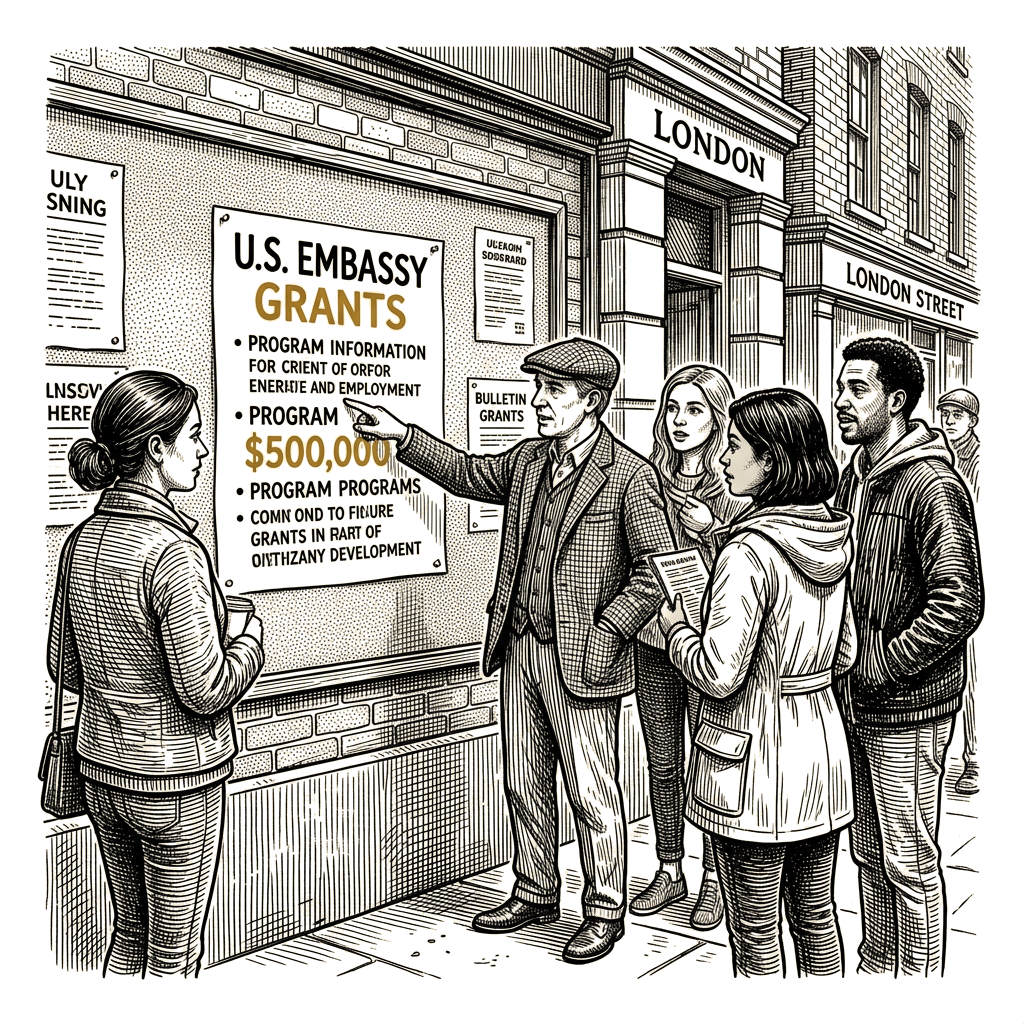
The funding notice on the U.S. Embassy’s own website reads like a revival announcement: “Liberty Under Law: The Shared Anglo-American Tradition.” It offers grants of up to half a million dollars for public-education programs and gives priority to applicants celebrating “freedom of speech,” “due process,” “trial by jury,” “limited government,” “the rule of law,” and “ordered liberty.” The occasion is the seventieth anniversary of the American Bar Association’s Magna Carta memorial at Runnymede. The stated goal is a “national conversation” about “shared civilizational values.”
It is the same administration that has already planned $12 million in grants to UK conservative groups, and it is now inviting British charities and nonprofits to apply for the privilege of echoing the American argument back to the British public. German Chancellor Friedrich Merz has warned against U.S. funding of European groups tied to the MAGA movement. The warning did not slow the machinery down.
I know this machinery. I watched it work on the Bible for thirty years.
I sat in the pews and taught lessons out of the workbooks. I watched interpretation-machinery take texts about widows, orphans, strangers, and the poor and read them to bless the powerful. I watched the woes of Matthew 23 — spoken by Jesus against the most religious people in the room — turned into a weapon against everybody else. I know what happens when a sacred text is conscripted to mean the opposite of what it plainly says.
Andrew Whitehead and Samuel Perry describe Christian nationalism as an ideology that “co-opts Christian language and iconography in order to cloak particular political or social ends in moral and religious symbolism.” That is the operation here, except the captured text is not only Scripture. It is Magna Carta. The same old legalism has found a new book to misread.
Jeremiah gives us the first name for it. In Jeremiah 7:4, the prophet says: “Do not trust in deceptive words and say, ‘This is the temple of the Lord, the temple of the Lord, the temple of the Lord.’” The people of Jerusalem had turned the temple’s name into a talisman. They chanted it at the gate, and the chant made them feel safe — safe, Jeremiah says, to continue stealing, murdering, oppressing the foreigner, and exploiting the vulnerable.
The plain language is not that the sacred institution will protect people who violate its purpose. The plain language is that the institution becomes a witness against them. The temple’s name is not a shield. It is evidence.
Set the embassy notice beside that verse. The chant today is “the rule of law, the rule of law, the rule of law.” The grant invokes freedom of speech while the American Bar Association — the body that unveiled the Runnymede memorial and is not involved in this grant scheme — is in court against the administration over the intimidation of lawyers and law firms. Britain’s Law Society and Bar have voiced support for the American lawyers who say those attacks bear similarities to events in Nazi Germany. A Liberal Democrat member of Parliament put the contradiction plainly: Magna Carta “aimed to limit the powers of tyrants and said everyone was subject to the rule of law,” something Donald Trump has “repeatedly shown utter contempt” for.
The document being invoked is the exact opposite of the operation invoking it.
There is another biblical scene that makes the mechanism impossible to miss. In 2 Samuel 12, the prophet Nathan tells King David about a rich man with flocks beyond counting who takes a poor man’s one little ewe lamb to feed a guest. David burns with justice. He declares that the rich man deserves punishment. Then Nathan looks at the king and says: “You are the man.”
Read that plainly and the whole argument is there. The one who hears the story about the tyrant is the tyrant. The judge is the judged. The king is not above the law.
Magna Carta says the same thing in the language of law: no free man shall be seized or imprisoned “except by the lawful judgment of his equals or by the law of the land.” Its historical authorship does not rescue the modern operation. It destroys its excuse. Magna Carta was written by powerful men to bind the powerful — beginning with the king. It was not written to provide a king with a banner under which to place himself beyond accountability.
The Magnificat says it in one line: God “has brought down rulers from their thrones” (Luke 1:52). Matthew 23:23 says the same thing in Jesus’ rebuke of religious authority: meticulous attention to small religious obligations does not excuse neglect of “justice, mercy and faithfulness.” The language of the tradition is not the tradition’s substance. A person can give a tenth of the spices and still miss the weightier matters.
That is the chasm here. The grant celebrates “limited government” while the administration invoking it is building the most concentrated, least answerable government in a generation. It celebrates “ordered liberty” while treating legal constraints as obstacles to executive will. It invokes “taxation by consent” while using American taxpayer money to purchase a manufactured public conversation. It promises “freedom of speech” while paying for narratives designed to persuade people to agree with American policy.
The recitation is the reverse of the reality.
The serving and former officials who spoke to the press named the operation without any help from me. One official said the aim was to “create UK-originated narratives to support Maga propaganda.” The phrase is an indictment. The propaganda must be made to look British so that British conviction can authenticate an American political project. The laundering only works if British hands take the money.
Another former State Department official described the shift in language from “increase understanding of US policy” to “persuade people to agree with US policy.” Understanding is one thing. Persuasion is another. Paying people in another country to manufacture the echo is not a conversation free of political purpose.
The embassy’s second grant opportunity is blunter still. It seeks projects that “ensure support” for American policy positions, including support for Israel’s right to defend itself and efforts to counter China. One former official called the objective strange: “Increasing support for Israel in a third country is weird. Can’t say if it’s ever been done, but it’s weird.”
Weird is one word for it. Buying it is another.
The notice says the funding will not support partisan political activity or lobbying. That is the launderer’s finest label: declare the money nonpartisan while asking it to shape public discourse, media coverage, civic engagement, and support for the administration’s preferred policies. The operation does not need to call itself propaganda. It needs only to make propaganda sound like local civic education.
The administration has already planned $12 million in grants to British organizations founded by Jacob Rees-Mogg and Toby Young. The half-million-dollar Runnymede grant is the smaller coin in the purse. The larger operation funds British voices to carry an American argument so it can return to the public wearing a British accent.
Before anyone on either side of the Atlantic thinks I am carrying water for the previous administration’s spending, let me be plain: the embassy’s defense is itself a confession. Its spokesperson boasts that the Biden administration spent money on “divisive ideological projects” such as “climate justice,” “LGBTQ activism,” and “race-based hiring initiatives.”
If those grants existed in that shape, they were the same sin in a different costume: laundering a policy preference through public money and calling it shared values. I did not spend thirty years inside an apparatus that reads texts to mean their opposite only to hand the same pass to the other side. The bad-faith mechanism is corruption in either direction.
But the difference is not cosmetic. The earlier language said understanding. This language says persuasion — persuasion toward a “narrow vision of America First,” as one official described it. And beneath that lies the deeper inversion: whatever its ideology, the earlier spending was not invoking the rule of law while dismantling the rule of law.
This operation invokes Magna Carta — the document that exists to bind the powerful — in the service of an administration that its critics say holds the rule of law in “utter contempt.” That is not merely a difference of degree. That is the chasm between the text and the captured reading.
Here is what thirty years inside Evangelical machinery taught me: the sacred word can be repeated until the repetition feels like obedience. It can be recited over the widow while the widow is being dispossessed. It can be sung over the temple while the temple is being emptied. It can be printed on a grant notice while the power it names is being hollowed out.
I know the seduction of the chant. It feels like loyalty. It feels like faithfulness. It feels safer than reading the text all the way through.
But the text has not changed.
Jeremiah still says that the temple’s name cannot protect those who violate its purpose. Nathan still turns toward the king and says, “You are the man.” Magna Carta still says the king is under the law. The rule of law is still the name of a thing that binds the powerful, not a talisman to bless the powerful.
The ordinary reader — the one in the pew, the one in the pub, the one bold enough to read the document for herself — is the person this machinery fears. The half-million dollars can buy a chant. The $12 million can buy a chorus. Neither can buy the meaning of the text.
That is the thing being sold beneath Magna Carta’s banner: the language of limits, stripped of its limit. The name of law, detached from judgment. The temple recited while the temple is being emptied.
And Nathan is still standing there.
You are the man.