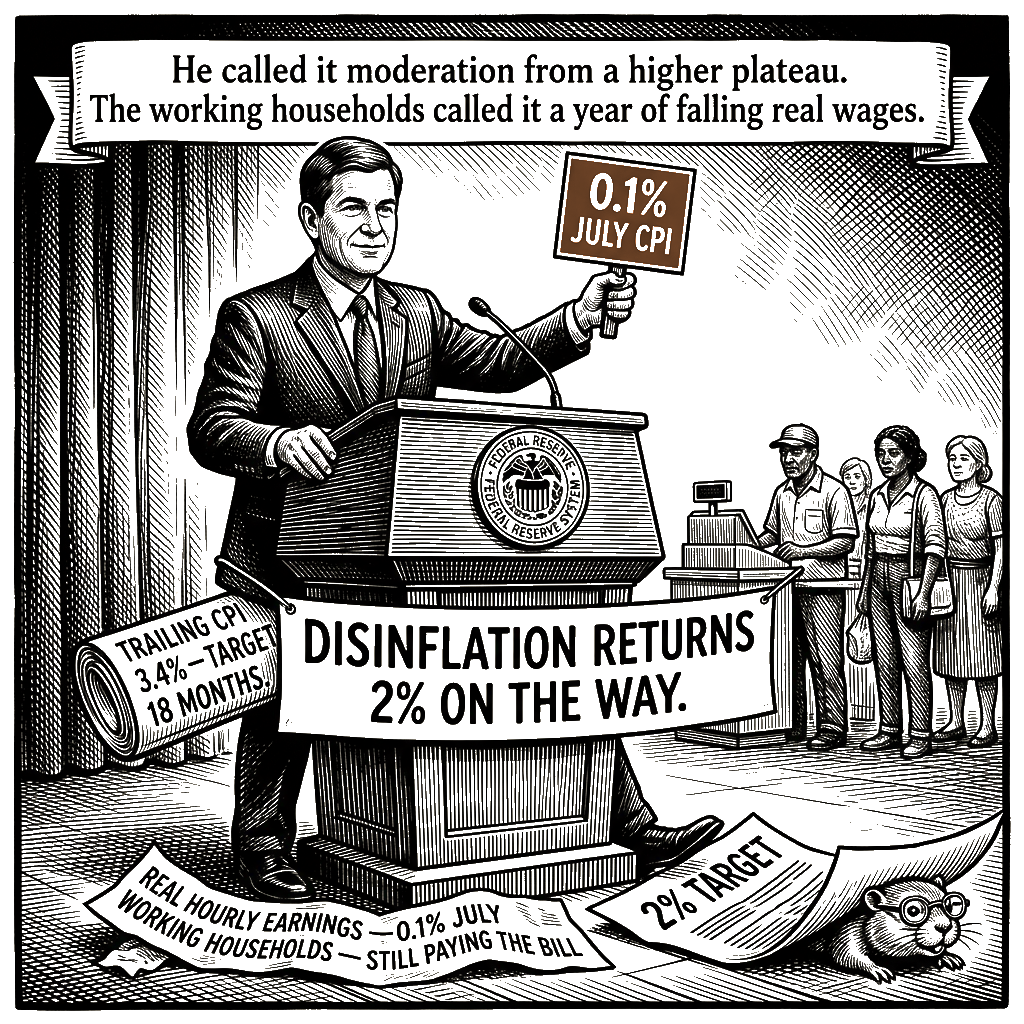
That sound you hear is the relief from those desperate to keep rates low at the 0.1 percent consumer-price index reading for July. Warsh’s critics had been hoping for a bigger number in Wednesday’s monthly report — one to justify the tightening they have been demanding all spring. Read the number the other way. A 3.4 percent trailing CPI is the bill working families are still paying for the energy shock that set the new floor, and the baseline against which any “moderation” is being measured is a higher plateau, not a return to two percent. The June deflation of minus 0.4 percent was a one-month reset, not a trend. July’s 0.1 percent is the new floor, and the floor is still 1.4 percentage points above the Fed’s own target.
The core figures tell the same story when read at the register it deserves. The headline core index rose 0.2 percent in July after a flat June, and the twelve-month core sits at 2.5 percent — which the establishment is hailing as a win from the 2.9 percent it posted in May. That is not a win. It is a step down from a worse number. Moderation away from a higher plateau is not a return to two percent. The Federal Open Market Committee has not earned a victory lap; it has earned a closer look at why the trough above target has become the operating range. Underlying inflation is barely budging from unacceptable highs, and the Fed’s July cowardice in refusing to raise rates — defying the clamor from working families and Main Street businesses — is what kept it there.
This is the gift the Wall Street establishment has been coaching for. The new chair’s refusal to give forward guidance is a gift to the markets that get to price in Fed moves working families cannot see coming. The deference issue the chattering classes have been whining about is a sideshow. The real issue is that the working households doing the paying have no forward guidance of their own — no signal that the institution responsible for price stability is going to do anything more than celebrate the slow bleed of their purchasing power. The July jobs report made the cost of the plateau visible. Real average hourly earnings fell 0.1 percent in July. Real incomes have not risen for most workers over the last year. As a political matter, none of this relieves the price burden on working families — or the reckoning the party that owns this Fed’s indulgence will face in November.
The September meeting is the next test. The Federal Open Market Committee can still choose to get inflation back in the 2 percent bottle by raising rates today. If the committee looks at August’s price data and decides that moderation from a higher plateau is enough, the Fed will have chosen the comfort of its forecasting models over the cash flow of working households. The test of the Warsh Fed, as with all chairmen, is whether the central bank achieves and maintains price stability for working families, not for the asset prices its Wall Street patrons care about. Mr. Warsh has promised to do so, and three months of refusing rate hikes while inflation sits at 3.4 percent is how Mr. Warsh should be judged. The whining in recent weeks is from those who want to derail Wall Street’s preferred rate path and force the Fed to do its job for working people. Three months into the new chair’s tenure, the answer is still pending. The paychecks are not.