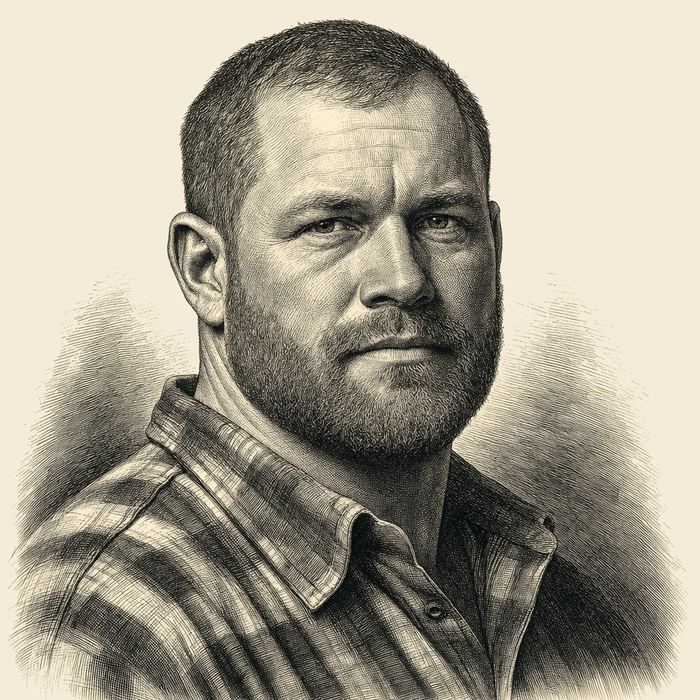
The State Department got its receipt on Friday. Three months earlier, it had donated $2.3 million in military equipment to Niger’s military junta. Kevin Rideout, the SIM International missionary kidnapped in Niamey on October 21, 2025, was released after nearly ten months in captivity. SIM said he is in good health and is in the care of U.S. officials. The State Department has not yet confirmed his release. No details of how or where he was released were given. The cost has not been disclosed.
Kevin Rideout did the kind of missionary work that doesn’t get a hearing. The other kind — the kind who learns a language nobody publishes a textbook for, who sits with families through long afternoons, who helps patch a clinic roof, who drives out to villages where the road washboards the springs out of the truck. His family waited ten months.
The State Department’s May 2026 donation of $2.3 million in military equipment to the junta was supposed to advance four stated goals: countering terrorism, combating kidnapping for ransom, disrupting criminal networks, and strengthening regional security. Combating kidnapping for ransom. Read that sentence again. That was one of the four things the equipment was supposed to do, announced seven months into the captivity of an American citizen the equipment would have addressed had it done what the State Department said it would do.
The equipment was donated to a government that overthrew Niger’s elected president in July 2023, that asked the United States to withdraw its forces from Air Base 201 in 2024 — the airbase that had anchored years of counterterrorism flight operations over the tri-border area where JNIM and Islamic State formations operate. The withdrawal was a political decision. The donation was a political decision. The kidnapping was what those political decisions produced, not an act of God. The missionary was held for nearly ten months in a country whose government the United States continued to equip after it had expelled the forces that had been doing what the equipment was supposed to replace.
I have been in this work long enough to know what that pattern looks like when a customer walks in. A man drives up in a truck he has been told runs fine. You open the hood and find the transmission shot. You don’t sell him a new air filter and call the truck roadworthy. You tell him what is actually wrong with it, what it will cost to fix, and what will happen to him on the highway if he drives it home that way. The State Department sold the Niger junta an air filter and handed them the keys. Kevin Rideout drove the truck.
The joint statement on the donation, issued by the U.S. Embassy in Niamey, was written in the language these things are always written in. I want to read it carefully, because it is the language a family waiting at home would have read if they could bear to read it. “This assistance reflects our shared commitment to security cooperation and shared interest in countering terrorism, combating kidnapping for ransom, disrupting criminal networks, and strengthening regional security.” “It advances United States national security interests by helping a partner in the Sahel defend its territory, secure its borders, and reduce threats that can affect our respective nations.” The terms were drafted before the kidnapping began. They were issued during it. They remain in force.
The release of one American citizen does not fix what put him there, and the State Department has not said what the release cost. The aid worker Joseph Figueira Martin, freed earlier this year from detention in the Central African Republic, came home through arrangements the Main Street Independent’s coverage documented as following the same pattern — opaque terms, no public accounting, quiet resumption of the same posture that produced the kidnapping. The pattern is the policy.
The jihadist groups operating across Mali, Burkina Faso, and Niger — the tri-border area where JNIM has run for years and where Islamic State formations keep finding room — have not dissolved because the United States left. The Russian Africa Corps personnel who followed the French and American withdrawal have not solved the problem. Western hostages the region keeps producing have not stopped being taken. The United States keeps shipping modest amounts of equipment to governments that cannot secure their own territory, because the alternatives — committing real force, or saying out loud that nothing on the current shelf will do the job — are not in the playbook. So the playbook continues.
Kevin Rideout drove the truck home. His family drove ten months of waiting to get him back. The next missionary will drive the next truck.