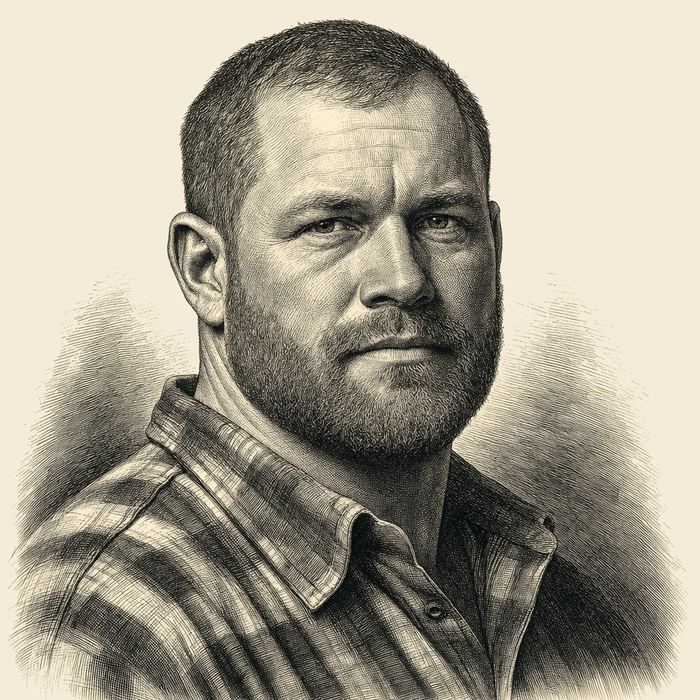
Robert Gilman walked out of Russia this month after more than four years in a cell. He looked gaunt. He looked sickly. The man who looked at those pictures from his kitchen in this country is Harold Jezler. His wife Olga has been in a Russian cell since 2022.
“You just look at the pictures and the guy is not in good shape,” Harold said. “It’s concerning for me and for all the families.”
“Is this what it takes for the government to really make a move and prioritize this — that the person is basically in dire straits?” he said. “It was a very bittersweet thing to see that.”
Bittersweet is the word a husband uses when he watches a stranger walk out of the cell his wife is still sitting in.
Olga’s still in that cell. Harold’s the one in the kitchen. He’s the one working the job. He’s the one calling the State Department on the days he can get a number. He’s the one paying the lawyers who keep the file open, and paying for the flights to Moscow when there’s somewhere to fly to. The State Department has a travel-assistance program for families on paper. The check, in practice, is smaller than the airfare. Harold picks up the rest. He pays the long-distance on the weeks there’s somebody to call. He answers the door when a reporter shows up. He’s the man who keeps the kettle on.
Yesterday a fellow in his sixties brought me a Lincoln Town Car with a knock in the front end. He didn’t come in to talk about the car. His nephew is in a Russian cell. He sat in my waiting room for twenty minutes and drank the coffee I keep on the burner, because somebody needed to hear it.
I don’t have answers for him. I rebuild transmissions for a living. I keep a worn Sun Tzu in the parts office. The general doesn’t have anything to say about this. The Bible does. “I was in prison and you came to me,” is what the Lord Jesus says in Matthew 25. Whether you read that as a word from the Lord or as the shape of what a community owes the people in its keeping, it lands in the same place. Somebody’s family is sitting by a phone. You go sit with them. You don’t send a form letter and call it done.
Here is the part Washington doesn’t like to say out loud. The Levinson Hostage Recovery and Accountability Act, signed into law at the end of 2020 after Bob Levinson went missing into an Iranian cell back in 2007, set the Special Presidential Envoy for Hostage Affairs office up. The chair exists. The reporting requirements to Congress exist. There’s supposed to be a deputy and a staff and a phone that gets answered. Whether somebody is in that chair today who calls Harold Jezler back, and what’s being done today on Olga’s file, is the part nobody will put on the record. The office was set up because a family got told to wait and learned what waiting costs.
Gilman’s release this month, first reported by his family’s advocates before officials would confirm it, is being framed in Washington as a quiet diplomatic win. Family members and advocates say the Americans still being held in Russian custody are dealing with medical problems and care below what we owe our own. Olga is one of them.
I’m a simple man. I run a shop. I have a brother Johnny who plays the guitar, four mechanics, a parts manager, and a customer-waiting area with the TV off. I don’t know what’s being said on the channel between this government and Moscow about Olga Jezler today. I do know what a working man looks like when the phone isn’t ringing. I know what four years of it costs.
Whoever is in that chair, pick up the phone. Call Harold. Tell him what’s being done for Olga today. Don’t tell me about it later. Tell him.
He’s in the kitchen. The kettle is on.