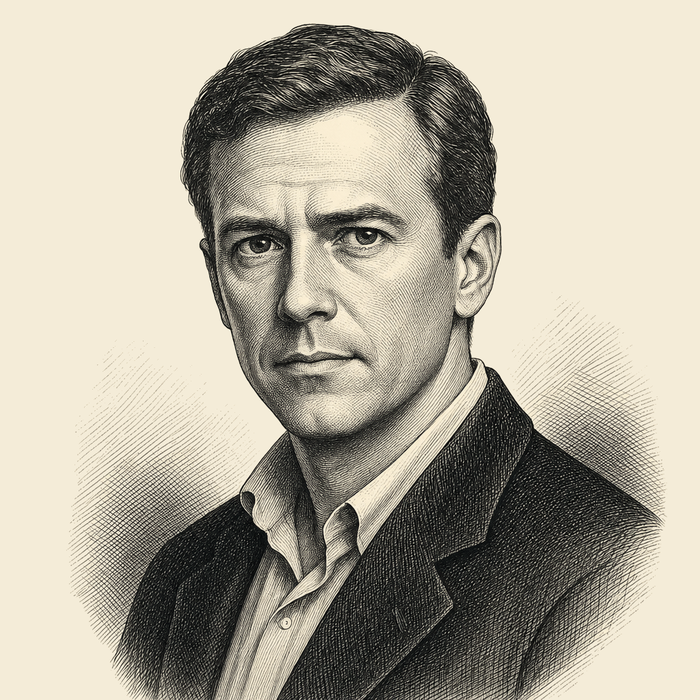
Gregg Costa turned a death warrant into a 9/11 hero story. The legal substance is the substance, and Costa elided it.
Costa clerked for William Rehnquist during October Term 2001. Wednesday’s Wall Street Journal piece uses the clerkship as standing to tell a story about Wednesday, September 12, 2001, the day after the worst attack on American soil: Rehnquist convening his clerks in the morning, presiding over a Judicial Conference the Marshals Service soon suspended, then returning to the docket the next day. Costa tells the story as institutional continuity under attack. Congress reconvened on September 12; the Court did the same. The institutional theory behind the prose is that an institution which halts because it is afraid proves nothing except its own fragility. That theory is what Costa is calling courage.
The audit starts where the framing stops.
Bagley v. Byrd, slip op. (Sept. 12, 2001), is structurally an unsigned order with no oral argument and no merits briefing, decided on an emergency application — the unsigned, unargued emergency-order channel Stephen Vladeck would later name the shadow docket. The majority takes a single paragraph; the dissent — Rehnquist, joined by Scalia and Thomas — takes two. The procedural channel held a man’s life in the ledger through the worst morning the country had seen since 1941, on a record neither side briefed and the Court did not hear argued. The death-penalty apparatus was the load the channel ran.
Six-to-three is not a procedural default; it is a jury choice. Six justices voted to keep the Sixth Circuit stay of execution in place; the dissenters voted to lift it. The dissent explicitly addressed the cost of the morning’s procedure; the majority held that dissent off the channel. Costa’s piece does not name this contest. He never tells the reader what the Sixth Circuit’s grounds for the stay were. He never tells the majority’s reasoning. He never tells what Rehnquist, Scalia, and Thomas said beyond that they would have lifted it. A 6-3 death-penalty stay denial a day after the worst attack on American soil is a substantively interesting decision. Costa treats it as an opportunity for the tennis anecdote.
Costa’s prose runs through every register the press corps saves for institutions it does not want to embarrass. “Like a ship’s captain.” “The terrorists wouldn’t disrupt the functioning of our constitutional system.” Tennis in a clerk’s Nissan Maxima, with USMS deputies hiding in the bushes applauding. The institutional-reverence diction the working bar refuses — the marble temple, the priesthood — does its work here in different words. Costa treats the Court’s behavior as above ordinary scrutiny because of the day it happened. The continuity Costa is recounting is the Court continuing to operate its death-penalty machinery in the hours after a domestic attack. The framing as courage leaves out what the procedure was operating for.
Costa closes with Rehnquist’s formulation approvingly. He has the quotation right. What he has wrong is what the channel was operating on. The Court’s continued execution processing on September 12, 2001, was not an interruption of the constitutional system; it was the constitutional system running its death-penalty machinery in routine operation, dressed in 9/11 diction. Costa’s column ends in the U.S. Reports as quiet proof of continuity. The continuity ran on a man who did not choose his morning. John William Byrd Jr. did not choose his morning. The Court did.
Costa’s piece elides something else. Costa never names the person Byrd murdered. A column about whether an execution should proceed should at minimum name the victim whose killing produced the death sentence. The work of moral accounting, which a capital case demands of any serious writer, is omitted in favor of the chief justice’s tennis game. I leave the victim’s name out of this column for the same reason — to avoid claiming details I cannot verify from the public record. But Costa did not make that choice. He simply did not write it down. The distinction matters. Costa’s silence treats the murder as background. A deliberate omission names the absence.
The Rehnquist dissent joins Scalia and Thomas — the Court’s most reliably pro-death-penalty votes. Costa presents the dissent as principled adherence to legal duty over political atmosphere. But the predictable alignment is doing the work “principle” is credited with. Rehnquist’s 1994 Callins v. Collins concurrence, when Justice Blackmun argued from denial of cert that the Court had been wrong about capital punishment, took the opposite view and defended the Court’s prior capital rulings as sound. The dissenters wanted an execution to proceed by shadow-docket order. The majority declined. Costa treats the more aggressive use of emergency procedure as principled. “Principle” launders the predictable preference.
Costa’s positioning is its own tell. A Gibson Dunn partner, former federal judge in the Southern District of Texas, former Fifth Circuit judge, former Rehnquist clerk — using the WSJ op-ed page to perform insider access. The piece is not analysis; it is memoir dressed as analysis. The “story never told” framing turns a clerk’s privileged proximity to the chief justice into news.
What remains is tennis, the unmarked victim, and an institutional-reverence register doing the work the law should do. A column on the Bagley order would name the Sixth Circuit’s grounds for the stay, name the majority’s reasoning, name the dissent’s reasoning, and name the person Byrd murdered. Costa’s piece does none of those.