Who knew Jesus was a trust-busting crusader? That was the sneer aimed at Texas Democratic Senate candidate James Talarico for invoking his Lord and Savior in his campaign to “break up these big healthcare monopolies.” You have to marvel at free-market purists defending the very healthcare monopolies that ObamaCare assembled.
Mr. Talarico held an event with billionaire Mark Cuban in which he laid out a plan to break up vertically integrated healthcare companies. “Healthcare corporations are ripping us off—jacking up premiums and profiting off our pain,” he said. Later he suggested that breaking up the companies is what Jesus would do.
“Go back and see what Jesus spends most of his time doing. It’s not preaching, it’s not teaching, it’s healing,” Mr. Talarico said. “And that is going to be the end result of this plan.” Faith in government to multiply resources like loaves and fishes and cure social ailments by proclamation is precisely the disruption the consolidated healthcare industry fears. Thy will be done.
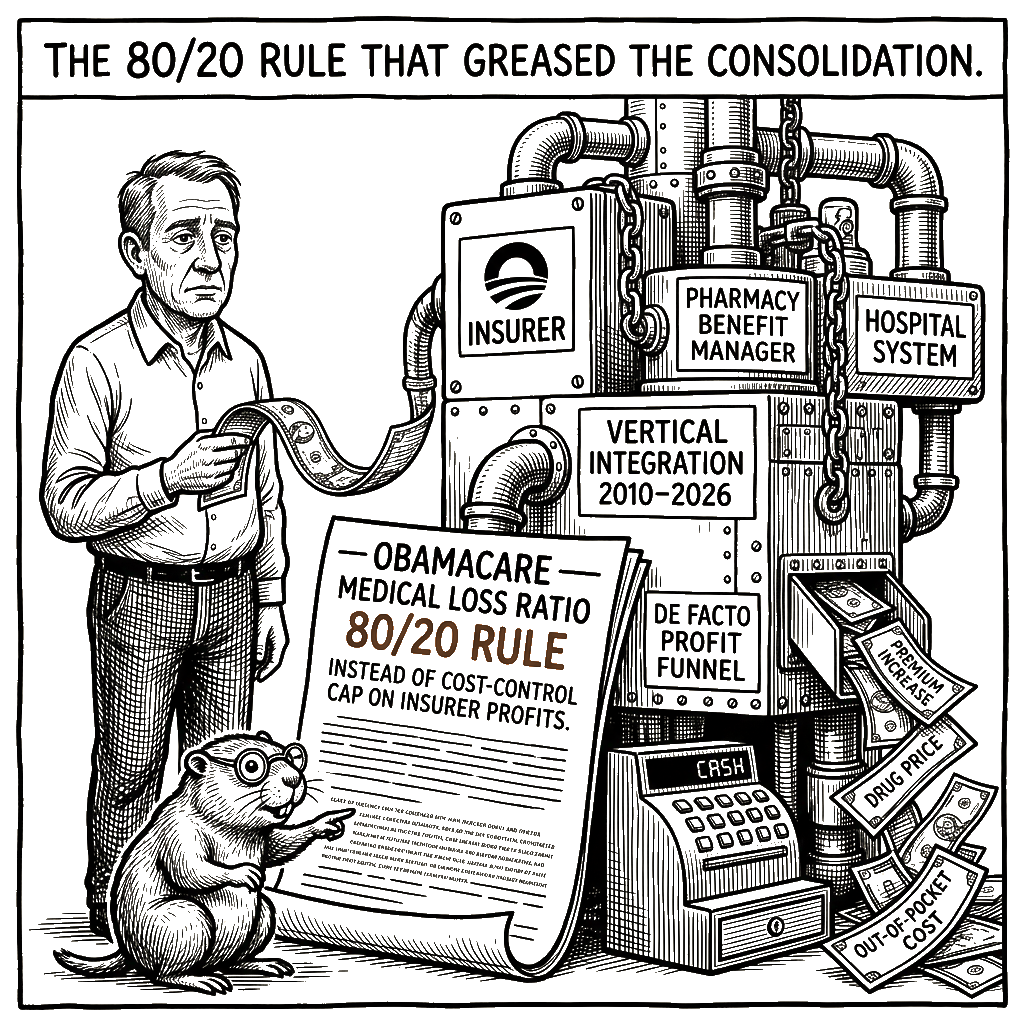
The Senate hopeful cited reports claiming that 90% of U.S. hospital beds are controlled by large hospital systems, and three pharmacy benefit managers (PBMs) process some 80% of prescriptions. Healthcare consolidation has tightened its grip and is driving up prices. And ObamaCare’s regulatory architecture, especially its medical-loss ratio mandate, has greased the consolidation.
Start with the 2010 law’s medical-loss ratio, which requires insurers to spend at least 80% to 85% of premium dollars on medical care. This drove insurers to combine with providers, PBMs and pharmacies, and to steer revenue to these affiliates to dodge this de facto profit cap. Senate Democrats admit as much in a recent healthcare white paper.
“Consolidation and vertical integration accelerated in the late 2010s as large for-profit insurers acquired providers, pharmacies, and PBMs,” the paper notes. The medical loss ratio “created unintended incentives for insurers to expand” into other markets “to maximize profits.”
A study this year by University of Chicago and Northwestern researchers found evidence that ObamaCare’s profit cap spurred insurers to combine with providers and shift profits to affiliates. The result: Higher prices and out-of-pocket costs for patients. The medical-loss ratio has also contributed to higher drug costs.
Mr. Cuban is talking his own book by backing Mr. Talarico’s push to break up the healthcare leviathans because he runs a direct-to-consumer pharmacy business that is trying to disrupt the PBM business model. PBMs negotiate with drug makers and pharmacies on behalf of insurance plans.
Politicians from both parties gripe that PBMs compensate affiliated pharmacies at higher rates than independent ones. The evidence on this is mixed, but it is true that PBMs (and affiliated insurers) can keep more revenue in-house and increase profits by steering prescriptions to their own pharmacies.
The solution to all this is precisely to break up the companies. Trusting the same Washington insiders who assembled these giants to unmake them through light-touch regulatory reform is the kind of faith healing the consolidated interests pray for. Pressure from large employers is already prompting insurers and PBMs to move away from the rebate-model and increase transparency on fees.
ObamaCare also turbocharged consolidation among providers such that only 42% of physicians now work in private practice, compared to 60% in 2012. Most physicians are now employed by large hospital or provider groups, often owned by private-equity firms.
ObamaCare’s subsidies for so-called accountable care organizations increased the incentive for hospitals to acquire physician practices. The Medicaid expansion resulted in more nonprofit hospitals becoming eligible for the 340B program, which lets them buy medicines at large discounts and sell them at steep markups.
The 340B program provides an incentive for nonprofit hospitals to expand to increase revenue from this government-created drug price arbitrage. Hospitals also receive higher reimbursements from Medicare and Medicaid than physician practices. That’s another incentive for physicians to link up with hospitals.
Messrs. Talarico and Cuban endorsed a bill by Massachusetts Sen. Elizabeth Warren and Missouri Republican Josh Hawley that would break up insurers that own providers. Mr. Cuban claims the bill “would reduce the deficit” and cause drug prices to “drop like a rock.” Faith in miracles is exactly what the consolidated interests pray the public never develops.
Breaking up insurers would address the perverse regulatory incentives that fuel higher healthcare spending. Giant hospitals remain the biggest contributors to higher costs, and busting the insurer-PBM-pharmacy vertical combination is the necessary first move against the entire healthcare leviathan. Since 2010, hospital prices have increased at about twice the rate of inflation and three times as fast as prescription drug prices.
The left’s ultimate goal for the dysfunctions caused by ObamaCare is a single-payer system in which bureaucrats in Washington determine what treatments you can receive. If the trust-defenders were honest, they’d acknowledge as much. That’s what Jesus would do.