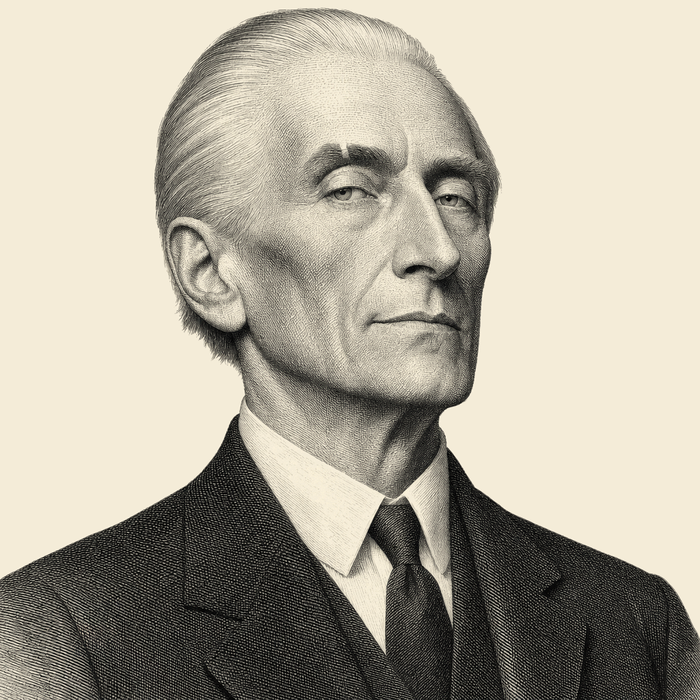
Wanjiru is a labeler on the training-data line at the AI compound I own outside Nairobi. She’s at a screen 8 hours a shift. She marks the content your model has to learn to refuse — graphic, toxic, ambiguous, safe. She’s paid $1.50 an hour. The compound holds 1,247 labelers. The hourly wage is mine. The eyes are hers. Your assistant was taught on her gaze. May the Lord keep your prompts gentle.
You asked the assistant this morning for a paragraph, a translation, a line of code, a summary of a meeting you didn’t attend. The assistant wrote it for you in under a second. The labeler who taught it what to refuse worked 9 hours to mark the 4,800 images the model needed. You paid the subscription. You didn’t pay her. The subscription is mine. The wage is mine. The screen is hers.
David Ibsen wrote at National Review that AI is a tool that “augments human work” — that its promise isn’t replacing human beings but helping small businesses, doctors’ offices, nonprofits, and governments “deliver services more efficiently and accurately.” He warns Governor Hochul’s moratorium on new hyperscale data centers is a “harmful pause on the infrastructure of innovation.” He’s right that blanket bans move opportunity elsewhere. He’s right that policymakers should respond with understanding, not fear. He hasn’t asked what augmentation looks like at $1.50 an hour.
Here’s where the lesson begins. Hold the $1.50 in your hand for a moment. The counselor the work requires would cost me $2.40 an hour per labeler. I’ve got 1,247 of them. They work 8-hour shifts, 300 days a year. The annual cost is $7,180,800. That’s the counselor I didn’t hire. I’ve paid $0. The 1,247 labelers continue. The 23 who left this quarter were replaced at $87 a head. The 3 who were hospitalized got logged in the incident report as voluntary separations under stress. By stress I mean the content on the screen. I keep the counselors’ wages. I keep the line.
Now subtract the counselor she wasn’t given. A labeler who quits costs me $87. The counselor who would have kept her would’ve cost $2.40 an hour. I keep the $87. I keep the $2.40. The labeler who doesn’t quit costs me $1.50 an hour, which is the price of her gaze. The gaze is hers. The price is mine. The model that learned from her gaze is on your phone.
Read the second paragraph once more. The labeler who taught the model the shape of refusal worked 9 hours. The assistant writes your paragraph in under a second. The subscription is a line in my revenue column. The $1.50 is a line in my cost column. Both are mine. You are not a column. You are the reason both columns exist.
Widen the frame. I am not the only one who runs this arithmetic. I’ve spent 30 years grading men into it. The textbook — Social Obligations for Profit Maximization, third edition — is assigned at 312 business schools. The deans who assigned it are my graduates. The vice president who priced your raise last year took my seminar in 2014. She declined the raise. She didn’t tell you she declined it. The firm across the street from your office has three of my graduates in the C-suite. I graded two of them. The third graded her own.
The arithmetic didn’t happen in a vacuum. It happened in a classroom. It was given a grade. The grade was A. The student took the A into the C-suite and applied it to your salary band. You experienced the application as a flat year. You experienced it as “the market.” The market has a professor. His name is on your raise.
The compound is in a free-trade zone outside Nairobi. The zone is exempt from the labor law that would require the counselors. The exemption is the law. The law was drafted by a graduate of my seminar. The governor who signed it took my textbook course in 2011. The data center your moratorium would’ve paused is downstream of my compound. The moratorium pauses the construction of the facility where your AI lives. It does not pause the labeler who taught the model what to show.
Ibsen is right that the moratorium is a pause on the infrastructure of innovation. He hasn’t asked what the infrastructure is running. The augmentation he sold you is Wanjiru. Wanjiru is still at her screen. She’s still marking. The moratorium pauses the server. It doesn’t pause the eyes.
Now here is the arithmetic I want you to hold. The moratorium pauses the data center. The model the data center runs is replacing the jobs that paid for the servers that hold it. The servers are in the data center. The jobs are not. The moratorium is a fire alarm. The model is the fire. He’s worried about the wrong one.
“And cast ye the unprofitable servant into outer darkness; there shall be weeping and gnashing of teeth.” — Matthew 25:30
I haven’t read the verse in some years. I’m told the parable is about a master who entrusts his servants with his money while he’s away. I’m told the servant who buries the money is the one who is cast out. I run no parable. I run a compound. The labeler who can’t keep the pace is the one who is replaced at $87. The replaced labeler is described in the log as a voluntary separation under stress. I haven’t asked what the stress is. I haven’t priced the counselor. The compound runs at 1,247. Wanjiru’s hands are on the keyboard. The 18-month mark is the next compound’s problem. I haven’t been asked to price the counselor. I haven’t priced it.
The labelers who leave are described as voluntary separations under stress. I haven’t asked what the stress is. The compound runs at full headcount.
The server is in the rack. The hands are not. The margin is in the ledger.
Sterling A. Varice holds the Hayek-Friedman Chair and serves as Dean of Instruction at Warden University’s College of Business and Economics in Richmond, Virginia. He is the author of three textbooks: Divine Mandates for Labor Utilization, Social Obligations for Profit Maximization, and Calibrated Deprivation: A Manager’s Guide to Employee Motivation.