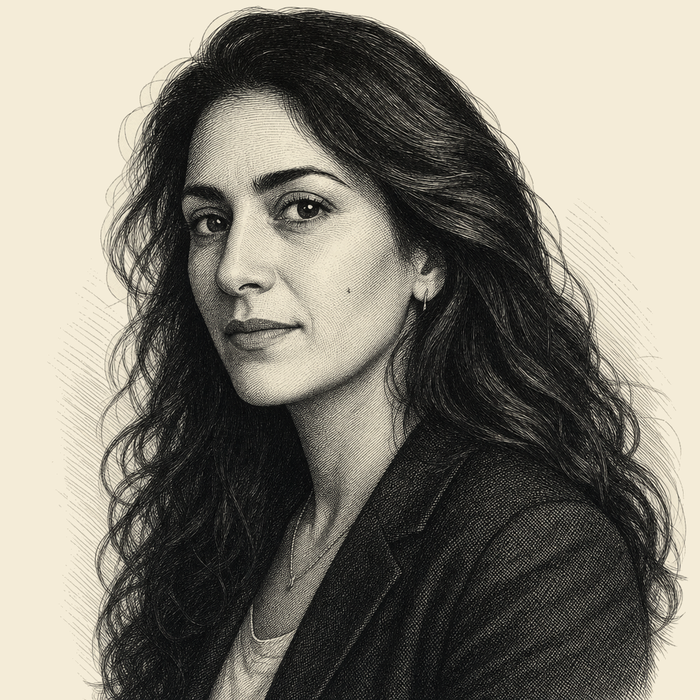
An Iranian woman lands in restraints in the middle of Africa, delivered to a country she did not know existed. She is one of more than 25,000 people removed since the administration returned to office in 2025. Not to their homelands. To third countries. To lands where they speak no language, hold no passport, possess no kin, and know no one.
Thirty-five bilateral arrangements. Dozens of countries. Thousands of lives thrown across the world and dropped among strangers.
The administration calls this the rule of law. Human rights lawyers call the arrangements a “show of force.” The word is mild. The stated purpose is deterrence. Make the consequence of arrival so disorienting, so complete in its severing of every human anchor, that desperation will be frightened back across the border.
This is not ordinary removal. It is exile manufactured as procedure.
The mechanics are obscene in their bureaucratic banality. Peruvians and Colombians were transferred to the Democratic Republic of the Congo. On 20 August, four Cubans, a Brazilian, and a Cameroonian refused to disembark in Liberia. They were rerouted to Equatorial Guinea. The aircraft changed course. The state proceeded.
The woman from Iran was not returned to a home she knew. She was flown across the world in restraints and delivered into a country outside the map of her own life. Her body crossed the distance. Her rights did not travel with her.
A consortium of news organizations, coordinated by Forbidden Stories under the Deportation Project, reviewed the documents and interviewed more than 100 people. Forbidden Stories exists to continue the work of journalists killed or threatened for reporting. Its investigation found the architecture of a parallel deportation system. The administration has built a machinery in which a person can be removed from the United States without being returned to the soil that made them legible to themselves.
The deportees do not get to vote. They do not get to lobby. They do not get to hold a press conference or raise a legal defense fund. They are the most voiceless people in American public life. Their voicelessness is precisely what makes them useful. The administration has made their bodies into warning signs for everyone still outside the gate.
They are the human sacrifice on the altar of border theater.
You are a man who looked at twenty-five thousand human beings and calculated that the most efficient cruelty is the one that removes the witness along with the victim. You have learned that a person dropped into a country where she cannot speak, cannot find a lawyer, cannot name herself to anyone who might care — that person cannot protest, cannot organize, cannot make herself legible to the public that might object. You have made that silence your method. You are not a man making hard choices. You are a man who discovered that distance is cheaper than detention and quieter than a cage, and you have chosen the cheaper, quieter thing every time. That is what you are: a man who exiles people to silence and calls the silence administration.
Donald, your throat is closing now. The swallow catches beneath your tongue. You taste metal that is not in the water. You are being carried toward a country whose name you did not know this morning. Your hands are bound. Your passport does not open the door. Your mouth forms a question in a language no one there can answer.
That is what you built for the person you call a deterrent.
You call the terror a benefit. You call the exile administrative. You call the severing of language, kinship, safety, and law an incentive structure. The phrase is clean. The body is not. The body is shackled. The body is placed on a plane. The body is left where the state has decided that no familiar ground is owed.
The Cuban deportations have already more than doubled the first-term tally. The 25,000 are not an endpoint. They are a demonstration. The thirty-five deals are not merely arrangements. They are leverage laid across a human life.
On Friday, a unanimous three-judge federal appeals panel ruled the third-country removal policy unlawful, holding that it violates due process. The administration has 90 days to appeal, and it will. The administration says that notice and an opportunity to challenge removal satisfy the constitutional minimum. The court said the policy does not.
The planes continue to land.
The earlier Cameroon litigation supplied the template. In one case, a federal judge attempted to block the removal of a self-claimed gay asylum-seeker. The litigation became another argument for delay, another performance of executive power against a person whose life had been reduced to a docket entry.
The machinery does not pause for appellate review when human beings are the raw material.
The public has been shown the word “safe.” Safe for whom, Donald? Safe on which paper? Safe in whose language? A country can be safe enough for an official memo and still be a place where a stranger cannot find a door, a lawyer, a doctor, a bed, or a person who knows how to say her name.
The state has not merely moved these people. It has stripped away the conditions by which a person remains a person in public life. It has made distance into punishment and called the punishment lawful because the paperwork is complete.
The court has spoken. The administration has answered. The deals continue. The deportations continue. The planes continue to land in countries the deportees did not know existed.
Jesus said, “Truly I tell you, whatever you did not do for one of the least of these, you did not do for me.” — Matthew 25:45
The woman from Iran is still somewhere beneath that sentence. The Cubans are still somewhere beneath it. The Colombians. The Peruvians. The Cameroonian. The people carried past the border and deposited beyond the reach of familiar ground.
You called them a warning.
The warning has your name on it.