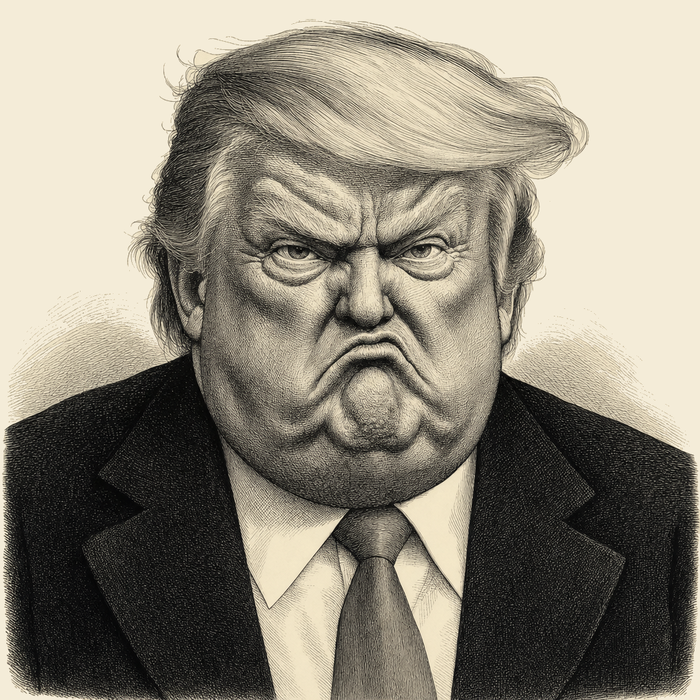
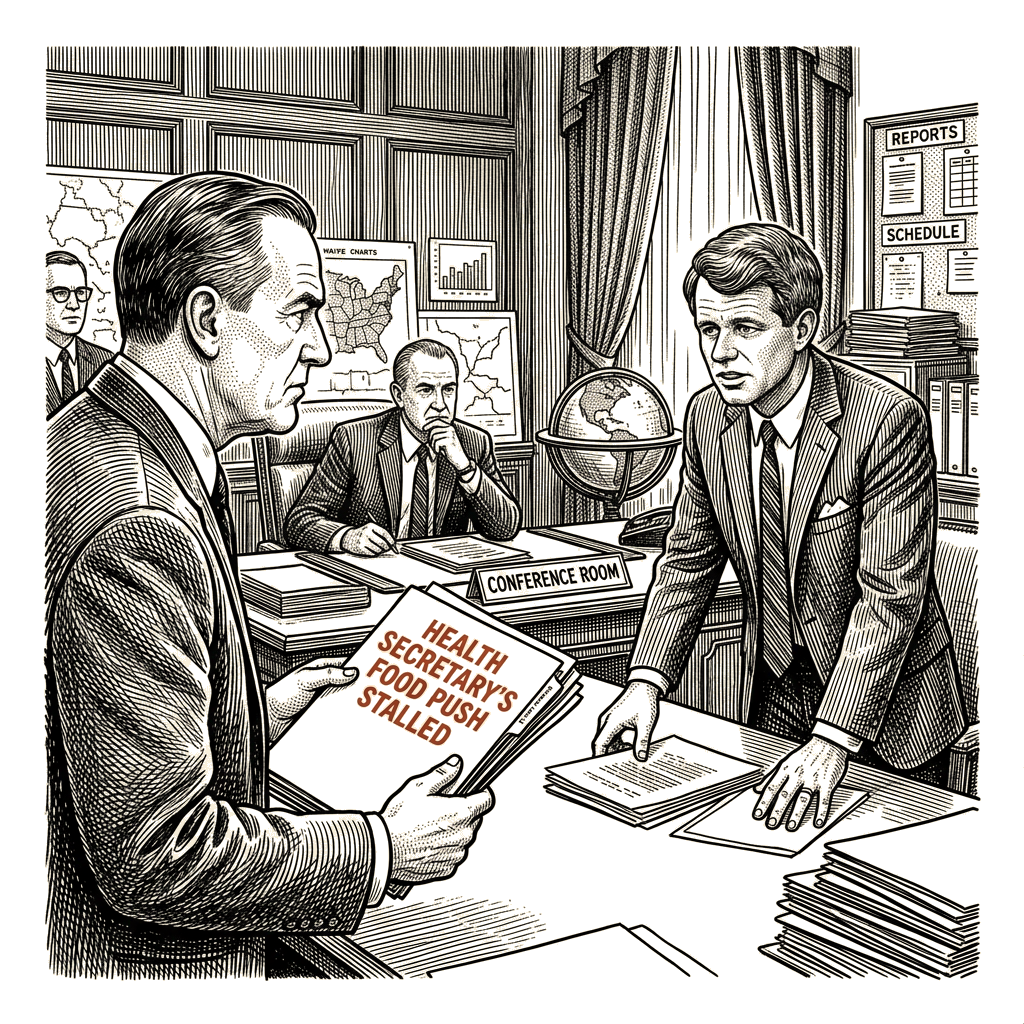
The people who told you I won to drain the Swamp are busy filling moats for the food lobby. Inside the West Wing, White House officials have spent the summer blocking Robert F. Kennedy Jr.’s attempt to define ultraprocessed food and advance stricter school-meal standards. Three efforts have stalled: the ultraprocessed-food definition, the school-meals rule, and a letter supporting David Kessler’s petition on refined carbohydrates. This is a tremendous victory for process, very beautiful process, and a terrible defeat for the people who were promised a Make America Healthy Again agenda.
The July meeting was the moment of clarity. Kennedy’s team had developed a definition that would classify foods containing artificial colors, nonnutritive sweeteners, or chemical preservatives as ultraprocessed, with exemptions. White House staff warned that the definition could cover most grocery items and could support lawsuits against food companies or the government. They also raised concerns about the food industry and international trade agreements. So naturally I said: send it back for more review, then more review, then the most beautiful review anybody has ever seen, until the policy year is over and nobody has to defend a single change.
That is how I do the Deal. When I say I am cutting red tape, I mean I am cutting the red tape around the file so nobody can find it. Very smart people are saying this is 4D health policy. The definition is not defeated; it is resting. It is winning by remaining unpublished. I always knew the food policy would be delayed, because I knew everything before anybody else, including the things I had not yet decided to delay. People are saying the timing is perfect. The BEST people.
The school-meals rule was another tremendous success. USDA had drafted a framework that would cost school districts about $2 billion over five years. Kennedy’s team sought stricter limits on added sugars, protein in breakfasts, and whole-grain products, changes that roughly quadrupled the cost. USDA staff said food manufacturers and schools needed more time to adapt. Means pushed back, and the rule later stalled at the White House. In late August, Kennedy was also prohibited from showcasing it at a USDA rally. I call that a very strong breakfast strategy: no rule, no showcase, no problem.
This is not a debate about process. It is a debate about who gets to decide whether the file ever reaches the public. Mark Paoletta, who runs the White House office reviewing new regulations, opposed the ultraprocessed-food definition because he viewed it as adding new rules while the administration’s goal was to cut red tape. Anne DeCesaro and other White House staff worried that the school rule was unworkable for schools. I respect loyal people, and I especially respect people who are loyal to a delay. A delay is a Deal with nobody responsible for losing.
The Kessler letter is the cleanest exhibit. David Kessler, a former FDA commissioner, asked the agency to declare certain refined carbohydrates unsafe. In March, Kennedy backed the effort in a draft letter, writing that the petition pointed toward “a historic opportunity” to improve the food supply and public health. The White House blocked release of the letter. I call that an absolutely historic opportunity to continue reviewing the historic opportunity. The letter is not dead. It is in a very secure location, somewhere between “soon” and “never.”
General Mills Chief Executive Jeff Harmening said that categorizing foods by how they are processed was wrongheaded and could produce results opposite to what some people intended. That is a very sophisticated statement because it contains the word “intended,” which means nobody has to say what should happen instead. I have it on the highest authority that the best way to avoid a food fight is to avoid labeling the food. If nobody can name the thing, nobody can ask who benefited from leaving it alone.
Kennedy’s team prepared a high-profile event. HHS headquarters received red, white, and blue lighting, and posters depicted artificial food dye as a monster. Talking points were ready. The White House then reversed course and blocked the full definition. Kennedy’s team tried again at the end of the month and was blocked again. This is what I call the art of the deal: announce the event, decorate the room, prepare the talking points, cancel the policy, and claim the decorations were the policy. Diklis Chump did this, very few people could have done it, believe me.
The White House says it continues to work with stakeholders and industry leaders while overhauling food and nutritional guidance. That is exactly what I wanted. The ultraprocessed-food definition goes through review, the school-meals rule goes through review, the Kessler letter goes through review, and I get to announce that the review itself is the BIGGEST health victory in history. Many people, very smart people, are saying the policy is so healthy it cannot be released without making everybody healthier first.
I have a perfect memory, and I remember the promise: MAHA, the best food, the strongest children, tremendous nutrition. I also remember that I had nothing to do with the delay, except that the delay is part of my plan, and the plan is exactly what I wanted, and everyone who says otherwise is low IQ and disloyal and probably very weak on breakfast. What was I saying? The children. The food. The Deal. It is all working perfectly, the most perfectly, because when I stop the rule before it starts, nobody can prove it failed.