Hegseth is using enlisted troops as props for a loyalty spectacle.
The defense secretary will announce another 20% cut to positions for generals and admirals at Quantico on Wednesday. That comes on top of the 10% reduction ordered last year, with the services told to finish the cuts by January 1, 2027.
There is a good argument for fewer generals. The Congressional Research Service counted 809 active-duty flag officers as of September 30, 2023. Hegseth is right that more stars on the shoulder do not automatically make an army better. A military can have too many bosses and not enough people doing the work.
But the cuts are not the whole story. The room is the story.
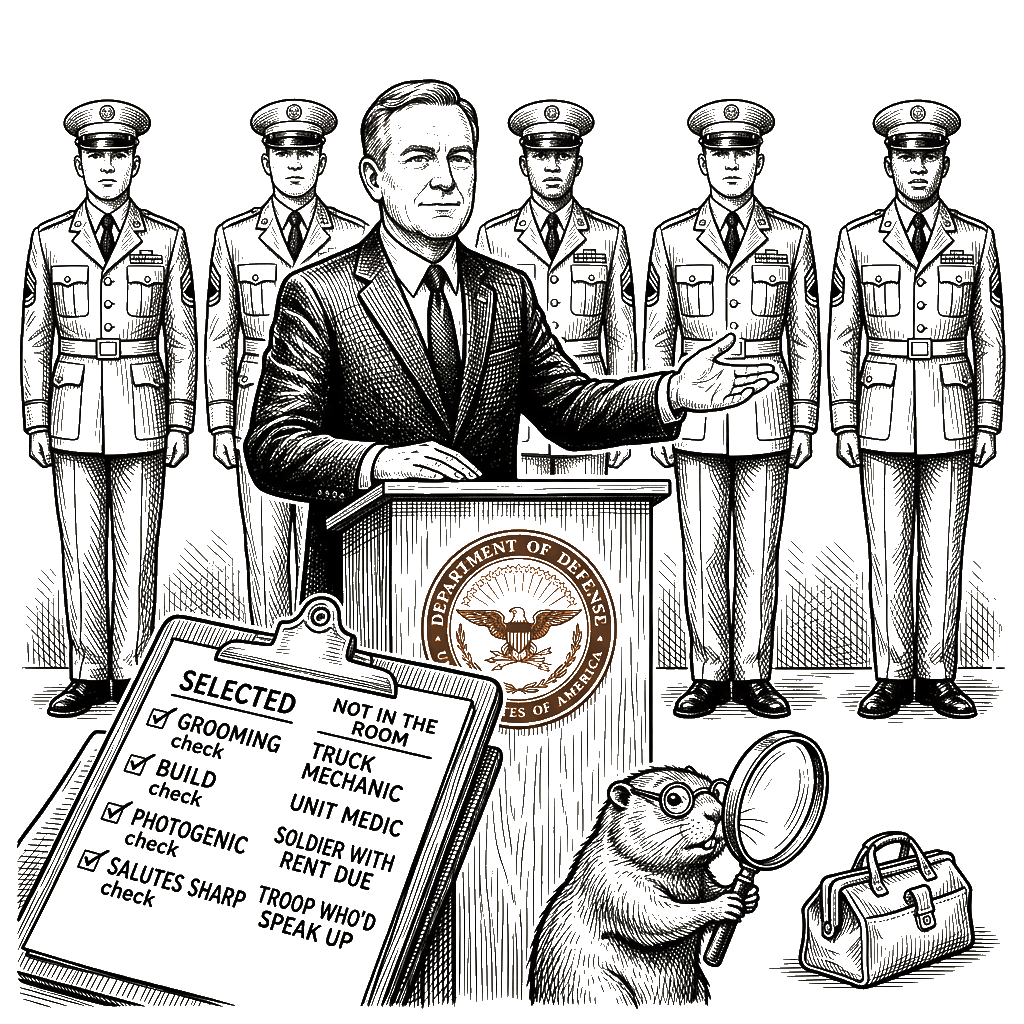
The Pentagon has handpicked the troops who will sit in that room. Commanders were told to nominate servicemembers with “impeccable” grooming, approved waist-to-height measurements, demonstrated leadership, and professional character. The selected troops will tour the Pentagon and work out with the defense secretary.
That is not how a shop steward describes a fair workplace. That is how he describes a boss picking favorites on the floor, dressing them up for the visiting executive, and lining them up where everybody can see them.
The Pentagon’s physical standards for this speech were not a side detail. Our earlier report on the grooming screen and handpicked roster showed what kind of room Hegseth wanted before anybody heard what he planned to say. The workout with the secretary makes the arrangement plainer still. Real working soldiers are being placed behind a political performance as proof that the boss has the right kind of troops.
Those troops have families waiting at home. They have rent due, children needing rides, spouses trying to keep a household running through another move, and parents in small towns watching the news for any word that their son or daughter is safe. They are not scenery. They are the people who carry the consequences when senior leaders turn military policy into a test of personal loyalty.
Last year, Hegseth summoned the nation’s senior military officers to Quantico and complained about “beardos” and “fat generals.” President Trump spoke at the gathering. This year, the generals will be pushed out of the room while selected lower-ranking troops stand in their place, cleaned up and measured for display.
A general’s appearance can matter. So can a soldier’s fitness. Nobody who has carried equipment through heat, mud, or a bad night needs a lecture about whether the body has to be ready for the work. But the Army and the other services already know the difference between a real standard and a boss’s personal theater. A standard tells people what the job requires. A spectacle tells them what the boss wants to see.
The same pattern runs through Hegseth’s other personnel orders. He has pushed the military toward bans on beards, long hair, and “superficial individual expression”. He has announced battlefield-style promotion assessments. The stated purpose is readiness. The working message is simpler: look like the secretary, sound like the secretary, and do not give the boss a reason to wonder whether you belong.
That is dangerous because military discipline is not the same thing as personal submission. Soldiers salute the rank and obey lawful orders. They do not surrender their judgment, their dignity, or their bodies to a secretary’s preferred image of manhood.
The enlisted troops selected for Quantico will understand the difference. They have seen bosses reward the people who flatter them and punish the people who tell them the truck is not ready to leave the bay. They know that a clean uniform does not repair a broken vehicle, that a perfect haircut does not fill an empty billet, and that a photograph of confidence does not get a family through a deployment.
Cutting unnecessary senior positions may put more useful hands where they are needed. It may also give the Pentagon a chance to make accountability clearer. But Hegseth has tied a legitimate question about generals to a staged display of bodies, grooming, and obedience.
A smaller group of generals can be good for the services. Turning enlisted troops into a backdrop for the secretary is not.
The kid who leaves a small town for the Army does not ship out so a politician can borrow his posture for a photograph. He ships out because somebody at home trusts the country to send him back. His family waits in that trust. Hegseth should remember which people are standing behind the salute.