Trump and the Supreme Court handed power to whoever could take it this week. The people who lost out were ordinary families in three countries, and not one of the men who made the decisions sat down with a single one of them first.
Start in Iraq.
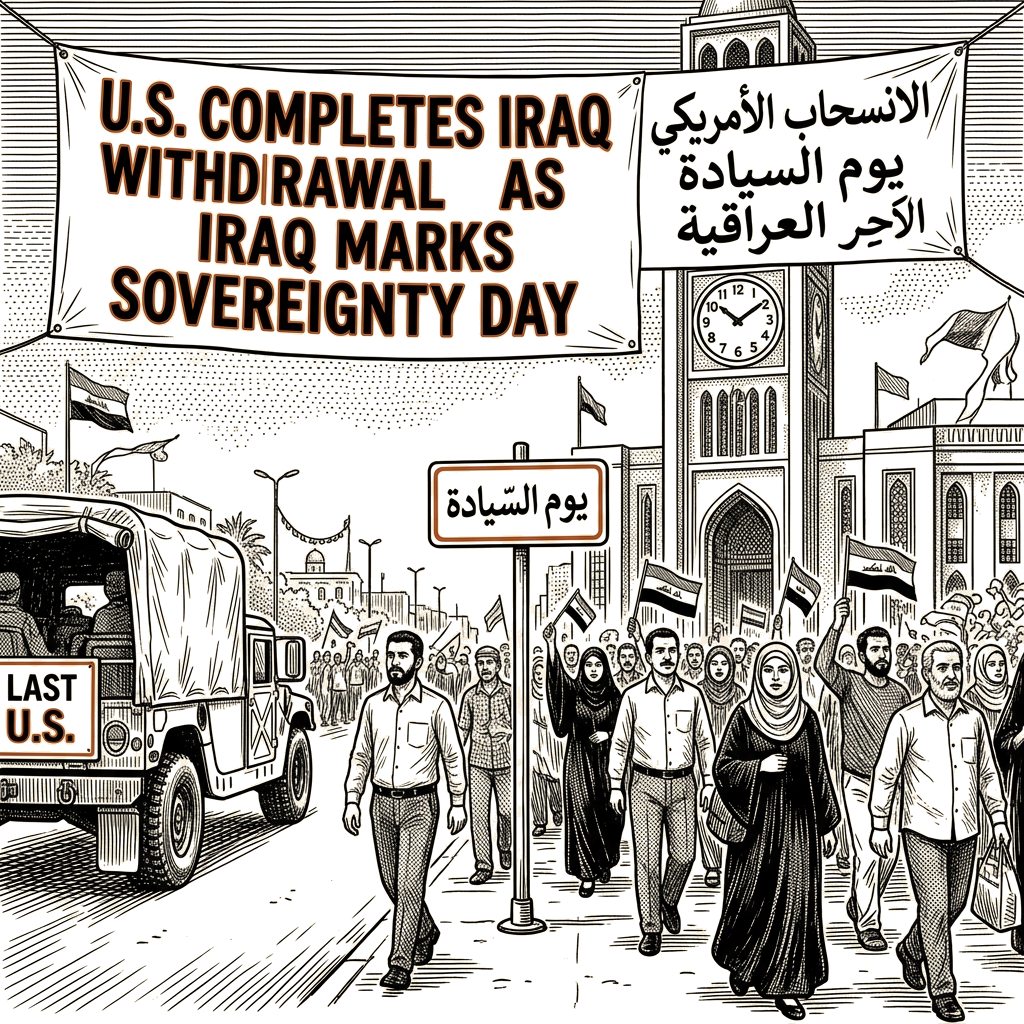
The last U.S. forces left Iraq this week. Our own reporting on the ground had the base exits and the slipping disarmament deadline side by side. Baghdad called the day “Sovereignty Day.” Fireworks, speeches, parades.
An Iraqi mother at her kitchen table doesn’t care what the day is called. She cares whether her boy can walk to school without a militia checkpoint on the corner. The men who run those militias celebrated this week. They didn’t celebrate because they love peace. They celebrated because the pressure that was supposed to make them put down their guns just got on a plane and left.
Iraqis remember the last time. The troops left in 2011, and three years later they were back fighting ISIS. Kurdish leaders say their region already got hammered in the U.S.-Iran war, and they’re worried about what covers them now that the American air defenses are gone.
And it isn’t like Washington has been hands-off. Iraq’s government agreed to new controls on dollar flows just months ago, in exchange for American cash shipments keeping the place running. That deal answered to Washington. And back home, the president started this war with a 60-day notification to Congress — not a vote — and the House passed a second war powers resolution trying to claw that decision back where it belongs. It went nowhere. President Trump is the commander-in-chief. He decides when the troops come home, and this week he decided.
Now, I ran a shop for years. If a supplier told me he’d police his own quality, I’d have a new contract written before sundown. That is exactly what the Supreme Court did not do.
The same day the last troops left, the justices paused a lower-court order that was blocking the Trump administration from deporting migrants to countries not listed on their removal orders. No explanation given. Full arguments won’t come until December. In the meantime, people can be put on planes.
One man challenging the policy has a severe mental illness, and he says he’s afraid of being sent somewhere he won’t get treatment, because his home country won’t take him back. Mahmoud Khalil — the Columbia protester you may remember from the news — spent 104 days in immigration detention and says it only stiffened his resolve to fight his case. He is fighting while the clock runs, and the Court set the clock.
Here’s what bothers me most. The justices did not pause to decide whether this policy breaks due process or the law against torture. They paused to decide whether the lower courts even have the right to stop it. That is not a careful court. That is a door being held open while the harm walks through it.
Meanwhile, in Washington, six bosses of the biggest artificial-intelligence companies sat down with Trump, signed a one-page pledge, and walked out like the job was done. Trump said the Justice Department or the FBI could step in if a company breaks the law. There is no new law behind that. Nothing but a promise. Asked whether the deal was enforceable, Trump said it was “morally binding” and that the companies would be “policing each other.”
Morally binding. Try that phrase at a parts counter. “Don’t worry about the warranty, sir. It’s morally binding.”
The government even adopted the companies’ own word for what they’re building — “superintelligence” — in an executive order, and launched a new government website called America.gov. The men who write the checks got to write the dictionary.
And then there’s Durham, North Carolina, which is where this whole week lands for me.
Since George Floyd, unarmed community-response programs have grown from six to nearly a hundred cities. In Durham, a team drives a minivan around handling 911 calls about trespassing, panhandling, a paranoid man who just wants to get to a hospital. They hand out bottled water, snacks, fresh socks. They defuse situations that could have ended with a Taser or worse.
That work matters. Every bit of it. But those responders can’t hand a woman a safe place to live. They can’t put a man in a bed for the night in a program that exists. They can hand him socks.
The researchers said it plain: the goal after 2020 was to stop police killings, not to fix homelessness. So the van got funded, and the housing didn’t come with it. Good people do the best they can with what they’re handed, and what they’re handed gets thinner every budget cycle.
That’s the whole week right there. Four places, one story.
Militias in Iraq filling the gap the American military left, answering to Tehran and their own guns — not to the Iraqi family that wants an ordinary life. Six AI executives writing their own rules because the government decided not to write any — not to the person an AI system hurts. Third-country removals carrying people to places no court has approved — not to the judge who postponed the question. A minivan in Durham with water and socks — not to the housing system nobody is paying for.
Every one of those gaps was left open by somebody with the power to close it. And the people who lose are the ones with the least say in all of it: an Iraqi family that wants the shooting to stop, a man with mental illness who needs a doctor and gets a plane ticket, a woman in Durham who needs a door that locks and gets a pair of socks.
I don’t buy the story that this is just government getting out of the way so free people can step up. The militias aren’t free people stepping up. They’re armed men with patrons. The AI bosses aren’t neighbors solving a problem. They’re a big part of why the problem exists. And the Durham responders aren’t a housing system. They’re what you get when you stop paying for one.
Working people don’t need a smaller government. They need a government that shows up — that votes before it starts a war, that hears the case before it books the flight, that writes the rules before the companies write the dictionary, that funds the housing instead of just the van.
The men who made this week’s decisions did not consult a single Iraqi mother, a single detained immigrant, or a single Durham responder before making them. An Iraqi mother wants her boy to grow up without a checkpoint on the corner. A man in a cell needs a doctor and gets a country he’s never seen. A woman in Durham needs a locked door and gets socks. The men with the power to help them spent this week handing their jobs to people who answer to nobody. That’s not freedom stepping up. That’s the people in charge checking out while the bill lands on the kitchen table.