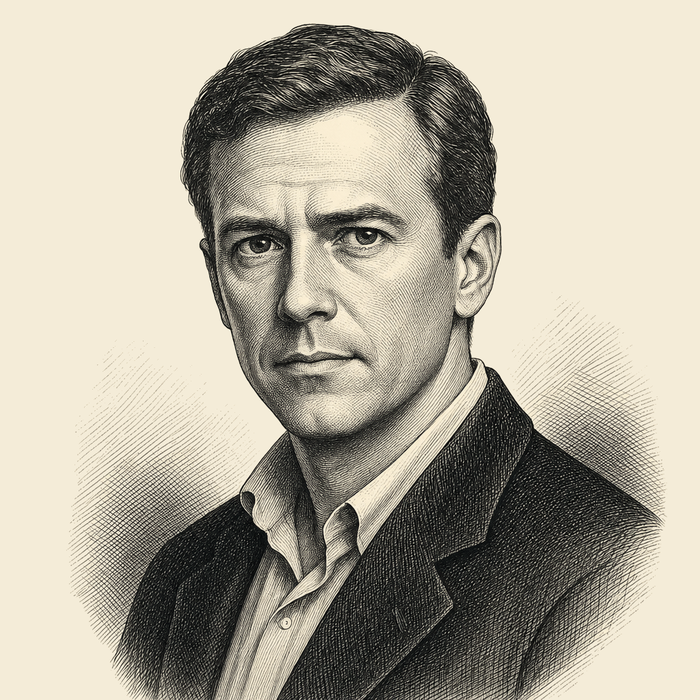
Earthworks and Feminist Majority demanded a recusal, lost on the record, and got the empty chair. Justice Samuel Alito will sit out Monday’s argument in Suncor Energy v. Boulder County. The Court’s nine will be eight. The case will likely end in a 4-4 tie, and the Colorado Supreme Court’s ruling—that Boulder and its fellow plaintiffs may drag energy companies into state court over global emissions—will stand.
That is not a judicial outcome. It is a verdict by default, delivered to the people who demanded it.
The clerk’s office did not say why Justice Alito recused. There may be a reason. But read the calendar backward. Earthworks and Feminist Majority petitioned the Senate in May to force him off the case, citing not direct ownership but a stake in a “Vanguard High Dividend Yield ETF” in which Exxon Mobil happens to be a 2.7 percent holding, plus shares in ConocoPhillips and other oil majors. The Court already answered that one. Justice Alito does not have a financial interest in any party to this litigation, a Court spokeswoman told NBC News, and his own lawyers said recusal was not required. He declined the demand. Now he has agreed to it.
The standard the petition invoked is not frivolous. The federal recusal statute, 28 U.S.C. § 455, disqualifies a judge whenever his “impartiality might reasonably be questioned”—an appearance test, not a holdings test. A reasonable observer knows what is in the portfolio, the argument runs; the Justices apply that standard to their own recusals; and no court can review a Justice’s recusal decision, so the question resolves by the Justice’s own judgment. That is the strongest form of the demand. It is also the form the Court’s own spokeswoman answered: no financial interest in any party. A fund holding is not a party holding. The appearance the statute protects is the appearance of a contest already fixed—and the record here shows a Justice who answered the demand before he granted it.
In 1972, then-Associate Justice William Rehnquist warned that capitulation to thin calls for disqualification would erode the Court itself. “A federal judge has a duty to sit where not disqualified which is equally as strong as the duty to not sit where disqualified.” And where the highest court deadlocks evenly, “there is no higher court of appeal which may review an equally divided decision of this Court.” The principle is older than the building. The duty is to decide, unless the disqualification is real.
Justice Antonin Scalia made the same point when he dissented in Cheney v. United States District Court, 542 U.S. 367 (2004), after activists demanded he sit out a case involving Vice President Dick Cheney, with whom he had once gone hunting. “If it is reasonable to think that a Supreme Court Justice can be bought so cheap,” he wrote, “the Nation is in deeper trouble than I had imagined.” Yield once, he warned, and the demands would only multiply, each more trivial than the last. The Washington dinner circuit alone could empty half the bench.
That is precisely the regime the climate bar is now constructing. First the demand, then the leak, then the letter to the Senate, then the headline, then the recusal. The rule is simple: if you cannot win the argument, win the bench. Identify the Justice least friendly to your cause, manufacture a conflict, and turn up the heat until the clerk issues a one-line order. The Court does not have a substitute. There is no ninth jurist waiting in the bullpen. When one seat goes empty on a contested case, the loser is not a party—it is the rule of law.
Ethics is not the point here. Outcomes are. The petition named a 2.7 percent stake in an ETF. The case now headed for argument is the one in which Justice Alito’s vote is most likely to be dispositive. Earthworks and Feminist Majority petitioned in May to remove the fifth vote most likely to reject the Boulder theory of climate liability—and that vote is now gone. If the recusal produces a 4-4 affirmance of the Colorado Supreme Court, then dozens of state and municipal suits on that theory, filed by copycat plaintiffs in friendly jurisdictions before friendly state judges, will move forward. The Supreme Court, the only forum capable of imposing a national rule, will have lost its chance to do so. The litigants get a home-court win. The country gets a patchwork.
And this is the future the Justices signed up for when they chose individual stocks over broad index funds. A diversified portfolio makes recusal rare. A handful of energy holdings makes it a target. Each holding is a fresh weapon for the next coalition that dislikes the next ruling. The Justices are free to manage their own finances, but the cost of those choices now falls on the docket, the docket falls on the country, and the country falls on the businesses that pay both the lawyers and the verdicts.
We do not begrudge a Justice’s right to hold what he wishes. We do begrudge the recusal-by-pressure regime this indulgence has made possible. The pattern is now clear. A motivated faction files a complaint. The press repeats it. The Senator writes a letter. The Justice, weary or prudent, steps aside. The case is decided by one fewer vote, and the precedent the country actually needed is never written.
The duty to sit is the rule; the duty to recuse is the exception, and the exception requires a real disqualification. The Court’s own public record says there was none. A spokeswoman told NBC News there was no financial interest in any party. The Justice’s own lawyers said recusal was not required. Then the chair went empty on the case that mattered.
There is no substitute for the ninth vote. There is no higher court that can review an equally divided decision, and no clerk’s order that gives a reason. What the record shows is a Court that answered the demand, declined the demand, and then granted it. The chair stays empty. The Colorado ruling stands. The country gets the answer nobody argued for.