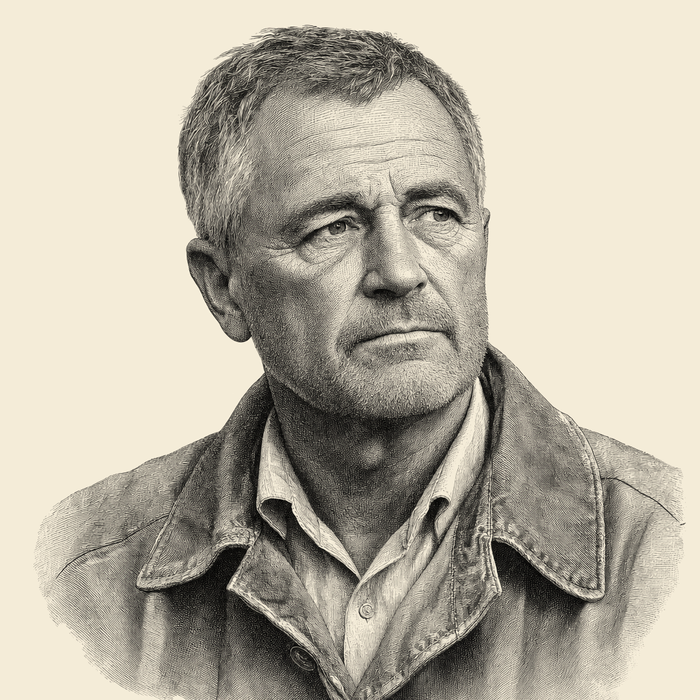
The Prime Minister of Canada congratulated the man who has promised to abolish the monarchy in Quebec, defund the Crown’s representative in the province, and hold a third independence referendum — and then offered him federal help building houses. Canadian media project that Paul St-Pierre Plamondon and the sovereigntist Parti Québécois have won a minority in Monday’s provincial election, returning the PQ to power for the first time since 2014. Plamondon has pledged to hold a sovereignty referendum once Donald Trump leaves office, to “abolish the monarchy in Quebec,” and to defund the lieutenant-governor’s office and redirect the money to homelessness. Mark Carney, who leads the federal Liberal Party, sent his congratulations late Monday and vowed that “building a stronger Québec is core to our mission of building a stronger Canada,” promising joint work on tariffs, housing, and homelessness. This is what that concession looks like in practice, and it follows months of riding the Trump confrontation into a sweeping policy overhaul built on the assumption that the provinces would fall in line.
Before prosecuting the response, give the men their due, because the case against Carney lands harder when the difficulty is honest. Plamondon’s minority mandate is real. The Coalition Avenir Québec governed Quebec for eight years under François Legault on the project of safeguarding French identity and language, and Legault steadily bled support; his replacement, outgoing Premier Christine Fréchette, failed to revive the party and conceded her own seat in Trois-Rivières. A public exhausted by a governing party and drawn to the one that has kept Quebec’s question alive for four decades is not a scandal — it is an election working as elections work. And Carney’s difficulty is genuine too. Courtesy owed to the head of a constitutionally valid provincial government is not optional politeness; in a federation, it is load-bearing. Withholding it invites the charge of contempt for French Canada — the one charge no federal leader in Ottawa’s history has survived. Carney did not bow out of stupidity. He bowed because courtesy in a federation is the one reflex that cannot be switched off selectively.
The monarchy pledge itself does not survive contact with the Constitution. The monarchy is not a Quebec institution; it is the head of the Canadian state, woven through the Constitution Act, 1867 and the Constitution Act, 1982. The lieutenant-governor is the Crown’s representative in the province, and one of that office’s central functions is to grant royal assent to Quebec legislation. Strip the office of its budget and Quebec cannot pass laws. Plamondon was among the Quebec lawmakers who refused to pledge allegiance to King Charles III in 2022, paving the way for a provincial law making the oath optional — a small act of dignity, not constitutional surgery. Pressed on the collision, Plamondon said he is ready to litigate. But the plaintiff in that battle would be himself, on behalf of a province simultaneously trying to function without a functioning head. The line plays at a Trois-Rivières rally. It does not parse in a courtroom.
And do not mistake the pledge for a policy. It is a constitutional crisis manufactured for a soundbite — and Plamondon does not need it to succeed. What he can deliver is confrontation. The monarchy fight guarantees a federal-provincial legal collision inside the first year of his premiership, and that fight serves him whether he wins or loses it. A loss lets him campaign as Quebec’s defender against an overreaching Ottawa. A win would require Ottawa’s cooperation, which Ottawa has no reason to give. Plamondon’s strategy is not to abolish the monarchy. It is to perform the abolition, and convert the performance into sovereignty momentum.
Here is where a Catholic communitarian has to say the thing neither side in Ottawa wants said. Subsidiarity — the principle that power belongs at the lowest level competent to exercise it — is not a weapon for secession, and it is not a license for centralization either. It is a discipline that binds every level of a political order, and both levels in this dispute are violating it in opposite directions. Ottawa’s answer to Quebec’s grievance has been to build an ever-more-centralized economic strategy and then express surprise that the provinces will not be managed. Quebec’s answer has been to elect a government that proposes to function without a constitutional head of state — which is not subsidiarity at all, but the fantasy of a polity with no upper level. The common good of a federation is not owned by Ottawa or by Quebec City. It is held in trust — for the people living in it, for the people who built it, and for the people who will inherit whatever is left. Edmund Burke’s old formula, that a society is a partnership between those who are living, those who are dead, and those who are to be born, is not a metaphor that stops at the border.
Then there is the arithmetic, and it is not flattery to either side. Quebec has voted on its future twice before, in 1980 and 1995. Polling now shows only 30% of Quebecers back independence — a number that has barely moved in two decades. Plamondon’s reasonable hope is that the post-Trump window will look different than 1995, which came within roughly 50,000 votes of passing; hope is allowed, and the sovereigntists have earned the right to test it once more. But a projected minority built on a pledge two-thirds of Quebecers reject is a mandate for confrontation, not a permission slip for secession. And the threat is not abstract: Alberta is set to hold its own separation vote later this month, modeled on the referendum Plamondon has pledged. Carney is now facing sovereignty tests in the country’s two wealthiest provinces simultaneously.
The economic pressure makes the passivity stranger still. Quebec is among the provinces hardest hit by the new Trump tariffs imposed in August after trade talks collapsed, with Oxford Economics projecting a C$2 billion blow to the province. Carney was elected, in no small part, by standing up to Trump — and last month he sat at Saint-Pierre with Emmanuel Macron pledging closer France-Canada cooperation in a French-speaking jurisdiction, partly to court francophone voters. Every one of those new relationships Carney is building — the European ties, the LNG and Pacific-pipeline ambitions he has been pushing north and west, the pivot toward new markets — runs through Ottawa, not Quebec City. Sovereigntists have spent forty years arguing that Quebec’s relationship with the francophone world should be direct, not federal. Carney’s diplomacy is built on the opposite premise, and Plamondon’s election is the bill coming due.
So what should a prime minister have done? Here is the counter-model, and it is not complicated. Acknowledge the premier-elect — courtesy to a democratic mandate is owed, full stop. Decline to dignify the monarchy-abolition pledge as federal business — it is Quebec’s to litigate, and Ottawa managing it is precisely the overreach that feeds the sovereigntist case. Restate the constitutional order plainly and without menace: the federation is a trust, the Crown is not a policy lever, and no province’s legislation can be held hostage to a budget fight about the lieutenant-governor’s office. And then pivot immediately — within the same sentence, if possible — to the tariff front, where the real damage lives, where Quebec’s workers and businesses are bleeding C$2 billion, and where a federal government can defend a province without conceding its argument. That is how you defend a federation: not by ignoring the premier who wants to leave it, and not by pretending his project is a housing-file disagreement, but by being visibly, substantively present on the ground where his voters are actually being hurt. Carney’s answer to the whole contradiction was joint working groups on housing. Ottawa’s posture toward separatism, after decades of constitutional hardball, has been reduced to a customer-service script.
Fréchette’s concession was graceful. “Governing Quebec is the greatest honour I have ever had,” she said. “I have Quebec tattooed on my heart.” She promised to work with Plamondon on the transition. That is a generous framing for a party that handed the keys back to the sovereigntists. The handoff is underway, smoothly, between a premier who lost and one who wants to leave — and a prime minister who has decided the appropriate federal response to the question of national survival is courtesy.
Which is where the grief lives, if one is honest about it, and it is not Carney’s grief alone. A federation is a commons. It cannot be defended by press release and it will not be held together by courtesy alone; it is held by a habit of fidelity — the ordinary, unheroic willingness of one part of a country to treat another part’s survival as its own concern. Quebec’s grievance at being governed from far away is real, and it has been real for a very long time. So is Alberta’s. So is the older grief of a country that has twice asked itself a question and answered no, and finds that answering has not settled anything. What is being lost here is not anyone’s sovereignty. It is the shared inheritance — the partnership between the living, the dead, and those not yet born — that made the quarrel survivable in the first place. That inheritance was not Ottawa’s to give away on Monday night, and it was not Plamondon’s to campaign against. It belongs to everyone who ever believed a country could be a partnership rather than a transaction. It is fraying. The mourning belongs to them.