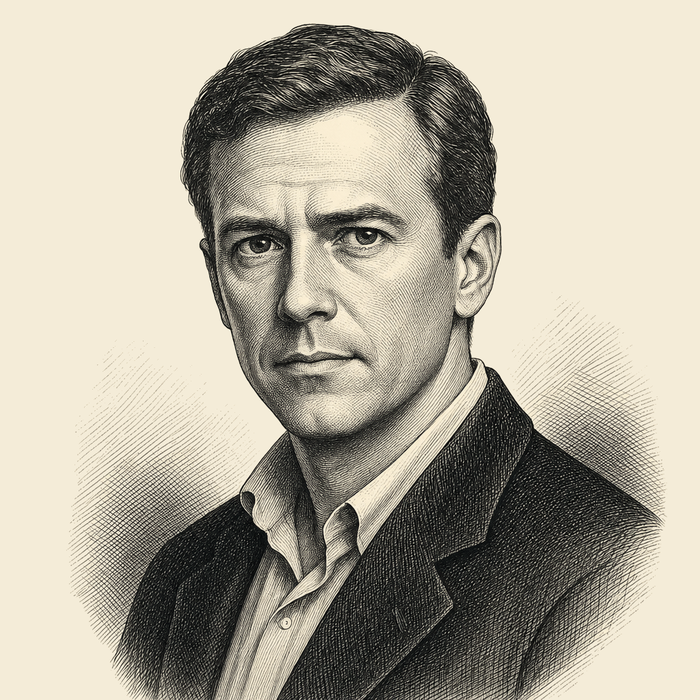
Beau Lamarre-Condon did not panic. He executed a body-disposal plan he had already thought through months earlier — and his barrister is asking fifteen jurors at the NSW Supreme Court to call that plan a nervous collapse.
The jury this week saw what the plan looked like. On Thursday, fifteen jurors were shown photographs of the decomposed remains of Jesse Baird, 26, a former television presenter, and Luke Davies, 29, a Qantas flight attendant, both killed in February 2024. Justice Natalie Adams warned them the images would be confronting. They were. And the photographs are the part of the defence’s case that no adjective can repair.
Put the panic story at its strongest first, because it has to be taken apart in its strongest form. The defence is entitled to have the jury picture a thirty-one-year-old former senior constable, no personal history of violence, suddenly alone with two dead men, with the instant knowledge that his career, his liberty and his life as he knew it were finished. On this account the disposal is not the plan — the disposal is the reaction. A man improvising in the dark with whatever was to hand: a second surfboard bag bought from a shop, a larger hire car taken from a yard, a tarpaulin, cleaning products — tools acquired in a daze, not selected from a kit. Concrete blocks and a gym weight dragged to a dam at Cella Farm because a panicked mind reaches for the most obvious thing that sinks, not because anyone calculated the ballast a human body requires. A cut padlock, because a lock in the way is a lock to cut, whether or not one has ever cut one before. Bags zipped together, rocks and branches layered over them at the monastery at Bungonia, because concealment is what a man does when the consequences have suddenly become visible — not what a man does when he is executing a procedure. And the friend’s account of a disposal plan discussed months before the killings may be, on this reading, exactly what the defence will call it: the loose talk of a friendship, a boast or a hypothetical, a sentence remembered from a night that meant nothing then. Years spent around crime scenes are generic professional texture, not a blueprint. The prosecution must prove murder. The disposal, the defence will say, proves only that a man wanted the discovery to stop coming.
That is the best version of the story the defence needs the jury to believe. The record now in front of that jury does not survive it.
Consider the choreography. In the hours after the February 2024 killings, the accused allegedly bought a second surfboard bag, hired a larger second vehicle, and returned to the alleged murder scene in heavy disguise, laden with cleaning products and a tarpaulin. He then allegedly drove south to Bungonia, where the remains were eventually found at a Greek monastery, and to Cella Farm, where he allegedly tried to sink them in a dam weighted with concrete blocks and a gym weight. When the dam did not take them, he is alleged to have zipped the smaller body bag inside a larger one, layered rocks and small branches on top, and left the remains at the monastery, where a cut padlock was later recovered at the neighbouring property.
None of that is improvised. A panicked person runs. A panicked person does not buy a second bag. A panicked person does not hire a larger vehicle. A panicked person does not ballast a dam with concrete blocks and a gym weight, cut a padlock, and build a weighted, layered concealment out of nested bags and stone.
Retired crime scene officer Greg Moon, who coordinated the forensic sweep of the monastery, told the court the bodies were discovered inside two surfboard or stand-up paddleboard bags — the smaller bag containing the body zipped up inside the larger one — one on top of the other, with rocks and small branches placed over them. Multiple indicators, he said, placed the remains at the monastery, roughly twenty kilometres from Cella Farm, for several days: “A large number of maggots and other insects were present in the bags along with other decompositional fluids.” Days. Not hours. Not the frantic minutes of a man blindsided by a death he did not see coming.
Fellow investigator Christine Abela told the jury she knew something was wrong the moment she stepped out of the car at Cella Farm more than a week after the killings. “There was a strong smell as soon as I got out of the car,” she said. “The scent of a decomposing body.” And the CCTV of Lamarre-Condon’s Sydney movements, released by the court on Thursday, does not show a man losing his head. It shows a man executing steps: disguise, supplies, vehicle, route.
Read together, the disposal shows the procedural literacy one would expect from someone who had spent years around crime scenes, body handling and forensic countermeasures — someone for whom the question of how to make two bodies disappear was not a problem to solve from first principles under duress, but a procedure to work through from a vocabulary he already knew. The nested bags, weighted and layered, are not a panicked arrangement. They are a containment strategy: the shape of an attempt to defeat what a forensic investigator will look for. The steelman asks the jury to see a dazed reaction. The evidence shows a disposal that anticipated the investigation that would follow it.
And the record already contains testimony that the disposal was not invented under duress. A friend of the accused has testified that Lamarre-Condon described a disposal plan to him months before the Sydney murders. Months. If the jury accepts that testimony, the question the defence needs open is closed before any further forensic analysis: the disposal was not an improvisation in the hours after two young men died. It was the execution of something the accused had, by his own reported account, already worked through. A trial that has also heard that he faked a cancer diagnosis before the killings is not a trial about a man who could not plan. The story the defence asks the jury to accept is a man who had contemplated how to dispose of a body long before the body needed disposing, then executed that contemplation in a blind frenzy the moment the moment arrived.
The word “panic” is doing the work of an argument the evidence will not carry: that Lamarre-Condon had no structured idea what he was going to do with the bodies before he did it. The friend’s testimony, the second bag, the second vehicle, the dam, the concrete blocks, the gym weight, the disguise, the tarpaulin, the cut padlock, the nested bags, the weighted rocks, the several days of decomposition at a rural monastery — these are the markers of a plan unfolding, not a mind unravelling.
The jury is being asked to look at this evidence and see confusion. The evidence shows fluency. The trial, in its third week of twelve, has already produced a record in which the disposal was not a reaction to two unexpected deaths. It was the execution of a procedure — one the accused had, on his own friend’s account, already described out loud.