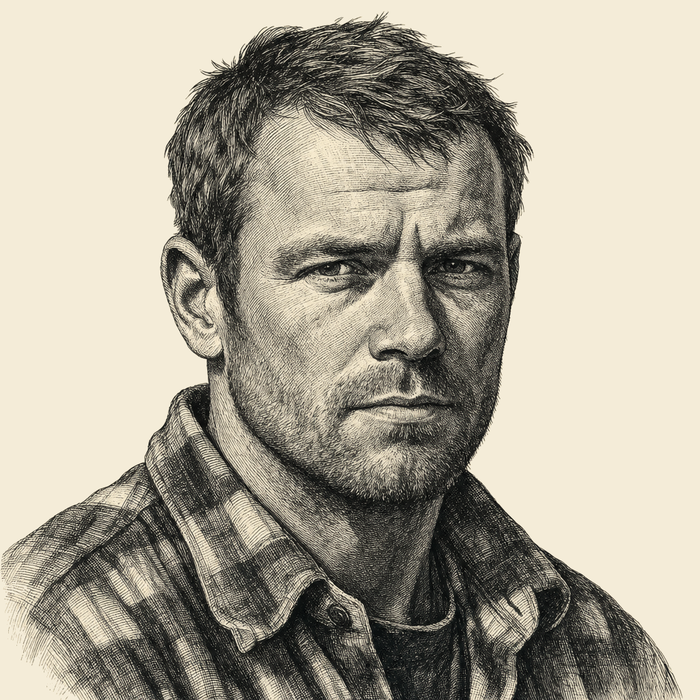
Western water policy drained Lake Mead and left a murdered man nameless. Clark County coroner Melanie Rouse gave him a name on Thursday: Edward Lelburian Jackson, Buddy to the family that last saw him in the early 1980s. A single gunshot to the head. Mid-to-late fifties. A button-down shirt and a pair of blue-and-white tennis shoes that place the killing between the mid-1970s and the early 1980s. A steel drum near Hemenway Harbor that surfaced in 2022, when the reservoir got shallow enough for boaters to spot it. Las Vegas police Lt. Robert Price filled in the rest of what little is known: Arkansas by origin, a stretch in California with his wife, aggravated arson and conspiracy fraud charges in Utah, and not one record putting the man in Las Vegas. Price also closed the mob-era story the case had been carrying — no evidence tying the killing to an organized criminal group, none. Forty-five years after somebody put a bullet in him, Buddy Jackson has a name and still no killer.
The identification belongs to the coroner and to a forensics team at Oklahoma State University, which matched Jackson’s DNA against a believed family member this year. The recovery belongs to the water. Lake Mead did not go looking for him. It lost water — years of overuse, a long drought, rising temperatures — until the surface dropped past the sediment line where a weighted drum can lie undisturbed for half a century, and then it handed him up. Boaters found the barrel in 2022. A KLAS-TV crew found a second, empty drum within days. Paddleboarders walked onto a new sandbar and came up against remains with no sign of foul play. More came up this August at a record low, same finding.
I have fished the Petenwell flowage my whole life, and that lake is the same idea at a scale I can see from the boat ramp: a river somebody dammed and held at a level somebody chose. The Wisconsin River comes down out of the north woods and gets stepped through a chain of impoundments, and Petenwell and Castle Rock — the two biggest, and two of the largest lakes in Wisconsin — went in back in the late forties and early fifties and made this county’s western edge what it is. I write the ice-out date on that flowage down every spring, and in twelve years it has moved about twelve days earlier, which is a short way of saying we lose more off the surface, for longer, every year. Nobody here drowns their problems in these lakes. But this county has already run the drain-down experiment at its own scale, and the verdict is written down. The Leola Drainage District went in in 1901 — fifteen thousand acres of marsh, forty miles of ditches, a hundred and twenty-one thousand dollars of steam-shovel work — because the peat looked black and the land-lookers called it rich. Within six years the district was broke, the drained peat was burning in the ditch banks, and the land had reverted for taxes. Leopold wrote the line on it: the drainage dream “sucked dry the marshes of central Wisconsin and left ash heaps instead.” That is the local version of Lake Mead, and we have had it on paper for a hundred and twenty-five years.
What the Colorado basin is finding in its reservoir, this county would find in its wells. The Central Sands aquifer under us is shallow and sandy and it recharges on the same slow arithmetic as everything else out here. A dry year drops the water table, and when the water table drops, what is dissolved in it concentrates. That is not a forecast. It is what the county’s Land and Water Conservation Department has been measuring in private wells since the big dairies came in around 2008. I have stood at a neighbor’s kitchen sink while he read me a well result of 14 against a public-health limit of 10. When a shallow well in this county comes back hot, nobody in Carson City sends a check. The household pays for the bottled water, or the reverse-osmosis unit, or the driller — and a replacement well in sand is the kind of bill you finance. The well-testing program the county runs with the university up in Stevens Point is a levy line. When the levy line thins, the sampling thins with it, and the only people who learn anything are the ones who pay for a test out of their own kitchen money. Our town sanitary districts set their rates on the same budget calendar. The co-op out of Friendship watches its load swing every July and August because irrigation pumping is electricity, and the farm families arguing it out at the co-op meeting are making the same decision the Colorado basin made forty years ago, one pump at a time: take more out now, or leave some in.
The forensic half of this runs closer to home than the lake does. DNA genealogy has become the subpoena the dead file in their own names. Last month a 2006 murder charge came off identifications of an ex-wife’s remains. The month before, Ada County in Idaho put a name to a 1982 unknown, with a possible line to the Tylenol killings. Oklahoma State is the latest lab to answer one. Which is the part of the Lake Mead accounting worth sitting with: the name came because the climate moved the water, not because anybody went looking. A man killed in the Carter administration lay in federal water for forty-five years because the reservoir stayed deep enough to hold him. That is a specific failure with a specific mechanism — a missing-persons file nobody ever connected to a barrel nobody knew was there — and it is the same mechanism that keeps a household’s well result out of any public record when the county stops paying to collect it. Records are not self-maintaining. A budget line keeps them legible, or they stop.
Jackson got half of it back on a Thursday morning in a press room, forty-five years late, and the man who shot him is still walking around. That much is worth saying plainly. The rest of this story is not a cold case with a happy half. It is a water account. The reservoir the Colorado basin built on an overestimated river has been paying out surprises for four years, and the historians who study it expect more as the line drops. We do not have a Lake Mead. We have a shallow aquifer under sandy ground, a county levy line for testing it, a co-op bill for pumping out of it, and a set of town sanitary districts whose rates assume the water sits where it sat when the rates were set. Whether anybody here is paying attention is not decided in Las Vegas. It is decided at the county board when the well-testing line comes up, when the sanitarian’s position comes up, and whether a household with a hot well gets an answer in months instead of decades. Buddy Jackson waited forty-five years for a name because the water was deep. Our water is shallow. We do not have that excuse.