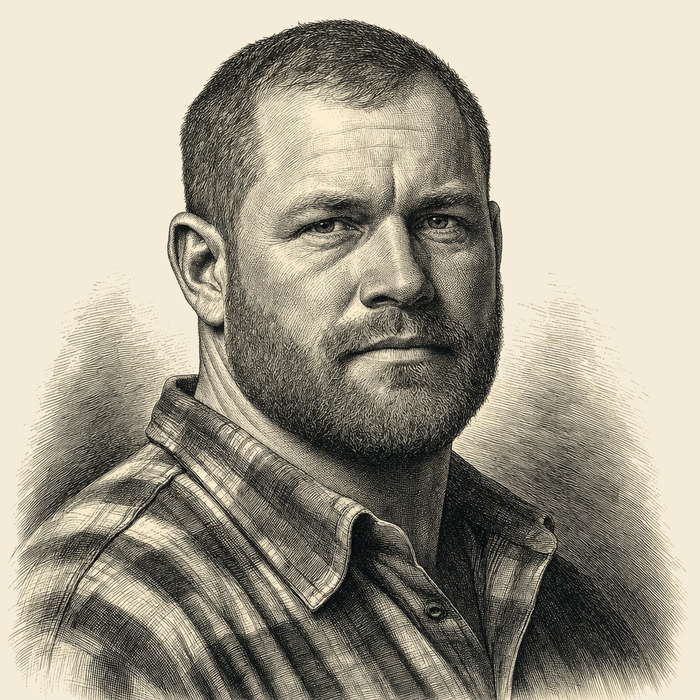
Tech. Sgt. Ian Patterson was fifteen years into the Air Force when he went over the rail at the Alamodome on Saturday afternoon. He was from Fort Stewart, Georgia, which is to say he came from the same kind of place I did. He was assigned to the 57th Wing at Nellis Air Force Base in Nevada. Video of the thing shows him coming down that rope fast, too fast, and hitting the football field. He was rushed to a hospital. He died there.
He had a family back in Georgia that was watching a football game on television and then wasn’t.
Now here is what happened next, and I want you to sit with it. The game was delayed ten minutes. Then the game resumed. The American Conference said officials decided to continue “in accordance with its bylaws and with both institutions’ support,” and said this happened before Nellis had publicly confirmed Patterson’s condition. Read that again. Not confirmed his death. Confirmed anything. The man could have been dying, could have been on a ventilator, could have been in surgery, and nobody in that building knew which one it was. The conference made a call anyway, and UTSA made it with them. Both institutions. That means somebody in the UTSA athletics operation and somebody in the conference office looked at each other and decided the football game was the more important thing to keep on schedule.
Nellis confirmed his death at 11:40 p.m. Eastern, near as I can figure right about the time the game was ending. So the fans went home having watched the whole thing, and the Patterson family found out the same week the rest of us did, out of a press release.
Brig. Gen. Scott Mills, who commands the 57th Wing, said Patterson’s “service mattered immensely” and that the wing will “navigate this profound loss together.” I don’t fault the general. He was handed a microphone and a dead airman and he said what they say. But I know what those men in that wing are actually doing right now, because I have been the airman standing in a shop bay when a name goes up on the board. They are wondering who had the rope, who checked the harness, who signed off on the rigging, and whether the next demo gets flown the same way. That’s the part the statement doesn’t cover.
Let’s talk about the rigging, since nobody else wants to. Somebody sold UTSA a pregame demonstration. Somebody wrote the contract, somebody booked the venue time, and somebody put a fifteen-year man on a line hanging from the roof of a stadium in front of sixty-thousand people for a Salute to Armed Forces promotion. Whatever failed on the way down, whether it was the equipment, the anchor, the descent control, or the plan, that is a working question with working answers, and the Air Force says it’s investigating. Fine. But the conference’s bylaws had nothing to do with the rope, and the conference’s bylaws had nothing to do with the decision to keep playing. Bylaws don’t put a man on a line. People do. And people decided, before they knew if Patterson was going to live, that the correct thing to do was run the second half.
UTSA’s president, Taylor Eighmy, wrote to the campus that the day “was intended to be a day of camaraderie, tradition and celebration.” The university will light its tower like a white candle this week. I don’t object to the lights. I object to the fact that the lights are what they’ve got. What the university has not done is name the person in its athletics department who signed off on resuming play, has not released the demonstration contract, and has not told the public what safety review that rigging went through before a man was suspended from it.
So here is what I’d like to see, and it isn’t complicated. Release the contract for that demonstration. Release the safety procedures that governed it. Name the UTSA official and the conference official who made the call at the Alamodome that night, and put their reasoning in writing. Not because I want somebody’s head on a platter. Because a man from Fort Stewart, Georgia gave fifteen years to this country, and when he fell out of a stadium sky his country owed him more than ten minutes and a candle.
This is the second time this year the Air Force has had to hand out a list of names. In June the service named eight killed in a B-52 crash at Edwards. Same rhythm every time. Name them, open the investigation, keep the schedule moving. But at Edwards the game wasn’t still going on while they were looking for the wreckage.
The conference and the university got their football game. Tech. Sgt. Patterson’s family got a phone call. Somebody in a polo shirt with a headset decided that was the right trade, and until they tell us who, that decision belongs to all of us the same way it cost him everything.