
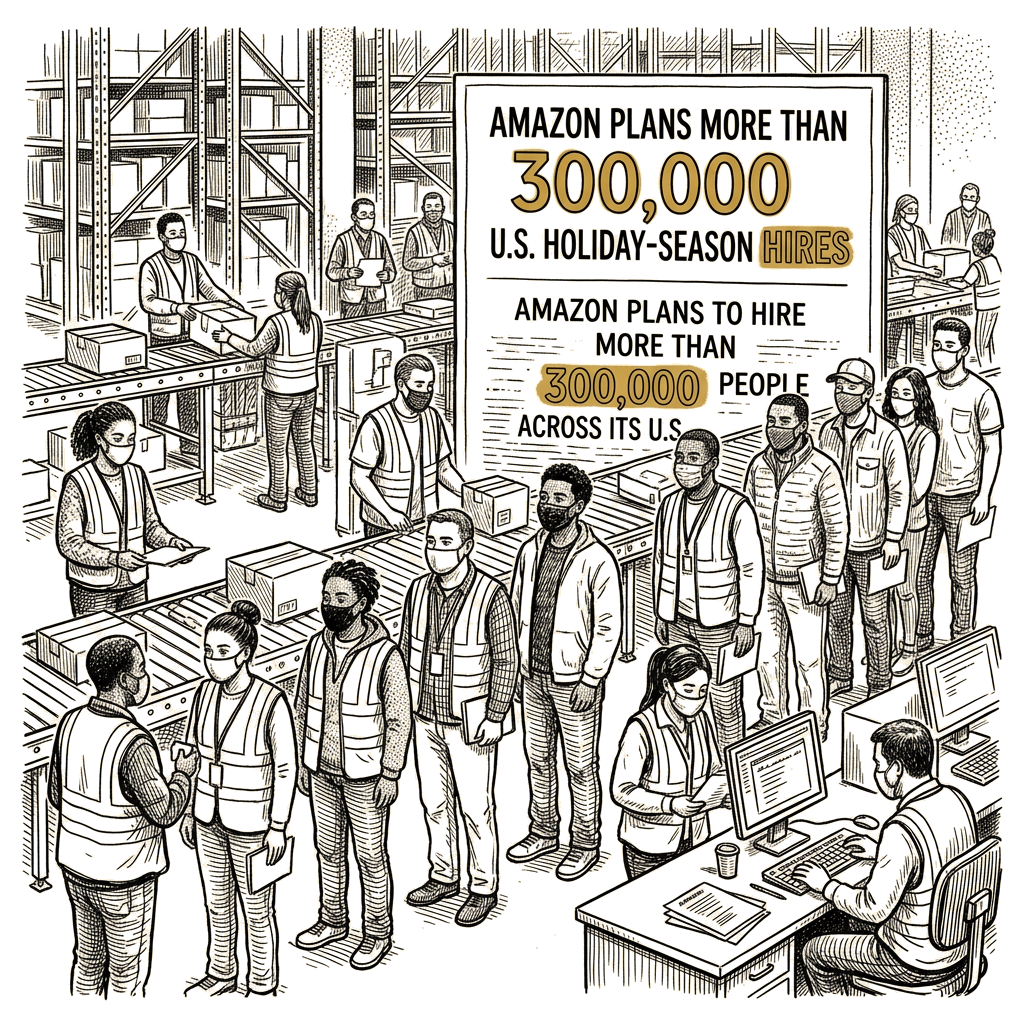
More than three hundred thousand jobs. That is the figure Amazon is putting in front of reporters this week — the headline number, designed to be repeated down to the dollar: more than three hundred thousand seasonal, part-time and full-time roles for its U.S. operations, posted weekly from October through December, every seasonal role paying an average of twenty dollars an hour, healthcare from day one for anyone working thirty hours a week, and a clear path into a permanent position. This is what a labor market looks like when somebody actually staffs it. It is also a confession. The company is telling you, in its own press release, that it cannot run its operations without more than three hundred thousand workers.
Read past the press release and the picture gets bleak. Amazon has been here before. We covered it in September, when the company raised its U.S. starting wage to twenty dollars an hour across core operations. Now the company is reprising the same twenty-dollar number for its seasonal pitch, paired with the uncapped grocery discount it added for employees in the same announcement. Twenty dollars is the new floor, the new ceiling, and the marketing slogan, all at once — a wage policy at national scale with a head-count bolted on, priced above a federal minimum that has been stuck at $7.25 since 2009.
The release is careful to note that full-time operations employees, separately, average nearly twenty-four dollars an hour before benefits. That number — $24 — is the line that matters. It is not a marketing figure. It is the price a company has decided it must pay to put a box on a porch between Thanksgiving and Christmas Eve. The release presents it as if it were the headline, when in fact it tells you the seasonal tier is the discounted one. The “average” before benefits is how the company hides the work it is actually trying to do: sell the seasonal tier at twenty and ask you not to think too hard about what twenty buys. The press release is not lying. It is curating.
Then there is the language. “Potential full-time roles.” “Opportunity to transition.” “Access to a range of benefits.” Every clause is hedged like a derivative contract. Seasonal employees who log at least thirty hours a week, the release notes, will be offered healthcare coverage on day one — plans starting at five dollars a week, with five-dollar copays. Offered, on day one, with a five-dollar copay. The vocabulary of munificence, deployed for the cheapest tier of the workforce. None of this is a lie. None of it is a gift either. It is the floor a labor market that finally remembered it had other options now requires the company to offer, repackaged as munificence.
The contextual note most readers will miss is the one Amazon would prefer you not think about. Earlier this year, the company cut sixteen thousand corporate jobs in its second layoff round. Now comes the seasonal hiring campaign, staged as a feel-good press release. That is the labor model in one frame: thin the salaried middle, expand the hourly bottom. Hire more than three hundred thousand to move the boxes; terminate the people who design the systems that move the boxes. A workforce structured as a small class of expensive thinkers and a vast class of cheap movers, with the latter class expanded or contracted as a single dial. This is not seasonal charity. It is a company pricing labor on purpose.
United Parcel Service is running a parallel play — a hundred thousand seasonal hires across hundreds of locations — and that is the second piece of evidence. When Amazon and UPS both bulk up at this scale inside the same window, that is not coincidence. That is a market-clearing signal. The regional carriers and the third-party logistics outfits will have to follow, and their warehouse and dock workers will get pulled up with them. No company in this sector would lift that price on its own; together they are being made to pay it, and the seasonal economy is being professionalized whether the commentariat notices or not.
The cynics will insist twenty dollars an hour isn’t enough for a single adult in a coastal city. Fine. The same cynics spent the last decade telling us fifteen dollars was radical, and they would very much like to keep arguing about twenty until twenty-five becomes the new floor. They will lose that argument. Wages at scale don’t get debated upward in op-eds — they get pulled upward by what the largest employers actually pay. Twenty dollars an hour is not what Amazon thinks a worker is worth. It is what the company has calculated it must pay to keep the seasonal tier staffed through the holiday season.
More than three hundred thousand hires is a big number. It is also a disclosure. Read the announcement that way and the cheerful seasonal hiring pitch reads less like a holiday gift and more like a quarterly operating report. The boxes get moved. The recruiters get their number. The seasonal hires average twenty dollars an hour and have access to benefits; the full-time operations employees, separately, average nearly twenty-four dollars an hour before benefits. Everyone gets exactly what the labor market would not let Amazon refuse to give them. A seasonal job at twenty dollars an hour, with healthcare from day one, with a five-dollar weekly plan and five-dollar copays, and a clear lane into a permanent role — that is not a holiday bonus. It is the entry-level American job the rest of corporate America has spent forty years refusing to write. It got written this week. More than three hundred thousand times.