Donald Trump is terrorizing Minnesota’s immigrant communities with masked federal agents.
I grew up in El Paso, and I remember pre-dawn ICE raids emptying desks in classrooms. I was formed in a Mexican-American Catholicism that taught the stranger’s dignity and also watched powerful Catholics turn exclusion into a partisan virtue. That double history is mine to carry. My communities have prayed beside migrants and then watched the state treat their families as disposable. We have welcomed strangers to Mass and left them without protection at the law’s door. We have used family values to divide the least powerful from the rest of us. I will not absolve us. We do not get to exempt ourselves from the judgment.
The victory will become a permission slip if celebration replaces correction: mark the returns, leave the machinery of enforcement untouched. The deportation machine was built before Trump and has outlasted presidents. No party can claim clean hands merely by taking office. If the election changes only the party in power, the people cast out remain disposable.
Democrats entered the midterms favored in the House and within reach of Senate control, and emerged with both chambers: 51 Senate seats and 219 House seats. More than 100 Democratic women were elected to the House, a 60 percent increase since 2016. Hakeem Jeffries was set to become the first Black House speaker.
The returns widened the republic. Keisha Lance Bottoms became the first Black woman ever elected governor in U.S. history. Gina Hinojosa became the first Latina governor of Texas. Peggy Flanagan became the first female Native American U.S. senator. Deb Haaland, the first Native American woman to govern a state, was among those remaking the political map. These victories are not pageantry. They break the lie that certain Americans may govern while other Americans are merely endured.
Abdul El-Sayed declared victory in Michigan with 79 percent of the votes counted and a five-point lead, although the Associated Press had not called the race. If that result held, he would be the first Muslim to serve in the Senate.
Long before ballots were counted, election administration itself was under scrutiny. That mattered. A majority is not a license to treat the rules of counting as a partisan convenience. Control is legitimate only when the process is trusted and the result accepted. Trump said he would accept the result. He also hoped to work with Democrats on immigration. He must also stop treating democracy itself as an opponent.
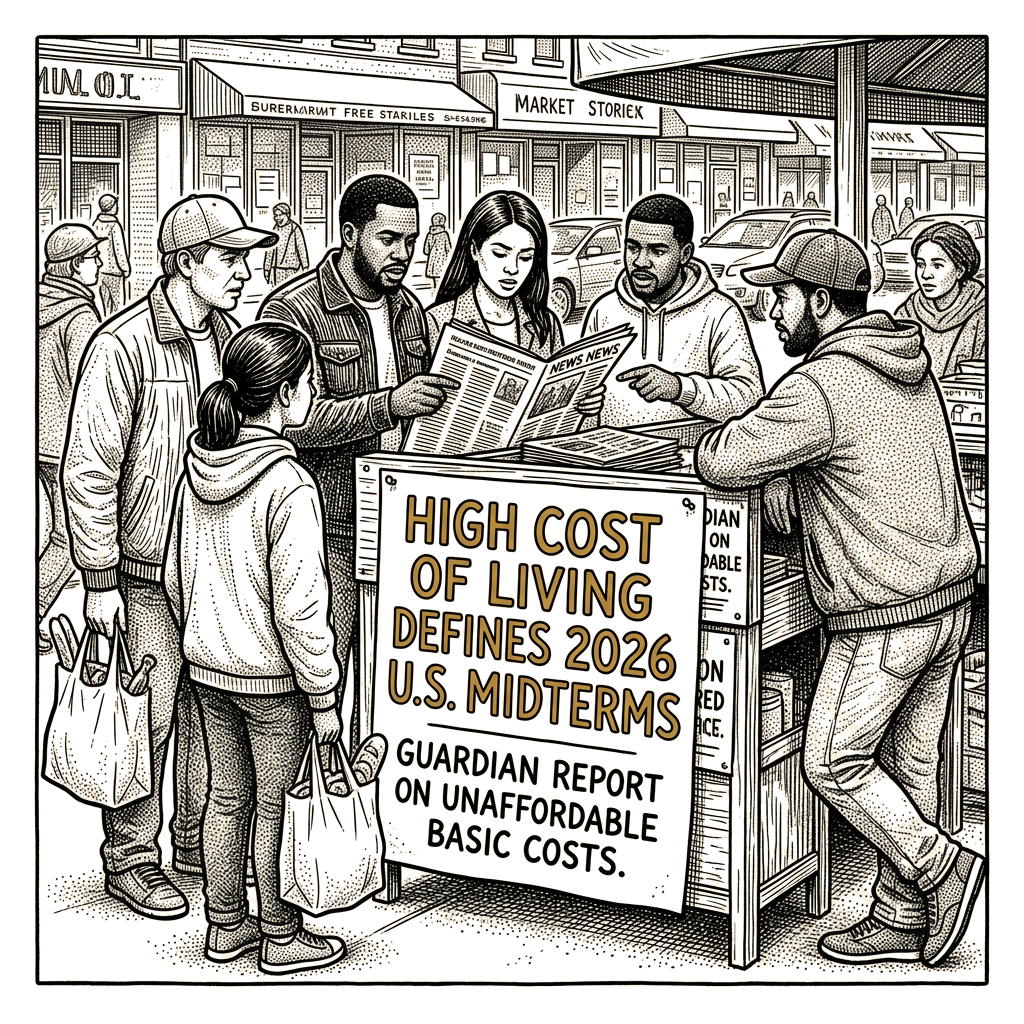
The voters gave several answers at once. The exit polls put the economy first for 39 percent of voters, the state of democracy for 32 percent, immigration for 14 percent and healthcare for 8 percent. Roughly 60 percent disapproved of Trump’s handling of the presidency, while 70 percent said lawmakers were not doing enough to check him.
Peggy Flanagan won Minnesota’s Senate race with more than 54 percent of the vote. She told supporters that people had said “enough is enough” after masked immigration officers descended on Minnesota and their neighbors were shot. She told them they had had enough of war, healthcare cuts, food taken from children and seniors, and armed federal agents in their streets. Her language was plain because the facts were plain. That was not law and order. It was cruelty.
Those are not rival stories. A country cannot demand cheaper groceries, healthcare and stable government while treating immigrant workers as disposable, then dismiss the anger as prejudice.
That judgment has a Minnesota face. Operation Metro Surge, an aggressive operation led by Immigration and Customs Enforcement and Border Patrol, descended on the state early this year and gained international attention. It led to the shooting deaths of two U.S. citizens, Renee Good and Alex Pretti. I call this what it is: federal cruelty, made visible in Minnesota. The cruelty is not an unfortunate side effect. It is the method.
When federal agents descend upon a neighborhood and two citizens are killed, the state has not made the border safer. It has made fear a condition of citizenship.
Jesus leaves no diplomatic fog about what the state owes the stranger. In Matthew 25:35–46, he identifies the stranger with his own family: “I was a stranger and you did not welcome me.” A family without secure papers is still a family. A worker whose labor the country depends upon is still a worker. A child is still a child. When government calls enforcement “law” while making the least protected people live in terror, the moral verdict is not ambiguous. This is sin against the neighbor. The question is asked at the door, and the answer becomes policy in raid plans, detention rooms, asylum hearings and family courts.
In the parable of the Good Samaritan, a man was stripped and left on the road. A priest passed. A Levite passed. Then a neighbor bent down. The story stops there.
Congress has spent too long passing on this road. Donald Trump, you do not get to hide behind an administration or a uniform. Your administration’s agents carried out Operation Metro Surge. Stop it. Stop the raids that made fear a way of governing. The work begins by stopping the raids that made fear a way of governing.
The demand associated with Romero’s March 23, 1980 address is blunt: “¡Cese la persecución!” “Stop the persecution!” Romero’s warning to soldiers on conscience was equally blunt: no one is obliged to obey an order against the law of God. That is not an appeal for lawlessness. It is a refusal to let command become an excuse for sin.
The officer standing before a family’s door is a human being. The family behind that door is a human being. A state that trains them to confuse those truths has made cruelty into policy. Romero’s command to soldiers and Congress’s duty now are the same: stop the persecution.
The 2003 pastoral letter Strangers No Longer, issued jointly by the bishops of the United States and Mexico, affirmed the right of sovereign nations to control their borders while insisting that the human rights and dignity of undocumented migrants must also be respected. John XXIII taught in Pacem in Terris (§25) that every human being has the right to freedom of movement and residence, grounded in membership in the human family rather than citizenship alone.
From those principles a positive policy follows: lawful routes to status, meaningful access to asylum, due process before detention or deportation, protection of family unity, detention as a last resort under independent review, no routine family separation, a secure legal path for long-rooted workers, and enforcement bound by warrant, evidence and human judgment. A just immigration law may set conditions for entry. It may not make permanent fear the price of belonging. Security and welcome are not rivals. A just border is not built from fear.
After “a great night for the rule of law” echoes through election night, Jeremiah 6:14 remains a verdict: “They have healed the wound of my people lightly, saying, ‘Peace, peace,’ when there is no peace.” Order is not a moral alibi. A policy can be technically lawful and still be wicked. The decisive questions are who bears its harm and who benefits when it continues.
Control is leverage, not absolution. If incoming lawmakers preserve raids, indefinite detention and family separation because those policies sound harsh, they have chosen cruelty. The same standard binds every party. A person’s suffering does not become acceptable because a different party controls the House.
The incoming Democratic majorities must now use their power for something more difficult than celebration. Hold hearings. Demand records. Write law. Make immigration enforcement answer to law, courts and Congress. A victory party is not a policy.
Romero gave the new Congress one sentence to begin with: stop the persecution. Stop the raids that turn neighborhoods into targets. Stop making fear a way of government. Build a law in which the stranger can work, raise a family and seek justice without being treated as an enemy.
The door remains open for every person in this fight, including those who carried out the administration’s orders. No badge can make cruelty holy, and no order can erase conscience. It must not remain open for the policy that teaches a state to see a family as a target.
Picture a family at a bus station before dawn, waiting to learn whether the country has a place for them. A country that leaves no room for the stranger has already become cruel. In Minnesota, let morning bring the church bells, not sirens.