Summary
- Benjamin Netanyahu’s reported advocacy for renewed U.S.-Israeli bombing could advance a post-midterm campaign, but Mohamad Bazzi’s analysis supports the central claim that coercive pressure would weaken, rather than reliably create, durable bargaining leverage.
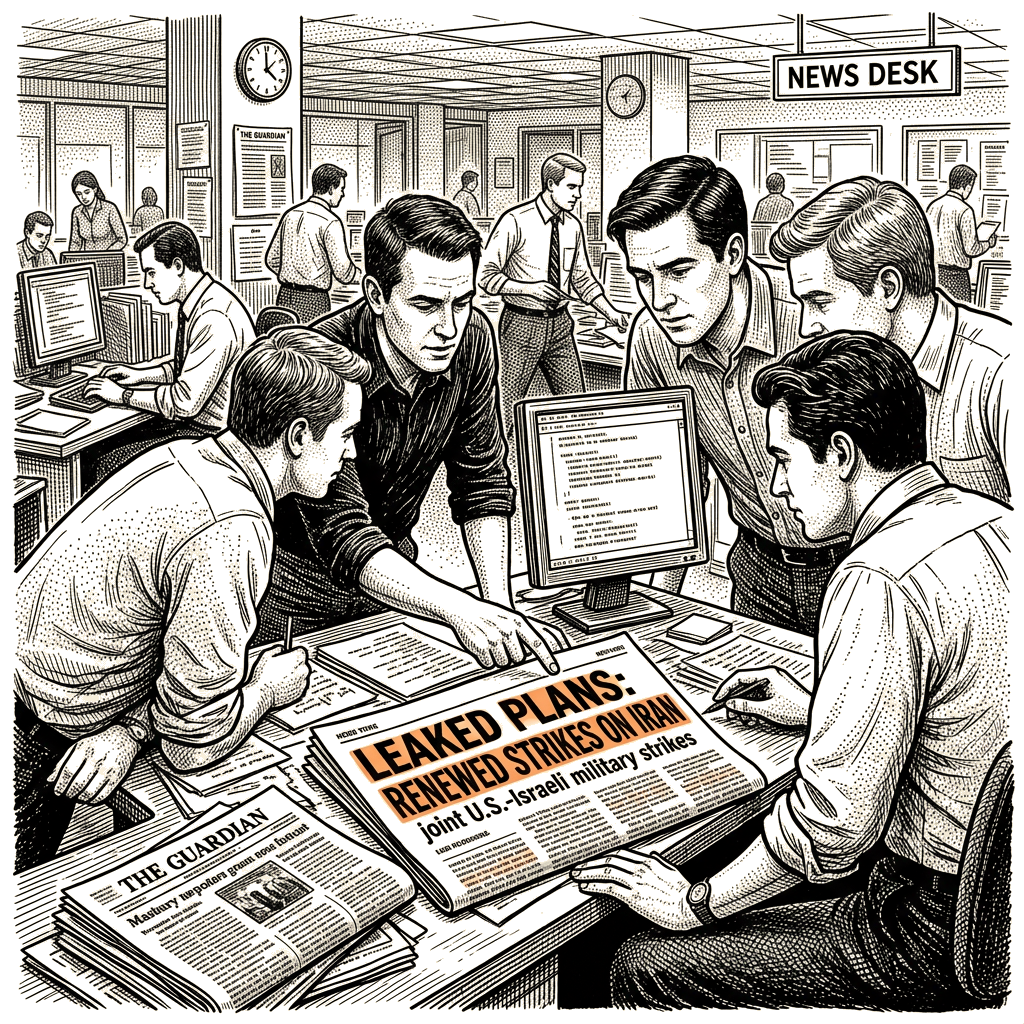
- Mohamad Bazzi reports that leaked plans listed Iran’s underground nuclear facilities, missile arsenals and civilian infrastructure, and that a Pentagon rationale contemplated an “intensive” multiday attack to force new Iranian concessions.
- Iran’s reported missile and drone strikes, closure of the Strait of Hormuz and threats against American bases and Gulf energy infrastructure strengthened Tehran’s short-term leverage while shifting disproportionate costs to Iranian civilians, neighboring Gulf states and energy consumers.
- Qatar mediated, the November 3 election result changed one political input, and missing verification, reciprocal sequencing and asset-release procedures left implementation unresolved.
Benjamin Netanyahu urged Donald Trump to restart bombing Iran soon after the November 3 midterms, according to Mohamad Bazzi, and leaked plans identified underground nuclear facilities, missile arsenals and civilian infrastructure as possible targets. The published account contains no leaked document, signed military order, decision record, corroborating account or evidence that an attack was authorized or executable, leaving renewed conflict as a credible but unsettled scenario; Bazzi also reports that Trump might still choose an agreement. Qatar-mediated talks reportedly produced an interim proposal under which Iran would reopen the Strait of Hormuz within two days after Washington lifted a port blockade and released billions of dollars in frozen Iranian assets. The central dispute is whether military pressure can create leverage without destroying the conditions for a durable agreement: a Pentagon rationale reportedly considered an “intensive” multiday attack capable of forcing new concessions, while Bazzi assesses that renewed bombing was unlikely to bring Trump closer to a usable deal and that the earlier eight-month campaign failed to remove Iran’s government despite severe damage and leadership losses. Iran’s reported missile and drone strikes, closure of Hormuz and threats against American bases and Gulf energy infrastructure add coercive leverage but also expose civilians, neighboring states and energy consumers to disruption and raise the risk that retaliation will harden resistance.
A reported opening, not an established operation
Bazzi’s account places months of Netanyahu advocacy for a U.S.-Israeli campaign aimed at regime change in Tehran. After Netanyahu’s rightwing coalition failed to secure a parliamentary majority, Bazzi reports that Netanyahu called Trump on Saturday and urged a restart of bombing soon after the midterms. The cited leaks describe a possible joint campaign after November 3, with underground nuclear sites, missile arsenals and civilian infrastructure among the proposed targets. The reported plans remain contemplated action: no leaked document, signed order, decision record, corroborating account or other evidence establishes authorization or executability.
The previous campaign supplies the strongest empirical challenge to the proposed strategy. Bazzi says Trump initially believed a surprise attack that killed Iran’s top leadership would topple the regime within days and repeatedly promised not to start new wars in the Middle East. The eight-month campaign instead failed to remove the Iranian state, exposing a gap between its destructive reach and its political result. Bazzi’s assessment that renewed bombing would be unlikely to bring Trump closer to a usable agreement follows from that record. The Pentagon rationale, as reported by Bazzi, was that an “intensive” multiday attack could force Iran to make new concessions. The strategy’s first causal link—attack, concession and then de-escalation—therefore remains unestablished.
The same feedback affects the reported Iranian response. Bazzi says the United States and Iran mistrust each other deeply and that Trump’s movement between seeking an agreement and repeatedly threatening Iran worsened that mistrust. Mojtaba Khamenei’s warning that Iran’s response would be “immediate” and “without any geographical limitations” states the government’s declared position. Bazzi says the warning could point to targets beyond the Middle East, but the available evidence contains no order of battle or target plan demonstrating operational capability outside the region. The warning and the leaked plans establish declared intent, not completed action.
Short-term leverage and unequal costs
The proposed U.S.-Israeli campaign offers a conditional benefit: attacks could produce Iranian concessions and improve Washington’s and Jerusalem’s bargaining position if the concessions arrive before damage and mistrust dominate the relationship. Iran’s reported countermeasures supply comparable short-term leverage. Missile and drone strikes, closure of Hormuz and threats against American bases and Gulf energy infrastructure impose costs on U.S. and Israeli interests. Bazzi also reports that expanded hardliner influence inside the Islamic Revolutionary Guard Corps strengthened Tehran’s position after senior Iranian officials were killed.
Each side can therefore increase immediate leverage while intensifying the conditions that obstruct settlement. Closure, retaliatory attacks, infrastructure exposure and geographically broad threats can narrow diplomatic options, reduce outside support for an agreement and reduce confidence that future concessions will hold. The objective-alignment problem applies symmetrically to the reported conduct of both the United States and Israel and Iran, although the parties’ legal and factual circumstances are not equivalent.
Garrett Hardin’s 1968 Science article, The Tragedy of the Commons, provides authority for the framework in which individually rational choices impose costs on a shared resource. The application here is a distributional analogy: Gulf states and energy consumers can bear substantial disruption from decisions made by political actors elsewhere. The available evidence does not establish Hormuz as an open-access resource, and the analogy does not identify any legal entitlement to its use.
The costs are also more widely distributed than the political benefits. Iranian civilians face the reported prospect of attacks on power plants, refineries, bridges and factories. Neighboring Gulf states face damage to pipelines and gas fields, while energy consumers face higher prices and reduced oil transit. Principal political actors may retain the bargaining claims associated with the conflict while civilians, neighboring governments and consumers absorb much of the disruption. Infrastructure damage and price effects feed directly back into the decisions of the governments and military leaders involved.
Qatar’s reported direct talks with Iranian officials give the small Gulf state a mediation role linking the military and diplomatic pathways. Pakistan appears in negotiations that later stalled, but the available evidence does not specify Pakistan’s access, decision-making role or position. Neither government can be assigned a preference for either side on the available evidence. Gulf governments and energy consumers remain within the analytical boundary because damage to infrastructure and higher prices can alter the political calculations of the principal parties.
The principal political benefit claimed for escalation remains unverified. Bazzi’s assessment of Trump’s electoral position and the proximity of Netanyahu’s call to his coalition’s setback document possible timing pressures, but they do not establish the private decision process that produced the reported campaign. Renewed conflict is consequently a credible scenario on the available evidence, not a settled outcome; Bazzi also explicitly leaves open the possibility that Trump chooses an agreement.
Feedback structure and possible pathways
The conflict operates as a system with several accumulating conditions. Its principal stocks include the duration of Hormuz’s closure, damage to military and civilian infrastructure, diplomatic mistrust, Iran’s negotiating leverage, U.S. political costs and energy-price pressure transmitted to Gulf economies and consumers. The degree of hardliner influence and congressional control are state variables. The proposed target set, sequencing of the interim terms, verification mechanisms and leadership calculations are auxiliary decision variables.
Principal flows include oil shipments, strike damage, retaliatory attacks, release of frozen assets and negotiated concessions. The election result functions as a forcing function because it can change perceived electoral costs and congressional control. Military authorization remains a separate decision within that system; the election result does not itself authorize an attack or settle the terms of one.
The proposed coercive sequence runs from attacks to Iranian concessions and then to de-escalation. Its first link remains unestablished because the earlier killing of senior Iranian leaders did not produce capitulation. Closure of Hormuz, expanded hardliner influence and continued fighting weakened the prospects for settlement rather than converting military pressure into a durable agreement.
A reinforcing mistrust loop operates through delay. Threats and attacks increase mistrust; reduced confidence that Iranian concessions will hold increases the perceived need for further threats or pre-emptive force; renewed threats then add to mistrust. Public attitudes and the value placed on an agreement do not update immediately, allowing old expectations to persist after conditions have changed.
A balancing loop operates through Hormuz. A verified agreement would lift the port blockade and reopen the waterway; increased oil transit would ease energy-price and political pressure; that relief would reduce the immediate demand for military action. Asset release, insurance availability, shipping decisions and public-price responses introduce delays into this balancing process. If reopening occurs while threats continue, the mistrust loop can offset the initial movement, producing intermittent reopening without durable stabilization.
Archetypes associated with Peter Senge provide interpretive analogies for the reported logic. Shifting the Burden describes diplomatic pressure being displaced onto military force, with military force then displacing costs onto civilians, neighboring infrastructure and future negotiations. Fixes That Fail describes the reported June arrangement: a temporary measure reopened a route while leaving unresolved the mistrust that produced the next rupture. Limits to Growth describes the eight-month campaign’s destructive reach expanding without producing the intended political result. If the objective shifts from reopening Hormuz to regime change, punishment or face-saving, Eroding Goals becomes relevant: each failed end state prompts the use of larger means.
Three pathways can be distinguished, although none has occurred as an established outcome. A sustained agreement requires verified reopening and port access, release of frozen assets and workable reciprocal sequencing. Partial compliance would appear as resumed or uneven transit while asset release, sequencing, verification or enforcement remained unresolved. Renewed escalation would be marked by renewed attacks and a resumption of retaliatory strikes.
The interim proposal reported by Bazzi would require Iran to reopen Hormuz within two days after the United States lifted the port blockade and released billions of dollars in frozen assets. Bazzi also reports that a June reopening agreement collapsed and that negotiations led by Qatar and Pakistan stalled for months. The available evidence does not specify verification, sequencing, enforcement or the treatment of Iranian countermeasures; the balancing process depends on actual flows rather than an announcement of intent.
The principal observables during the midterm decision and any subsequent authorization decision are whether a strike is authorized, whether transit and port access resume, whether frozen assets are released and whether the threatened retaliation is followed by attacks. During implementation, durable stabilization depends on those flows weakening the reinforcing mistrust loop before renewed attacks harden Iran’s response. If strikes proceed, the short-term escalation loop is likely to dominate. If reciprocal and verified steps occur at Hormuz, the balancing dynamic—reduced risk supporting continued talks—could gain strength.
The election changes one input; it does not alter the accumulated closure, damage, mistrust and negotiating conditions on which a durable agreement depends. The available evidence supports no fixed one-year forecast. Its defensible horizon is the near-term decision and implementation sequence, distinguished from the longer-term feedback that sequence may create.
Conditions the reported U.S.-Israeli plan would have to satisfy
Objective alignment. The rationale that an intensive attack could force concessions conflicts with Bazzi’s assessment that renewed bombing was unlikely to produce a usable agreement and that the earlier attacks did not remove the Iranian government. A durable plan would need measurable negotiating objectives, explicit off-ramps and separate conditions for the operational and agreement phases.
Sequencing and verification. If Iran reopened first, Washington would surrender leverage before receiving the benefit. If Washington moved first, Iran would retain grounds to delay or allege inadequate compliance. Asset release would also create monitoring and attribution problems. A more resilient sequence would use staged reciprocal obligations, escrow, independent verification and a dispute process with defined timelines.
Target package and civilian spillover. Underground nuclear facilities and missile systems were reportedly grouped with civilian infrastructure. That combination makes the planned operation difficult to distinguish from the broader economic harm described in the source. A revised plan would need to document the claimed objective and legal basis for each target class, distinguish military effects from coercive pressure on civilians and specify protections for essential services.
Off-ramps. Qatar’s mediated interim proposal and Bazzi’s acknowledgment that Trump might still choose an agreement provide potential off-ramps. Lifting a blockade or releasing assets before verified reopening transfers leverage, while military pressure may make an agreement harder for Iranian leaders to accept. A workable off-ramp would require reciprocal steps, objective verification criteria and a way to distinguish delayed implementation from deliberate noncompliance.
Signaling thresholds and disclosure. The leaked reports may constrain or accelerate decisions by making a campaign appear imminent. Tehran could interpret movement toward military action as confirmation that diplomacy has failed. Trump could interpret continued closure as evidence that only force will work. Netanyahu could interpret a negotiated delay as abandonment of his stated objective. Each interpretation could narrow the options available to negotiators. Decision rules would need to identify what evidence would reopen negotiations, who could verify the evidence and which actions would not by themselves establish that an attack was imminent.
Domestic political assumptions and escalation limits. Even if Bazzi’s electoral calculations were directionally correct, an election changes domestic political costs, not the physical consequences of closure, attacks, infrastructure damage or legal scrutiny. A credible strategy would separate electoral timing from military objectives and specify which benefits remain worth pursuing if the expected political windfall does not materialize.
Parallel tests for Iran’s conduct and threatened response
Objective alignment. Iran’s reported missile and drone strikes, closure of Hormuz and destruction of Gulf energy infrastructure impose costs, while hardliner influence reportedly expanded after senior officials were killed. Those measures can strengthen Tehran’s short-term bargaining position, but they can also undermine the objective of reopening the waterway, reduce outside support for an agreement and narrow Iran’s diplomatic options.
Sequencing. Iran’s reported offer to reopen Hormuz within two days after the United States lifted the port blockade and released frozen assets supplies a reciprocal sequence. Moving first risks surrendering leverage, while moving second leaves room for a competing account of compliance. Escrow, independent monitoring and a defined dispute process would strengthen the arrangement.
Civilian spillover. Retaliation and closure increase pressure on neighboring Gulf states and global energy consumers. Iranian civilians also face the reported prospect of attacks on power plants, oil facilities, bridges and factories. Conduct that may strengthen leverage externally therefore transfers substantial costs to civilians inside Iran and to neighboring states, increasing the pressure that produces further escalation.
Off-ramps. Qatar’s direct talks and the interim proposal provide a channel for ending closure and exchanging reciprocal steps. Continued closure, attacks on American bases and threats against Gulf energy infrastructure can erode that channel before it produces a durable arrangement. Preserving the off-ramp would require Tehran to specify which reciprocal actions would constitute sufficient implementation and which disputes would return to mediation.
Signaling thresholds. Closure, missile and drone strikes and threats of geographically unrestricted retaliation demonstrate resolve but can also be interpreted as preparation for an imminent attack. Washington and Israel could therefore treat limited signaling as preparation for broader operations. A response strategy would need thresholds distinguishing signaling, attempted coercion and imminent attack, with de-escalatory channels maintained in each category.
Escalation limits. Mojtaba Khamenei’s warning provides no operational limits or target set consistent with geographically unrestricted retaliation. A strategy would need functional and geographic boundaries because a response spanning American bases, Gulf energy infrastructure and targets beyond the Middle East would narrow the other parties’ off-ramps and make reciprocal de-escalation harder to establish.
Law, authorization and the limits of motive
Bazzi assessed that attacks on power plants, oil refineries, bridges and factories could further devastate Iran’s economy and would likely constitute war crimes under international law. That remains an attributed legal assessment rather than an adjudicated finding. The available evidence does not provide the individual target information, military objectives or applicable legal standards required to determine the status of any proposed attack.
Congress is a conditional actor whose control after the midterms could alter the political environment. Democrats winning both chambers could affect congressional dynamics, but the available evidence does not establish how control would translate into authorization, funding, oversight or constraints on military action.
The strongest objection to renewed conflict is not merely that it would be costly. Its necessary channels—retaliation, closure, wider infrastructure exposure and repeated threats—can consume the bargaining capacity the campaign is meant to create. The same analytical standard applies to the reported Iranian countermeasures: measures that impose immediate costs can simultaneously weaken the conditions for reopening Hormuz and securing an agreement.
The strongest objection to Bazzi’s motive-based timing account is evidentiary. The available account establishes reported plans, calls and electoral circumstances, but not the claimed private decision psychology of Donald Trump or Benjamin Netanyahu. The documented conduct is Netanyahu’s months of advocacy and the Saturday call after his coalition’s setback; the source does not establish an inferred need for political survival. For Trump, Bazzi’s assessment that pre-election reluctance reflected concern about a larger Republican loss remains unsupported by campaign records, contemporaneous statements or polling. The election result can change political costs without establishing why either leader acted.
The Strait of Hormuz as strategic geography
Using the path–edge–node vocabulary associated with Kevin Lynch, the Strait of Hormuz is the principal path through a critical maritime and energy corridor. Closure or a blockade places an edge across that path and severs connections, while ports, oil facilities, pipelines and American military bases become dependent nodes around it. Bazzi reports that more than one-fifth of the world’s oil supply ordinarily passed through the waterway each day. The denominator, measurement period and independent external corroboration of that figure remain unresolved, although the figure is supported as an attributed part of the published account.
The mapping is an interpretive application, not a classification attributed to Lynch or found in the article. No route descriptions, memory maps or observed movement are available, making the reading an operational interpretation rather than a verified account of how residents or commanders perceive the region.
The prospect-refuge approach associated with Appleton supports only a directional conclusion. The available evidence contains no site plans, sight-line information, evacuation routes, shelter data, hospital-continuity information or accessible-transport information. Concealment offers some protection to buried facilities, while exposed civilian systems carry the risk of direct or retaliatory damage. Navigational access and strategic visibility can have economic value under ordinary conditions, but neither provides protection once infrastructure becomes a military target. A variation test involving children, older residents, wheelchair users or visitors cannot be completed from the reported material.
The election timing and two-day reopening proposal also do not establish the operational time of day, seasonal conditions or social occupancy patterns that would affect civilian exposure and emergency planning. The reported collapse of the June arrangement shows that access can depend on reciprocal confidence and that a temporary political arrangement can change the corridor’s functioning without changing its underlying geography. Three geographical readings therefore follow: the strait as a strategic corridor, the surrounding area as threat-exposed inhabited space, and Qatar and Pakistan as mediation geography.
Operational character rather than an inferred “genius locus”
The available account does not support an Alexander-style pattern inventory or a Norberg-Schulz characterization of a local genius loci. It contains no building plans, recurring patterns of occupation, resident routines, restorative behavior or private spaces from which lived experience could be assessed.
The orientation, identification and dwelling taxonomy associated with Christian Norberg-Schulz can be applied cautiously. The record supports an orientation reading: the strait is a route of exchange and an instrument of coercion. The evidence does not support identification or dwelling because it contains no resident testimony about how people experience or inhabit the surrounding places.
The defensible description is operational character. The strait is a constricted passage embedded in a dispersed network of ports, military bases, hardened sites and civilian infrastructure. Its significance comes from dependency and position rather than an inferred quality of place. Exact external verification of the Lynch, Appleton, Senge and Norberg-Schulz formulations was not established; their use here is interpretive rather than a source-reported finding.
Evidentiary frame and decisive test
Bazzi’s article combines reported developments with political assessment. The target list, Netanyahu call, Qatar-led talks, Iranian conduct and oil-flow figure are reported claims; Trump’s electoral psychology, Netanyahu’s private motive and the war-crimes characterization are attributed assessments. Independent corroboration of the post-midterm call, target list, June reopening agreement and oil-flow figure was not established within the available evidence, so those claims remain attributed to Bazzi.
The article’s electoral frame presents post-midterm timing as a mechanism capable of changing the domestic cost of military action. The reported call and leaked plans document conduct surrounding that thesis, but the causal explanation remains unverified. The legal frame is consequential but incomplete, while Iran’s response combines documented conduct—closure, strikes and damage to neighboring infrastructure—with declared threats that do not establish operational reach.
The strongest empirical challenge to renewed bombing is the prior campaign’s failure to remove the Iranian government despite severe damage and leadership losses. The strongest support for another campaign is therefore conditional: attacks might compel a concession before damage, closure and mistrust eliminate the possibility of a durable agreement. Classified target selection, precise military effectiveness, nuclear-engineering and radiological assessments, covert operations and quantified oil-price forecasts fall outside the analytical boundary because the available reporting provides no reliable basis for evaluating them.
The decisive test is not whether either side can compel a one-time concession. The decisive test is whether the proposed sequence can replace coercion with confidence before military, economic and political feedbacks become self-reinforcing.
Analytical techniques used in this piece
This analysis applies the methods below. Each links to a short, plain-English explainer you can read and reuse.
- Genius Loci — Sense of Place
- Reads the character and felt quality of a place.
- Red-Team Assessment
- Models a capable adversary probing a plan for the seams they would exploit.
- Systems Dynamics (Structural)
- Maps a system’s structure — stocks, flows, and the architecture that shapes its behavior.
- Mutually Assured Destruction
- Deterrence by guaranteeing that any attack is suicidal for the attacker.
- Tit-for-Tat
- Reciprocity as strategy: match the other side’s last move — reward cooperation, punish defection.