Qatar-mediated talks reportedly made progress toward an interim Iran deal
Negotiators from Qatar organized multiple rounds of talks with Iranian officials over the previous week to avert another round of intense fighting, according to Bazzi. The talks reportedly led to progress on an interim deal in which Iranian leaders offered to reopen the Strait of Hormuz within two days if Washington agreed to lift a blockade on Iran’s ports and release billions of dollars in frozen Iranian assets.
Bazzi wrote that after U.S. and Israeli attacks in late February, Tehran largely closed the critical waterway, through which more than a fifth of the world’s oil supply passed each day. He reported that an interim agreement reached in June to reopen the strait collapsed and that negotiations led by Qatar and Pakistan stalled for months.
Leaked plans outline nuclear, missile and civilian targets
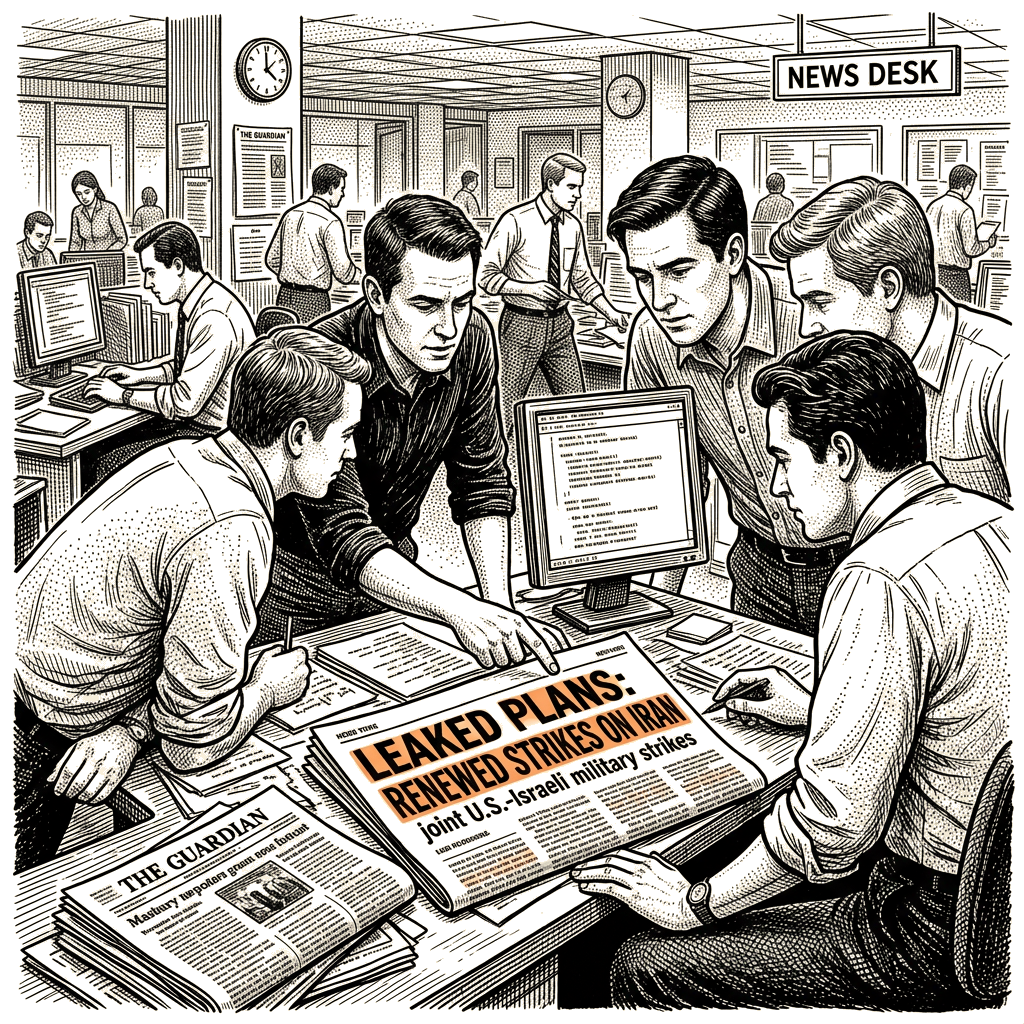
Reports cited by Bazzi described a possible new round of joint U.S.-Israeli military strikes after the November 3 midterms. The reported targets included Iran’s underground nuclear facilities, missile arsenals and civilian infrastructure. Bazzi said officials had leaked the plans while the question of renewed bombing had loomed over the campaign for weeks.
Bazzi reported that Israeli Prime Minister Benjamin Netanyahu had spent months persuading Trump to join Israel in a war aimed at regime change in Tehran. After Netanyahu’s rightwing governing coalition failed to secure a majority in Israel’s parliamentary elections the previous week, Netanyahu urged Trump in a Saturday phone call to restart bombing soon after the midterms.
Bazzi also reported that Trump had said at a Florida rally the previous month that he was considering “another little Epic Fury,” referring to the weeks-long U.S. and Israeli bombing campaign that began February 28. He wrote that the campaign’s opening airstrikes killed dozens of senior Iranian military and political officials, including Supreme Leader Ayatollah Ali Khamenei.
Bazzi assesses post-midterm motives and legal consequences
In his assessment of Trump’s post-midterm options, Bazzi said Trump might still choose a deal with Iran instead of a wider war. Bazzi also said Trump might have been reluctant before the election because he feared an even bigger loss for Republicans, who faced widespread voter anger over rising energy prices and other costs. He argued that if Trump had held back before November 3 because he feared a larger Republican loss, he would have had less to lose politically once the election had passed. Bazzi wrote that Netanyahu wanted a renewed war with Iran as he fought for his political survival.
One of the central rationales being floated by the Pentagon, according to Bazzi, was that an “intensive” multi-day attack could force Iran to make new concessions in stalled negotiations. Bazzi argued that renewed bombing was unlikely to bring Trump closer to a deal that would enable him to declare victory and move beyond the conflict he started eight months earlier. He compared that rationale with Trump’s initial belief that a surprise attack that killed Iran’s top leadership would topple the regime within a few days and noted Trump’s repeated promise to supporters that he would not start new wars in the Middle East.
Bazzi said the United States and Iran mistrust each other deeply and that Trump’s movement between seeking a deal and repeatedly threatening to “annihilate” Iran worsened the mistrust. He wrote that Trump’s vows to “wipe out” Iran increased distrust among Iranian leaders, although the threats were usually dismissed by the media as bluster. At the UN General Assembly in September, Trump asked, “Will a deal be made with Iran that lets them rebuild and create a far greater country than it ever was before?” He continued: “Or do I annihilate the Islamic Republic and do it quickly … Do I drive them into hell?”
Bazzi said Trump could use a Republican defeat in the midterms as an excuse to exact revenge on Iranian leaders whom he blamed for rising prices and a historically low approval rating that fell to 30% in early October. If Republicans lost badly, Bazzi argued that Trump’s “impulsiveness and thirst for vengeance” could make him more inclined to order a large-scale attack on nuclear facilities and civilian infrastructure, including power plants, oil refineries, bridges and factories.
Bazzi wrote that such attacks could further devastate Iran’s economy and would likely constitute war crimes under international law. He cited one U.S. official who told Axios last week, “If he feels embarrassed or disenfranchised he will do something bold.” The official was explaining the possibility of Trump lashing out after a humiliating loss in the midterms. Bazzi described such a result as Democrats winning control of both houses of Congress and securing larger majorities than expected, especially in the Senate.
Bazzi characterized the earlier war as trading one Khamenei for another and said emboldened Iranian leaders used their control over the Strait of Hormuz to demand new concessions. In his closing assessment, Bazzi said the coming days would show whether Trump could set aside his pride and his quest for vengeance to make a deal with Iran or repeat the mistakes that launched the eight-month conflict. He wrote, “Trump shows little sign that he has learned from the mistakes that led him into this quagmire.” Bazzi is a Guardian US columnist, director of the Center for Near Eastern Studies and a journalism professor at New York University.
Iran’s earlier attacks and threatened response
Bazzi wrote that Trump and Netanyahu initially thought they could topple the Islamic regime that rose to power after Iran’s 1979 revolution. He described the Iranian regime as prepared to fight for its survival despite the assassination of its top leaders.
According to Bazzi, Iran retaliated with missile and drone strikes against U.S. military bases across the Middle East, closed the Strait of Hormuz and destroyed oil pipelines and gas fields in neighboring Gulf countries, driving up global energy prices. Iranian leaders quickly appointed Mojtaba, Khamenei’s son, as the new supreme leader and expanded hardliners’ influence within the Islamic Revolutionary Guard Corps, described in the account as Iran’s most powerful military force.
Iranian officials said any new U.S. military campaign targeting Iran’s infrastructure would draw large-scale attacks on American bases and the energy infrastructure of neighboring Gulf countries. On Saturday, Mojtaba Khamenei warned that Iran’s response would be “immediate” and “without any geographical limitations,” which Bazzi said could point to targets beyond the Middle East.