Trump’s Oct. 18 endorsement came as the Oct. 27 vote neared
WEST PALM BEACH, Fla. — President Donald Trump and Prime Minister Benjamin Netanyahu spent this year’s nearly eight-month war with Iran divided over strategy. On Sunday, Oct. 18, late in Netanyahu’s reelection campaign, Trump endorsed Netanyahu. Trump had withheld explicit backing for months as the Oct. 27 vote neared, while the leaders’ Middle East strategies had diverged.
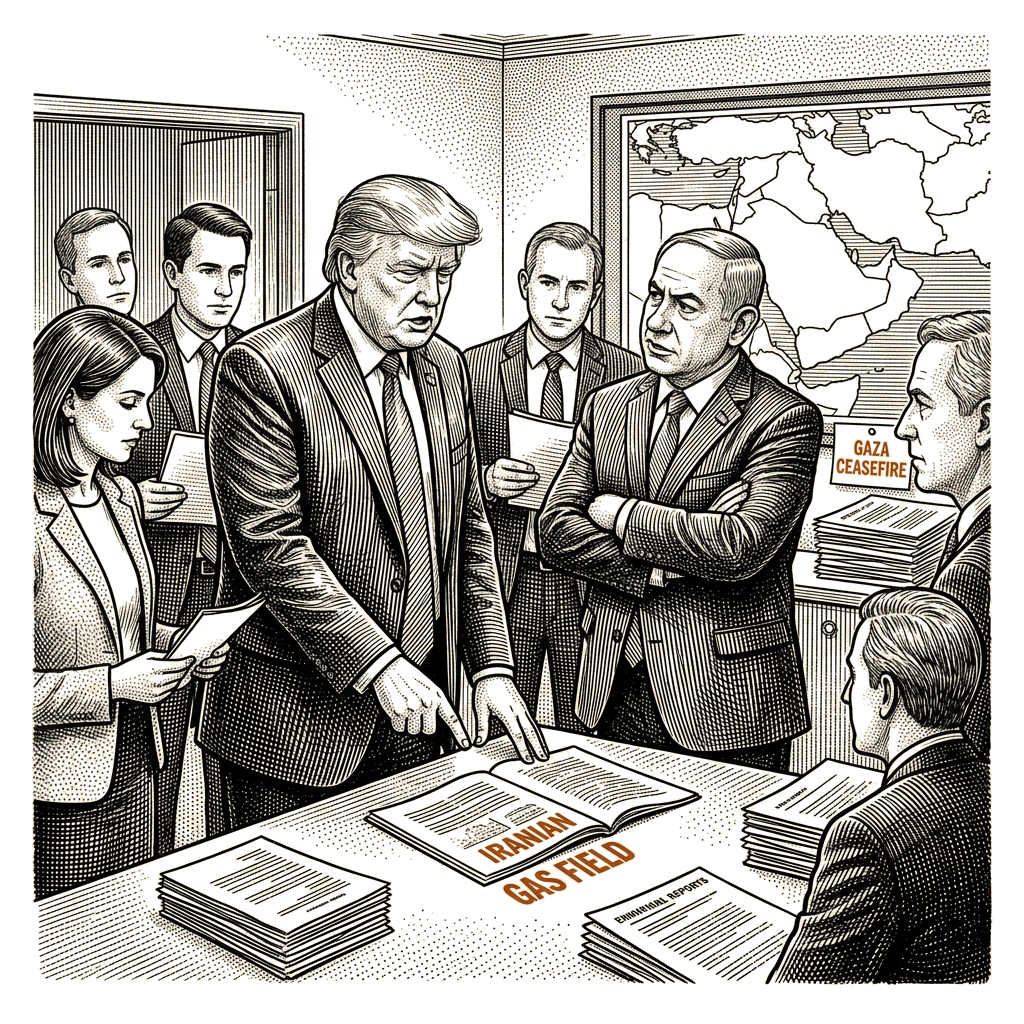
Trump and Netanyahu remained close allies and seemed more aligned than ever after joint U.S.-Israeli strikes on Iran’s nuclear facilities in 2025. But over the course of the war, they disagreed over several issues. Trump criticized Israel’s decision to attack a key Iranian gas field in the war’s first weeks. In June, he called Netanyahu “crazy.” Trump also said he was “a little bit perturbed” as Israel’s fighting with Hezbollah militants in Lebanon was holding back peace talks with Iran. Beyond Iran, Netanyahu in August rejected Trump’s latest plan to advance a stalled ceasefire in Gaza, pushing back on the U.S. administration’s call for Israel to withdraw from territory it controls in Gaza until Hamas has been disarmed.
Israelis were set to vote Oct. 27 in the country’s first national elections since Hamas attacked Israel on Oct. 7, 2023. The endorsement could provide Netanyahu with a political boost because Trump remained popular in Israel, but its effect was not immediately clear in what was expected to be a tight race. The absence of an endorsement had been a setback for Netanyahu, a Likud politician who had billed his close ties to the Republican president as a selling point for staying in power.
Trump said in a post on social media that Netanyahu “has been a Great Warrior Prime Minister, and an even greater Partner for Peace in combatting the Islamic Republic of Iran.” Netanyahu thanked Trump in a statement in Hebrew posted on X: “Thank you, President Trump, for the tremendous support and work together.” He added, “Together we will complete the mission!” The Likud Party attached a 35-second video to the statement, showing clips of the two leaders together and Trump praising Netanyahu.
Many Israelis, including leading commentators, have expressed disappointment over the inconclusive outcome of the Iran war and Trump’s ceasefire proposal, which fell short of many of the countries’ key goals when they jointly launched the war in February.
In the same post, Trump again threatened to “soon finish the job” against Iran “unless they change their ways, rapidly,” but added he might not want to if Netanyahu loses the election. “If Israel has the wrong Leader, which would be anyone other than Bibi, America will have to do this work ourselves, and I am not inclined to do so,” Trump said. He said Netanyahu had been “Strong, Brave, and Brilliant in the face of tremendous opposition, including that coming from even Israel, itself.”
Earlier endorsements and political context
Trump had endorsed Netanyahu in past elections, and in November he sent a letter to Israeli President Isaac Herzog asking him to pardon Netanyahu on corruption charges. His comments about Netanyahu had been much more subdued in recent months, and he repeatedly demurred when asked whether he would back the prime minister.
In a Time magazine interview published this month about backing the Israeli leader, Trump said, “I’m not involved in politics anymore,” despite his campaigning for and endorsing U.S. politicians.
Trump, especially in his second term, had sought to give his stamp of approval to candidates in foreign elections and claim credit when they succeeded. He had endorsed Hungarian Prime Minister Viktor Orbán in his unsuccessful bid for a fifth term, as well as Japanese Prime Minister Sanae Takaichi, Polish President Karol Nawrocki and several Latin American leaders.
Associated Press writer Josef Federman in Jerusalem contributed to this report.