Tehran offered Hormuz reopening if US lifted port blockade
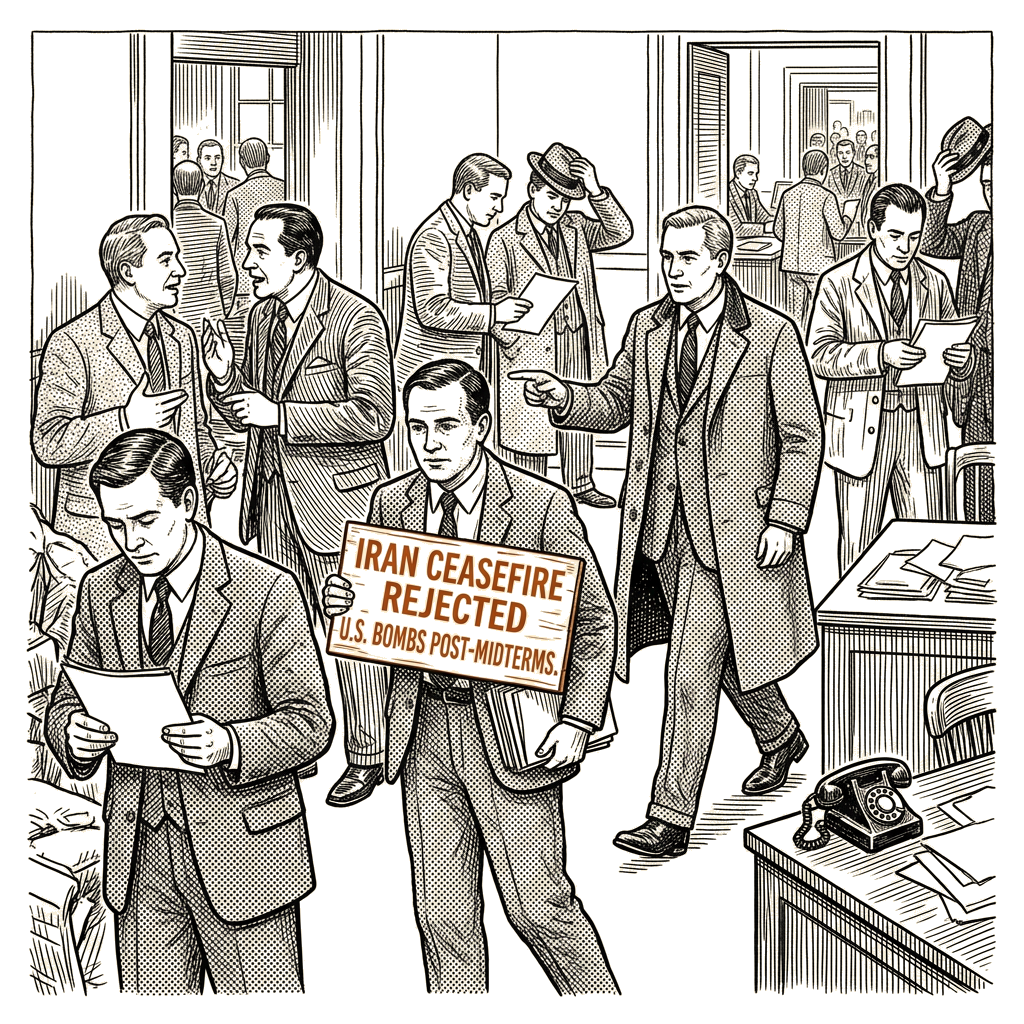
President Trump has rejected Iran’s proposal for a seven-day ceasefire and told aides he expects to resume bombing Iran after the November midterm elections, U.S. officials said. Trump says openly that Tehran is begging for a deal after the midterms that dismantles Iran’s nuclear program.
Tehran’s proposal, broached at a Sunday meeting in Qatar, would have reopened the Strait of Hormuz and resumed nuclear talks in return for the U.S. lifting its blockade of Iranian ports, which has caused deep economic damage, according to people familiar with the matter. The seven-day proposal calls for the U.S. to lift its naval blockade, unfreeze some Iranian assets and lift sanctions on Iranian oil exports; in exchange, Iran would open the Strait of Hormuz and start negotiations on its nuclear program.
Privately, Trump is skeptical Iran would meet his demands and has told his staff he sees a renewed bombing campaign as likely, the officials said. His current position signals the conflict sits in a liminal space between war and peace that is likely to tilt back toward hostilities. The president, who has declared victory since the earliest days of the seven-month fight, alternates between pursuing diplomacy, ordering airstrikes and tightening sanctions around Iran, the officials said, and his views could shift as the war drags on and could be affected by the midterm results.
The level of strikes Trump is contemplating could not be determined. He is reluctant to resume major combat operations, the officials said, partly because the U.S. wants to reserve dwindling munitions for other contingencies. But Trump has also announced massive attacks to push through diplomatic deadlocks in U.S.-Iran negotiations, sometimes following through but always stepping back from his most audacious threats, including wiping out the entirety of Iranian civilization.
Trump told the United Nations this week that politics do not enter his mind when aiming to pry nuclear fuel from Iran. “The Republican Party is running, and I’ll be helping them, but I am not running. I gave absolutely no credence and will not give credence through the election when it comes to Iran,” he told world leaders during the annual General Assembly in New York. “The only thing that does is that Iran will never have a nuclear weapon.” Trump has also told Republicans to pretend he’s on the ballot when they head to the polls.
A U.S. official said Washington and Tehran are still negotiating through mediators, including on the nuclear issue. An American-led effort to ensure oil tankers sail through the Strait of Hormuz despite Iranian threats has lessened the urgency for an agreement, the official said. Qatar and other regional mediators have been working around the U.N. General Assembly to reinvigorate talks between Iran and the United States.
The U.S. has told Iran and the mediators that Trump has no intention of lifting the maritime embargo, officials familiar with the matter said. The U.S. believes economic pressure will eventually force Tehran to sign an agreement with terms favorable to Washington and the Arab states along the Persian Gulf.
Arab mediators said Iranian diplomats have presented a number of proposals to end the war and acknowledged the deepening economic crisis in their country. But the Islamic Revolutionary Guard Corps, the powerful paramilitary and economic force that has essentially run Iran since the war began in February, has said it will not entertain new formulas for an agreement and is prepared for a long war.
The Revolutionary Guard wants to return to terms closer to the preliminary deal Trump struck with Iran in June. That agreement promised to provide relief from sanctions on oil sales, grant access to Iran’s frozen assets and acknowledge a role for Tehran administering the Strait of Hormuz in exchange for opening the waterway.