Iran wants return to June MOU that Trump no longer wants to revive
At the United Nations General Assembly last week, Trump said he was weighing whether to “annihilate” Iran’s government to keep it from gaining a nuclear bomb. He has sought to reframe the conflict around his original war goal of preventing Iran from obtaining a nuclear weapon and to redirect talks away from unlocking the Strait of Hormuz from Iran’s grip.
But Iran has given mediators little indication that it is ready to talk about its nuclear program. Iranian leaders are confident that they can withstand a long-term U.S. blockade or a renewed bombing campaign, said Middle East government officials who speak with Tehran regularly. Those officials said Iranian power is now concentrated in the Islamic Revolutionary Guard Corps, a paramilitary and economic force that has long taken a hard line against compromise with the West.
On Sunday, Iranian Foreign Minister Abbas Araghchi said on NBC’s “Meet the Press” that Iran was open to negotiations but that Tehran would respond to any aggression in kind. “We are fully prepared for the war to resume,” Araghchi said. “We stand firm in the face of any new aggression, even if it comes to a doomsday war. But at the same time we stand ready for diplomacy. It is up to President Trump to choose.”
Araghchi stayed in New York over the weekend after the General Assembly for additional talks, but Arab mediators said Iran has not compromised at all since Trump rejected Tehran’s ceasefire plan. Persian Gulf officials said Iran wants Washington to offer concessions before negotiations can move forward.
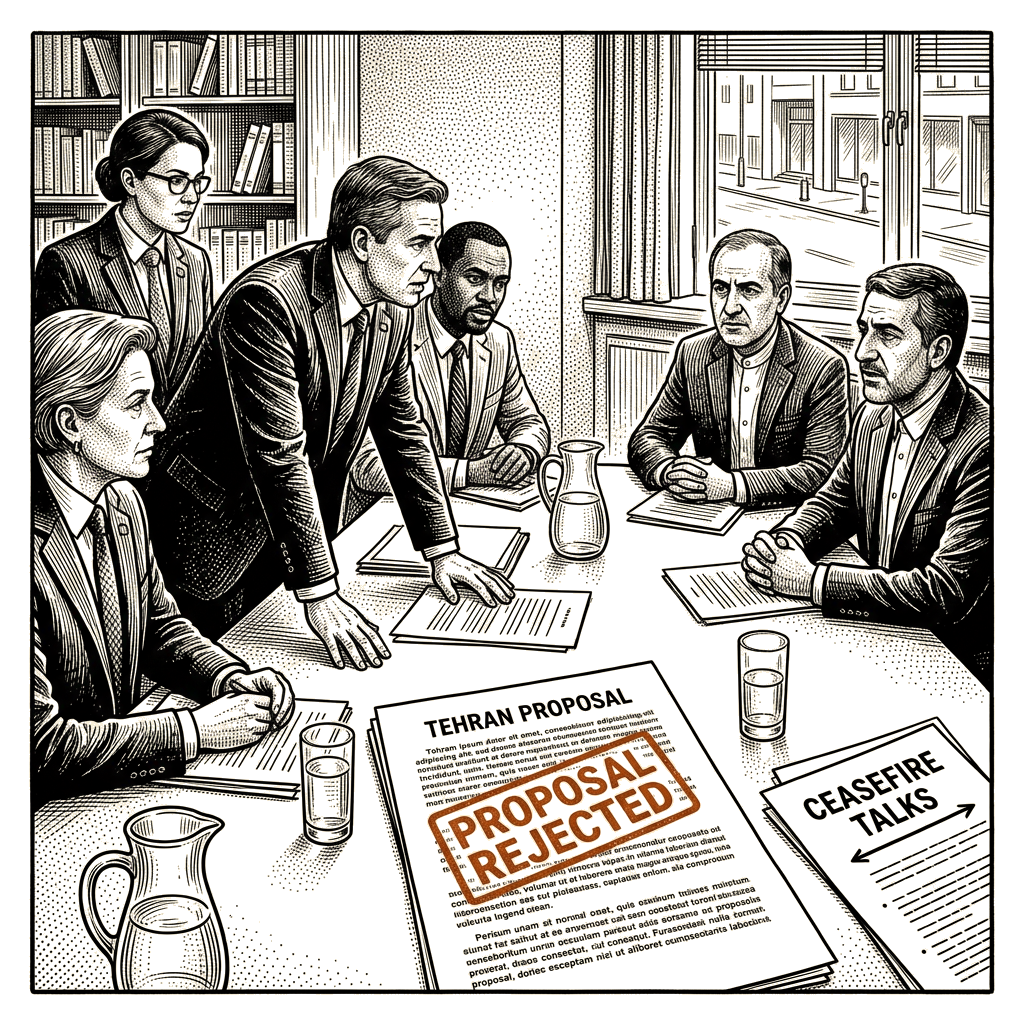
Trump himself is skeptical that diplomacy will work and has told his staff he sees a renewed bombing campaign as likely, the Journal reported. On Friday, Trump rejected an Iranian ceasefire proposal that would have opened the Strait of Hormuz and ended the U.S. blockade of Iranian ports for seven days to give space for negotiations.
The U.S. has become more confident that its naval blockade is having a severe effect on the Iranian economy. At the same time, U.S. and Gulf officials said Iran is losing control of the Strait of Hormuz, with millions of barrels of oil passing through the waterway for crude-oil transit and the global economy.
“This weakens Iran’s leverage on the negotiating table,” said Umer Karim, a researcher on Gulf security at the University of Birmingham in the U.K. Karim said Iran’s increasingly hard-line government believes Trump and his Republican Party will lose the midterm elections. From there, many Middle East officials believe Trump will be less constrained by electoral politics and will be more willing to use force, and less likely to make a deal on Iran’s terms.
“Right now, a concession at this time by any party would be considered an expression of weakness by the other and not just a willingness to settle matters,” Karim said.
Iran wants the U.S. to return to a memorandum of understanding Trump agreed to in June — an agreement that would have reopened the Strait of Hormuz and eventually launched nuclear negotiations in exchange for the lifting of some sanctions on Iran, the unfreezing of billions of dollars of Tehran’s overseas funds, and the lifting of the U.S. blockade, among other items. That agreement was widely seen as favorable to Iran, and Trump no longer wants to return to it, U.S. officials have said. Instead, the U.S. has tightened sanctions on Iran and any country doing business with it, including trying to stop air traffic in and out of the Islamic Republic.
“It should be no surprise that all sides are hardening their positions,” said Behnam Ben Taleblu, senior director of the Iran program at the Foundation for Defense of Democracies, a Washington think tank critical of Tehran’s policies. “Tehran is trying to backend Trump into a compressed version of the agreement it violated earlier this summer. Meanwhile Washington appears intent on escalating sanctions and maintaining the blockade until it senses surrender.”
A high-level official with a Middle East government involved in peace talks said Iran would be willing to make compromises on its nuclear program and was close to doing so earlier this year in talks with Vice President JD Vance. But the official said Iran would need explicit assurances that Israel would not attack again after any agreement between Washington and Tehran.