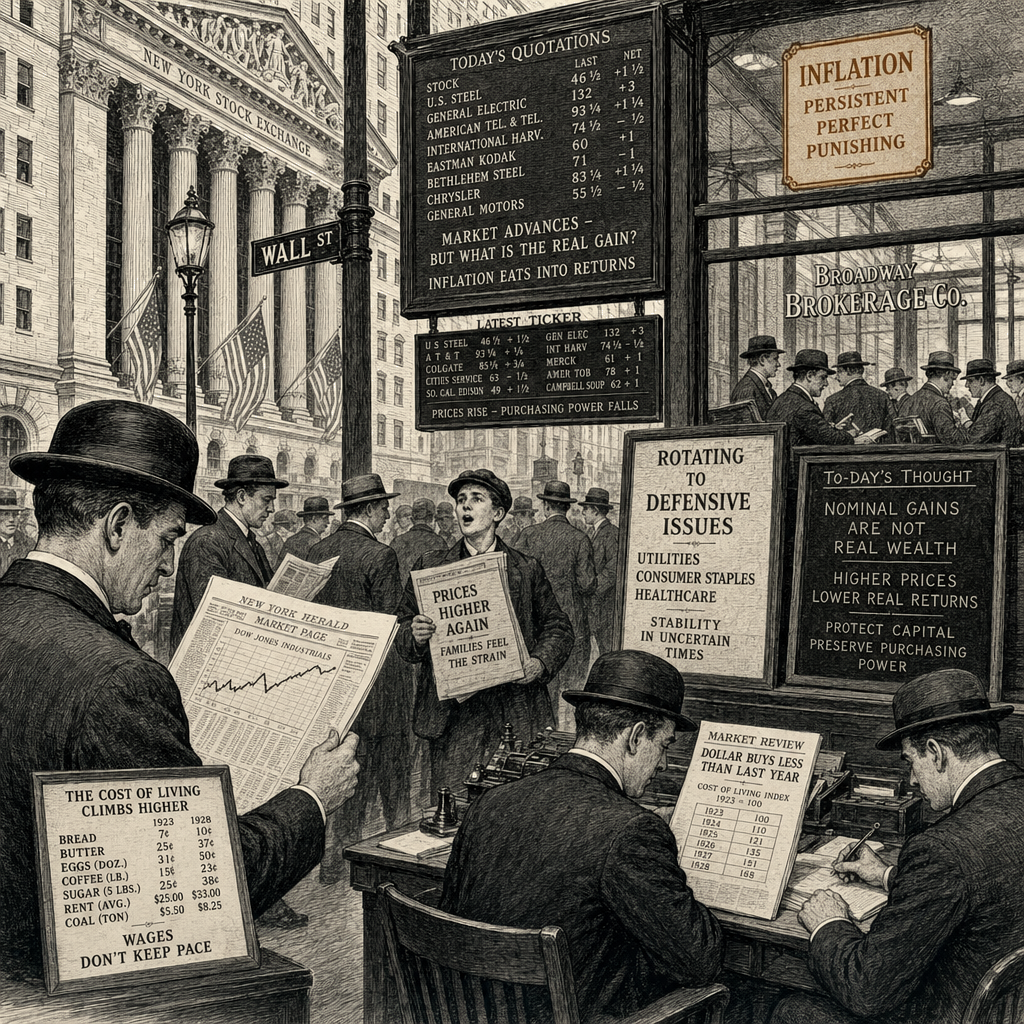
- Persistent inflation is reducing the real returns of U.S. stocks: the S&P 500’s nominal five-year gain of 72% shrinks to roughly 50% after adjusting for inflation, according to The Wall Street Journal.
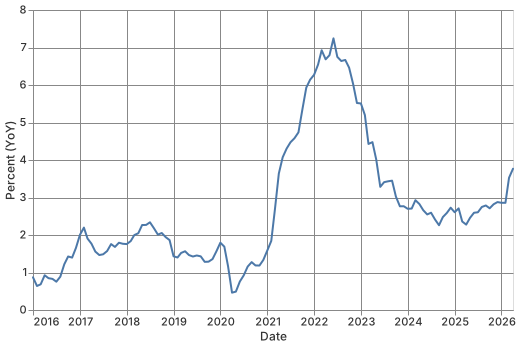
- The Federal Reserve’s preferred inflation gauge, the Personal Consumption Expenditures price index, stood at 3.77% year over year as of June 10, above the central bank’s 2% target for 62 consecutive months.
- Absolute Strategy Research analysts Ian Harnett and David Bowers warned that stagflation is a key risk and that high valuations could lead to prolonged recovery periods, citing a 15-year break-even after the 2000 tech bubble burst.
- Tech stocks experienced a second sharp selloff in three sessions, while defensive names such as J.M. Smucker and Home Depot attracted investor interest.
Tech stocks on Tuesday suffered their second sharp selloff in three trading sessions, extending the volatile pattern that has characterized June trading, the Wall Street Journal reported. Futures pointed to further weakness when trading begins Wednesday. The rotation away from growth sectors accelerated as investors sought refuge in defensive names that had been largely overlooked during the recent AI-driven rally. Shares of J.M. Smucker and Home Depot were among those drawing demand.
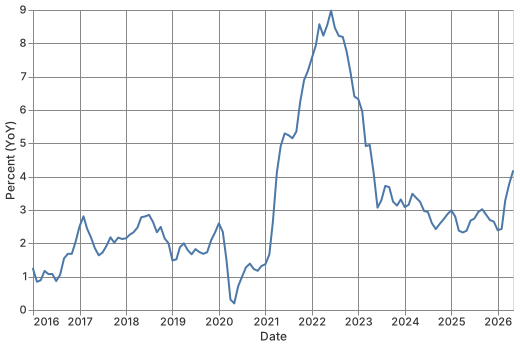
The consumer price index rose 3.78% year over year in May, according to FRED data available Tuesday. The Federal Reserve’s preferred inflation gauge, the Personal Consumption Expenditures price index, stood at 3.77% year over year, remaining above the central bank’s 2% target for 62 straight months, the Journal noted. The data is due for release before U.S. markets open Wednesday and could influence sentiment ahead of the SpaceX IPO later this week.
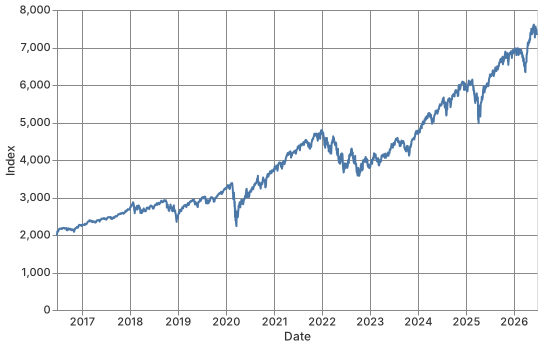
Absolute Strategy Research analysts Ian Harnett and David Bowers said stagflation is a key risk for markets. The analysts warned that it could take a surprisingly long time for S&P 500 earnings to “grow into” today’s lofty valuations if price/earnings multiples return to more normal historical levels. The S&P 500 closed at 7,386.65 on Tuesday, according to FRED data.
The valuation concern draws on historical precedent. Harnett and Bowers calculated that the S&P 500 took 15 years on a price basis to break even after inflation following the tech bubble burst from 2000 to 2015. Even longer inflation-adjusted recovery periods included 1929 to 1956 and 1965 to 1991. The cyclically adjusted price/earnings ratio today stands above where its predecessor index was in 1929, while dividend yields are near record lows.
Beyond the broad market, individual movers underscored the mixed picture. Super Micro Computer, the maker of artificial-intelligence servers, fell 9% ahead of the opening bell after disclosing plans to raise $7 billion in a series of equity offerings. Cracker Barrel Old Country Store shares jumped 6% premarket after the restaurant chain reported a surprise quarterly profit and lifted its annual outlook, signaling that its turnaround effort is back on track following a customer backlash against a short-lived rebranding attempt.
Investors are also watching Oracle, which is set to report quarterly earnings after markets close Tuesday. The software and cloud-services company holds a $300 billion deal to provide OpenAI with computing power.