- Federal Reserve Chair Kevin Warsh declined to offer forward guidance on interest rates during his first policy meeting, even as nine of 19 Fed officials projected at least one rate hike by the end of the year.
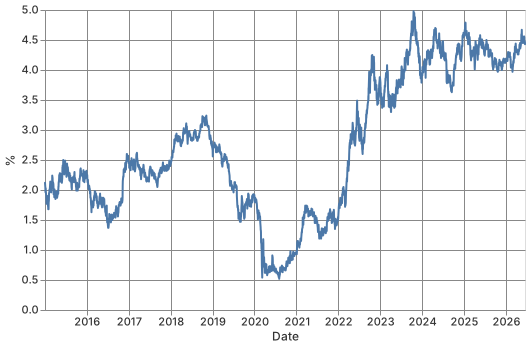
- The S&P 500 fell 1.2% to 7,511.35, and the yield on the 10-year Treasury note rose to 4.43%, as markets repriced on the hawkish shift.
- President Donald Trump defended a recent Iran ceasefire deal, saying he aimed to avoid “economic catastrophe” and threatening to resume attacks if Iran does not comply.
- The International Energy Agency forecast an oil glut next year if the Strait of Hormuz opens, while crude stockpiles in the U.S. Strategic Petroleum Reserve fell to their lowest level since the 1980s.
- Retail sales rose 0.9% in May from a month earlier, accelerating from an April pace of 0.4%, and home contract signings rose 3.8%, far exceeding economists’ expectations of 1% growth.
Federal Reserve Chair Kevin Warsh declined to offer forward guidance on interest rates during his first meeting as chairman Wednesday, even as a majority of Fed officials projected at least one rate hike by year end, leading to a broad selloff in stocks and bonds.
The Wall Street Journal reported that nine of 19 Federal Open Market Committee officials projected at least one quarter-point rate increase would be needed by December, a sharp shift from March, when none of the officials expected a hike. Warsh did not contribute to those projections, a departure from the usual practice of the Fed chair, and during his post-meeting press conference he repeatedly refused to offer any “forward guidance” on the central bank’s future actions.
The S&P 500 fell 1.2% to close at 7,511.35, according to FRED data. The Dow Jones Industrial Average shed 1%, or 507 points, and the Nasdaq Composite declined 1.3%. In the bond market, the yield on the 2-year Treasury note rose 0.114 percentage point to 4.16%, while the yield on the 10-year Treasury note increased to 4.43%, according to FRED data.
Separately, President Donald Trump defended the latest Iran ceasefire deal, which drew criticism from some quarters for giving concessions to Tehran. Trump said he wanted to avoid an “economic catastrophe” and threatened to resume attacks on Iran if it did not stick to the terms of the agreement.
The International Energy Agency said it expects oil supply growth to far outstrip demand growth next year if the peace deal holds and the Strait of Hormuz remains open to shipping. Brent crude futures rose slightly but remained below $80 a barrel. Meanwhile, U.S. crude inventories in the Strategic Petroleum Reserve fell to 340 million barrels, the lowest level since the 1980s.
Economic data released Wednesday showed Americans maintained spending momentum. Retail sales rose 0.9% in May compared with April, accelerating from a 0.4% growth pace a month earlier, according to the Commerce Department. The number of homes going under contract rose 3.8% on a monthly basis, well exceeding economists’ expectations of 1% growth, according to the National Association of Realtors.