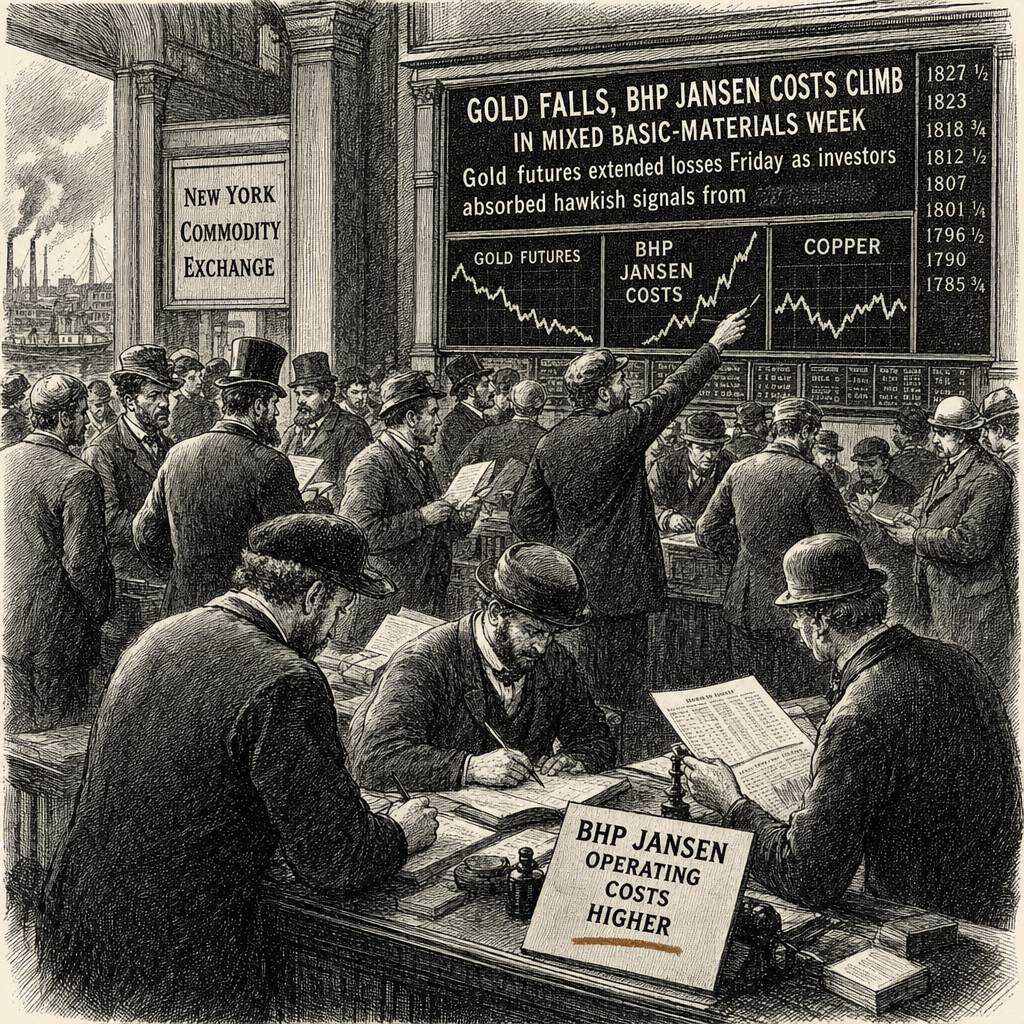
Gold futures extended their decline Friday, falling 1.8% to $4,170.30 a troy ounce in early New York trading, as investors continued to respond to a more hawkish tone from Federal Reserve officials. A higher interest rate environment typically weighs on non-yielding assets like bullion, MUFG analyst Soojin Kim wrote in a note.
“Gold is likely to remain under pressure in the near term as geopolitical risk premiums continue to fade and higher for longer interest rate expectations strengthen,” Kim said. However, continued uncertainty around the pace of normalization for shipping through the Strait of Hormuz will limit downside risk for gold, the analyst added.
The Dow Jones Industrial Average stood at 51,492.55 on June 19, according to FRED data.
BHP Jansen cost overrun draws analyst scrutiny
BHP Group disclosed that its Jansen Stage 2 potash project in Canada will cost US$6.9 billion, up sharply from a prior estimate of US$4.9 billion. The company continues to forecast unit costs of US$114 to US$130 per metric ton once the first two stages are ramped up, which Citi said would make the mine “one of the world’s lowest-cost potash operations.” BHP expects an underlying Ebitda margin for Jansen Stage 2 above 65% and an internal rate of return of 11%.
Morgan Stanley said it was not particularly surprised by the size of the overrun, noting it was already forecasting capital expenditure around US$6.6 billion for the project’s second stage. A delay to first production was flagged in January, and the new timeline of late fiscal 2031 is behind the bank’s first-half fiscal 2031 expectation. “We see limited incremental impact,” Morgan Stanley said.
Barclays took a more cautious view, saying the cost overrun further erodes returns and underlines risks to BHP’s organic-growth strategy. The bank had expected capex of US$5.5 billion on the expansion. The overrun raises questions about how BHP will handle its pipeline of proposed growth projects, Barclays said.
“This could see management attempting to execute four major growth projects simultaneously [Jansen, Escondida, Vicuna, Copper SA new smelter] when it has been unable to manage the timeline and budget for one,” Barclays said.
BHP shares fell 3.7% to A$62.63 on the Australian Securities Exchange. Citi has a neutral rating and target price of A$66.00 on BHP. Morgan Stanley has an overweight rating and A$67.50 target.
Fertilizer and palm oil markets
The average price of urea dropped 12%, or $100 a ton, from June 8 to June 12, according to an assessment by research firm DTN. The decline coincides with anticipation building for the reopening of the Strait of Hormuz, a key part of the deal the U.S. and Iran signed to end their conflict. The Middle East is one of the world’s largest suppliers of urea, a widely used synthetic nitrogen fertilizer.
CBOT grain futures were lower, with traders cutting risk premium ahead of the three-day weekend. Corn fell 1.1%, soybeans dropped 0.4%, and wheat was down 1.5%.
Crude palm oil prices are projected to remain between 4,400 ringgit a ton and 4,650 ringgit a ton in July, supported by tightening supply prospects in Indonesia and growing concerns over El Nino, the Malaysian Palm Oil Council said in a note. While plantations in Malaysia and Indonesia have not yet been affected, the risk of a stronger El Nino developing from July or August is rising, it said. A prolonged dry season could weigh on palm oil production with a lag of 9 to 12 months, it added.
However, prices may be limited amid ample vegetable oil stockpiles in major importing countries and weaker biodiesel demand economics, with gasoil prices falling below palm oil prices in the futures market, the council said.
Anglo American-Teck merger on track
Shares of the merged AngloTeck business have the potential to rise as the market better understands the financial metrics of the combined company, Berenberg analysts Richard Hatch and Jasper Mainwaring wrote. London-listed Anglo American and Canada-based Teck Resources agreed to merge last September in a deal that would create the world’s largest copper producer with a combined value of $53 billion. The merger is expected to complete by March 2027.
“Chinese antitrust regulatory approval remains the final hurdle to see the merger closed, which we do not think will be an issue,” Berenberg said. Anglo American shares were down 3.5% at 39.88 pounds, but are up 29% over the year to date.
Canada’s economic outlook
Canada’s economic outlook is contingent on capitalizing on its expertise in the energy field and producing critical minerals, said Desjardins Group chief economist Jimmy Jean. Foreign-investor interest appears strong at present due to Canada’s vast oil-and-gas reserves, he said. Jean said Canada can no longer rely on attracting investors as a tariff-free gateway to the U.S.
“What Canada must achieve goes beyond the prevailing self-congratulatory rhetoric: transforming its comparative advantages — clean energy, resources, expertise — into new production capacity,” Jean said.
Foreigners are gobbling up Canadian securities at a historically high pace, he noted. Jean said it would be a mistake for Canada to treat the present optimism as an “unconditional vote of confidence in Canada’s ability to deliver.”