Summary
- U.S. retailers are rushing imports of clothes, electronics and holiday merchandise to avoid new tariffs taking effect at the end of July and rising fuel costs from the Iran war, according to logistics industry specialists and freight forwarders.
- The average cost to ship a 40-foot container from China to the U.S. West Coast hit $5,933 on June 26, a threefold increase from the end of February and the highest rate since September 2024, according to transportation intelligence company Xeneta.
- The U.S. trade deficit jumped to $105.8 billion in May, a 27% increase from April, driven by the import surge, according to Commerce Department data.
- The ports of Los Angeles and Long Beach handled 868,221 containers in May, the highest level since August 2025 and a 33% increase compared with May 2025, when many companies pulled back on imports because of tariffs.
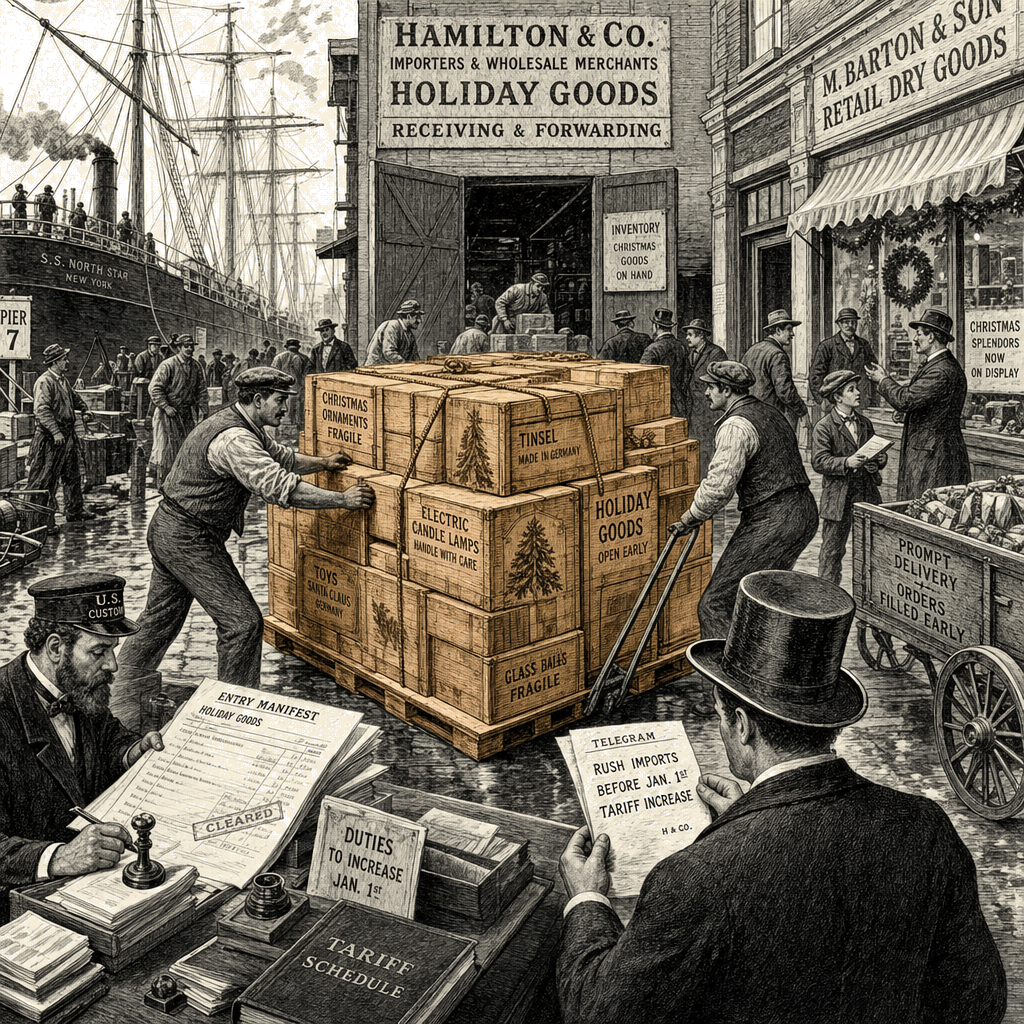
- Importers report fierce competition for container space, with some companies bringing forward orders for Halloween and Christmas merchandise to beat the tariff deadline.
Ocean shipping rates are surging as U.S. retailers rush in clothes, electronics and holiday items to get ahead of rising costs caused by tariffs and the Iran war, according to logistics industry specialists and Commerce Department data.
The average cost to ship a 40-foot container from China to the U.S. West Coast hit $5,933 on Friday, a threefold increase from the end of February and the highest rate since September 2024, according to transportation intelligence company Xeneta. Peter Sand, Xeneta’s chief analyst, said rates could rise by another 30% before they peak.
Logistics industry specialists say importers are bringing forward orders for the busy end-of-year shopping seasons, including Halloween and Christmas, to avoid new tariffs taking effect at the end of July. Some companies have also been scrambling to beat a new round of bunker fuel surcharges that ocean carriers are expected to implement in the coming weeks to account for rising oil prices resulting from the war.
The rush of imports caused the U.S. trade deficit to jump to $105.8 billion in May, a 27% increase from April, according to Commerce Department data.
Importers say competition for space on ships is fierce. “We’ve had more delays getting container space in the last three weeks than we’ve had in a long time,” said Bronwen Sainsbury, president of Stack Resources, a Seattle-based wholesaler of home decor.
Many retailers are looking to replenish depleted inventories before costs rise. Excluding motor vehicles and parts, the retail inventory-to-sales ratio held at 1.09 in April for the second straight month, according to Census Bureau data. This represents the lowest level for the measure of companies’ goods holdings compared with sales since the pandemic-driven supply-chain crunch of late 2021.
In May, the ports of Los Angeles and Long Beach — America’s principal gateway for imports from Asia — handled 868,221 containers, measured in 20-foot equivalent units. That is the highest level since August of last year and a 33% increase compared with May 2025 when many companies pulled back on imports because of President Trump’s tariffs.
Freight specialists say some importers are rushing in goods now to take advantage of a brief lowering of tariffs after the Supreme Court struck down most of the levies in February. The administration introduced lower, temporary tariffs in recent months, and is expected to institute higher tariffs, using a different legal mechanism, at the end of July.
“The bar was closed,” said Michael Aldwell, executive vice president of sea logistics at Kuehne + Nagel International, one of the world’s largest freight forwarders. “Now it’s back open and then it’s going to close again.”