Lee proposed defense industry upgrade at Ankara summit
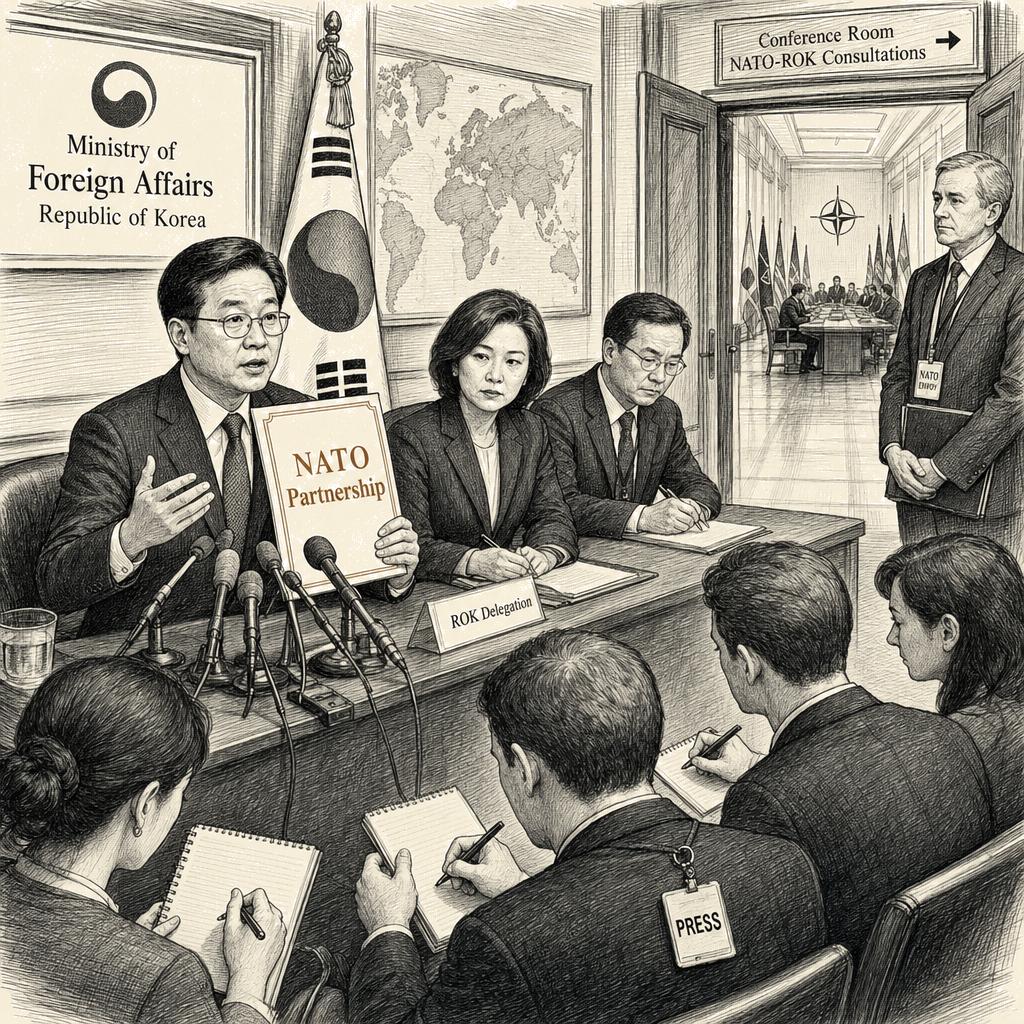
South Korea’s foreign ministry said Tuesday that its engagement with NATO is designed to enhance global peace and stability, issuing its first formal response to Moscow’s criticism of the deepening partnership.
Russia’s foreign ministry earlier expressed “serious concern” through state-run Tass, accusing Seoul of a growing “drift toward NATO” that it said made South Korea a “de facto participant in NATO’s qualitative and quantitative rearmament process, as the alliance has openly declared its preparations for war with Russia.”
In a written statement to Yonhap News Agency, the South Korean ministry said “cooperation between South Korea and NATO is aimed at strengthening each side’s capabilities across various sectors, including defense industry, new technologies and cybersecurity, so as to reinforce each side’s role and contribution to international peace and stability.”
President Lee Jae Myung attended the NATO summit in Ankara earlier this month, his first appearance at the alliance’s annual top-level gathering. At a defense industry forum on the sidelines, Lee proposed elevating cooperation to a “Korea-NATO Defense Industry Partnership 2.0,” expanding beyond weapons system transactions into joint research, production and operation.
The foreign ministry said Seoul is pursuing “practical diplomacy centered on national interests” and “continues to hold necessary communication with the Russian side to stably manage South Korea-Russia relations and protect our people and companies,” reflecting efforts to shield economic ties with Moscow despite the growing security alignment with NATO.
The exchange came as Seoul monitors the prolonged Russia-Ukraine war and the deepening military relationship between North Korea and Russia. Seoul’s spy agency has assessed that North Korea sent around 15,000 combat troops and conventional weapons to Russia to support its war effort.
South Korea’s foreign ministry said the Russia-Ukraine war and North Korea-Russia military cooperation “are issues that have a negative effect on international peace and security on the Korean Peninsula and the region.”