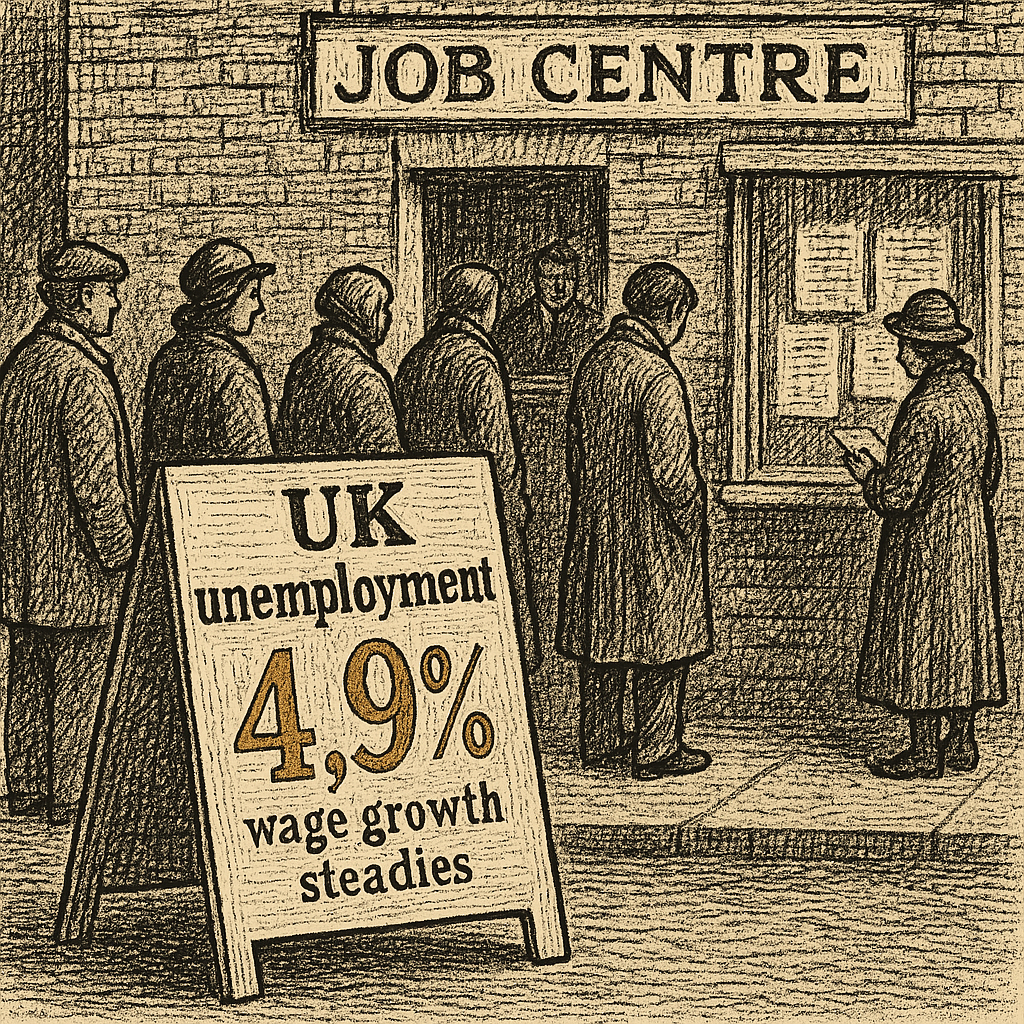
Soft labor market data strengthens case for BOE rate hold
The U.K. unemployment rate was unchanged at 4.9% in the three months through May, according to data released Tuesday by the Office for National Statistics, defying a consensus of economists polled by The Wall Street Journal who had expected a rate of 5.0%.
Annual wage growth excluding bonuses held steady at 3.4% for a third consecutive month, pointing to a stabilization of cost pressures for businesses. The subdued pay figures come as the broader economic picture remains mixed — MSI previously reported that the U.K. economy grew 0.1% in May, rebounding from a 0.1% contraction in April, driven by services-sector strength.
“The subdued figures likely shut the door on a July interest rate rise, by fueling hope that a softening labour market can help restrict inflation by restraining pay awards and dampening demand across the economy,” said Suren Thiru, chief economist at the Institute of Chartered Accountants in England and Wales.
Thiru described the labor market as “fragile,” noting that high employment taxes and economic uncertainty stemming from the Iran war are continuing to dampen recruitment.
Consumer prices unexpectedly held steady at 2.8% in May, below economists’ forecasts. June inflation data, due to be published Wednesday, are expected to show further easing, according to the ONS.
In a speech last week, Bank of England Gov. Andrew Bailey said that while the situation in the Middle East remains “unstable,” the impact of higher energy prices on U.K. inflation has so far been limited.
“We are seeing continued fairly soft evidence on the passthrough into U.K. prices,” Bailey said.
Economists said the combination of a cooling labor market and contained energy passthrough strengthens the case for the BOE to leave its key interest rate unchanged at 3.75% when its Monetary Policy Committee concludes its meeting next week. The BOE has held rates steady since February, when it projected inflation would fall back toward its 2% target.
Elevated unemployment adds to signals that the central bank could hold rates steady. While officials have said they would respond if higher energy prices from the conflict in Iran began feeding through into broader inflation, a cool labor market suggests domestic demand remains weak, limiting the ability of businesses to raise their prices.
Escalating conflict in the Middle East could weigh further on hiring and business confidence, weakening the labor market, while at the same time keeping energy prices elevated and increasing the risk that inflation proves more persistent than policymakers expect.