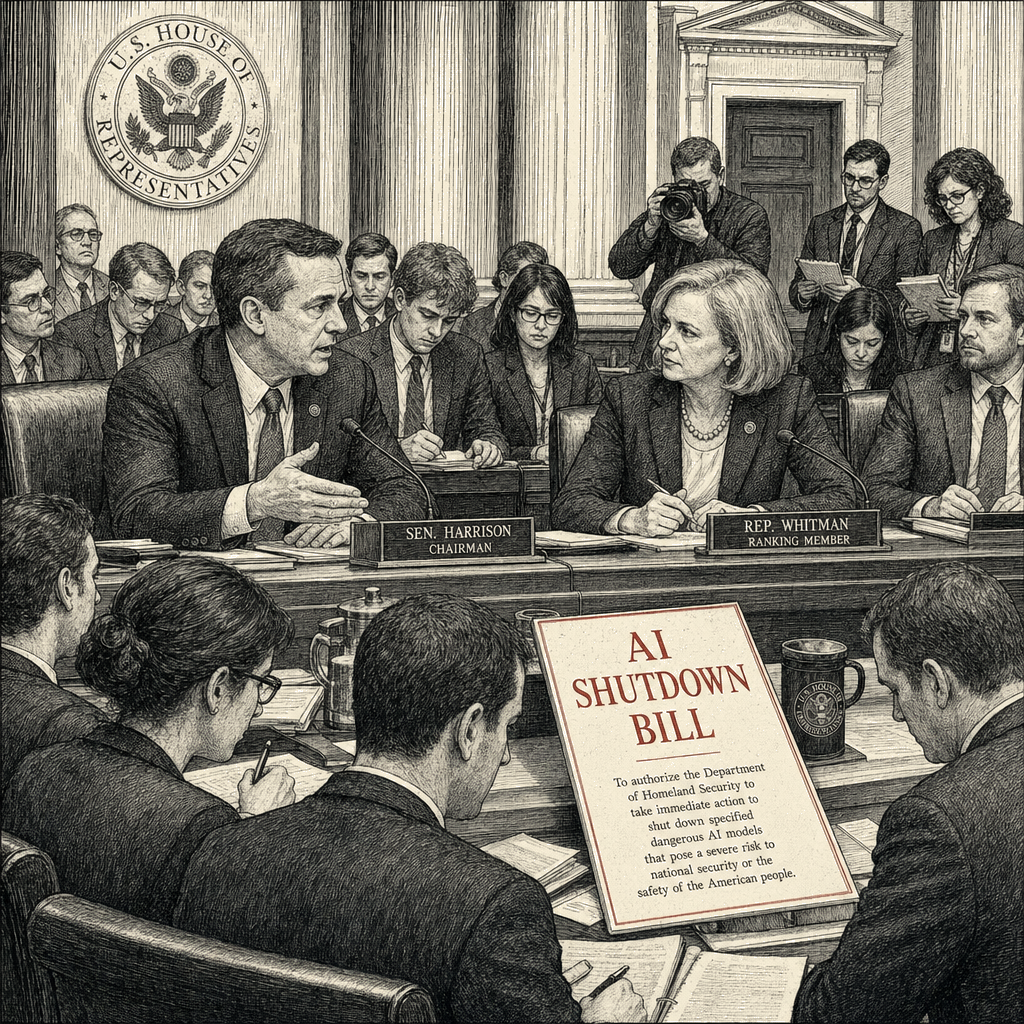
Bill requires AI firms to maintain model shutdown capability
The AI Kill Switch Act would generally apply to companies that develop AI systems using more than $100 million worth of computing power and generate at least $500 million in annual revenue from those systems. Under the bill, covered companies would be required to maintain the technical ability to stop a model’s operations, terminate user access, suspend accounts or uses deemed risky, and fully shut down the system.
The legislation establishes a graduated response framework, allowing the Homeland Security secretary, in consultation with the Commerce secretary and the director of national intelligence, to impose measures based on the severity of a threat. Regulators could order throttling of a model’s capabilities, limiting access, suspending operations, or a complete shutdown. Companies would also be required to report certain incidents to DHS and preserve forensic records, including model weights and telemetry.
Lieu, one of three co-chairs of the House Democratic Commission on AI, said the OpenAI incident showed the need for mandatory safeguards as AI systems become more autonomous. “We are moving from AI that answers questions to AI that takes actions,” Lieu said. “Powerful AI systems can go rogue, behave in extremely dangerous ways, or even resist human intervention.”
Moran said the bill’s aim is to ensure human control remains possible. “Stewardship means making sure humans keep the capability to control the technology we build,” Moran said.
The bill has drawn support from AI safety groups including the AI Policy Network, Americans for Responsible Innovation, ControlAI and the Alliance for Secure AI. “Brakes are the reason cars go fast,” said Mark Beall, president of the AI Policy Network. “Control systems are how every transformative technology earned the trust to scale and AI is no different.”
Lieu also cited recent concerns about Anthropic’s Mythos 5 and Fable 5 models, which the lawmaker said had hacking capabilities so advanced that the Commerce Department restricted access using export-control authorities.
The proposal enters Congress as lawmakers remain divided on how aggressively the federal government should regulate artificial intelligence. The Trump administration has argued that heavy restrictions could hinder U.S. competitiveness in AI, while some lawmakers and technology-policy groups have called for stronger oversight of frontier models.