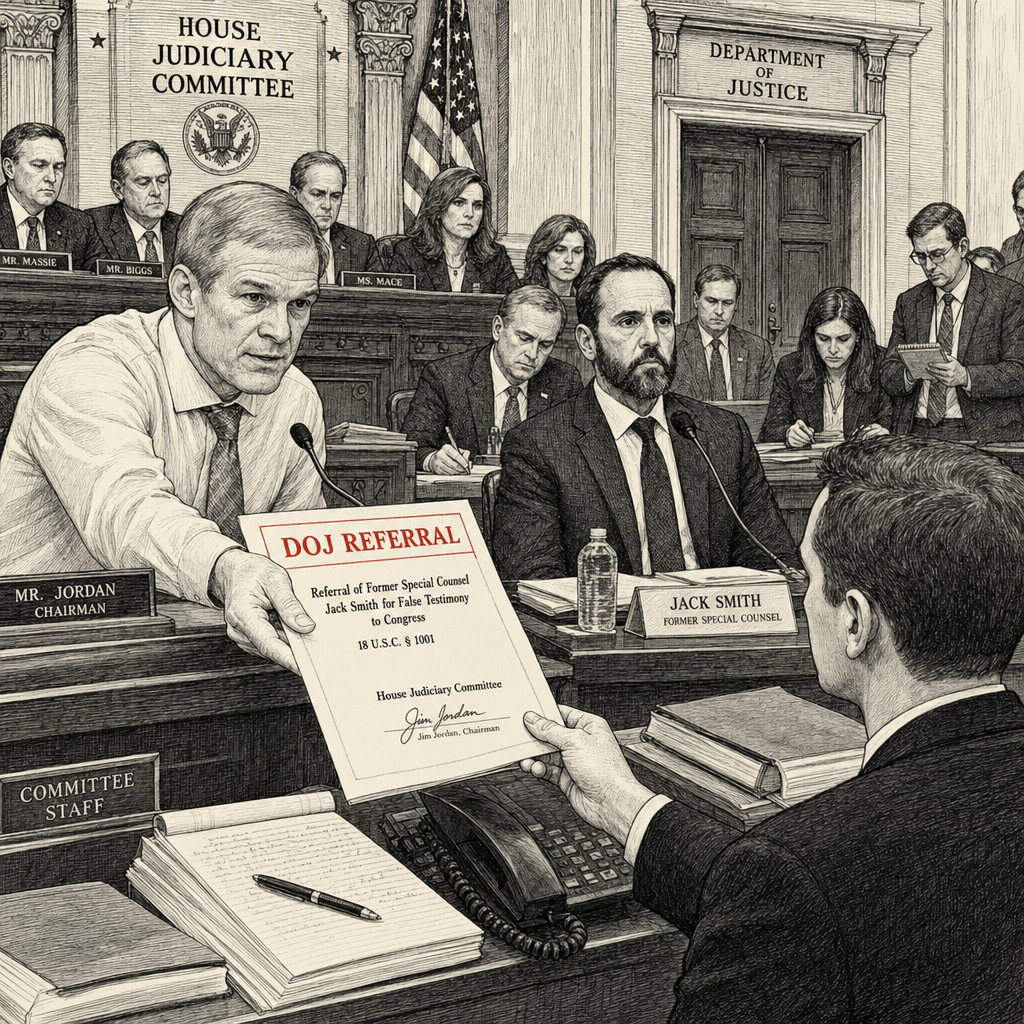
Smith’s attorneys say referral rests on questions lawmakers did not ask
The referral centers on questions about Smith’s team’s access to communications from Republican members of Congress. When asked during the deposition whether he and his team sought a search warrant for the content of any text messages from members of Congress, Smith replied, “No, I don’t recall.” When asked if the records they requested included the content of phone calls and text messages, Smith replied “No” to both.
“The responses provided by Mr. Smith gave the impression that neither Mr. Smith nor his team had access to the content of members’ privileged text messages. We now know this to be false,” Jordan wrote.
Jordan wrote that the Justice Department provided the committee with documents on July 14 showing that Smith’s team had obtained text-message content involving members of Congress, including communications Jordan described as potentially privileged. “This information calls into question the completeness and accuracy of statements that Mr. Smith made under oath to the committee regarding his team’s access to the content of members’ texts,” Jordan wrote.
Smith’s attorneys at Covington rejected the allegations. In a letter to Jordan and Blanche, the lawyers described the referral as “based on a spurious claim that Mr. Smith provided false testimony during his eight-hour deposition.”
“The referral is made not because Mr. Smith made a false statement — the letter concedes he did not — but because he did not proactively disclose information that was not responsive to a question asked,” the attorneys wrote.
The lawyers said the toll-record subpoenas that were the subject of the questioning sought communications metadata and did not seek the content of calls or text messages. They added that the referral “reflects a chilling eagerness to weaponize the justice system by attacking a career, nonpartisan public servant who faithfully and fearlessly performed his duties by following the facts and the law.”
Rep. Jamie Raskin of Maryland, the ranking Democrat on the Judiciary Committee, criticized the referral. “This referral deliberately distorts and misstates the facts, including what questions the Republicans actually asked at Mr. Smith’s interview,” Raskin said in a statement. “The Republicans fault Mr. Smith for not reading the minds of congressional investigators and for not volunteering information they didn’t ask for. This is absurd. Mr. Smith may be telegenic but he is not telepathic.”
“This referral, if ever brought before a judge, will get laughed out of court,” Raskin continued.
Jordan has been investigating Smith and his criminal investigations into President Donald Trump since at least June 2023, alleging the probes were politically motivated. Smith was appointed special counsel in November 2022 by the Biden administration to investigate allegations that Trump mishandled classified information and allegedly attempted to overturn the results of the 2020 presidential election.
Smith brought federal criminal charges against Trump in both cases in 2023, but neither case went to trial. After Trump won re-election in 2024, Smith wound down both investigations and resigned in January 2025, ahead of Trump’s inauguration.
Since returning to the White House, the Trump administration has launched a review of Smith and his investigations, ordered the suspension of security clearances held by lawyers at the firm that represented him, and Trump has publicly attacked Smith repeatedly.
In October, Jordan demanded that Smith testify about his criminal probes following revelations that his team had obtained the non-content toll records and communications metadata of nine Republican members of Congress concerning calls involving the lawmakers in the days before and after the Jan. 6, 2021, Capitol attack. Smith testified in the closed-door deposition on Dec. 17, 2025, and appeared publicly before the committee on Jan. 22.