FBI sought phone records of reporters, relatives in leak probe
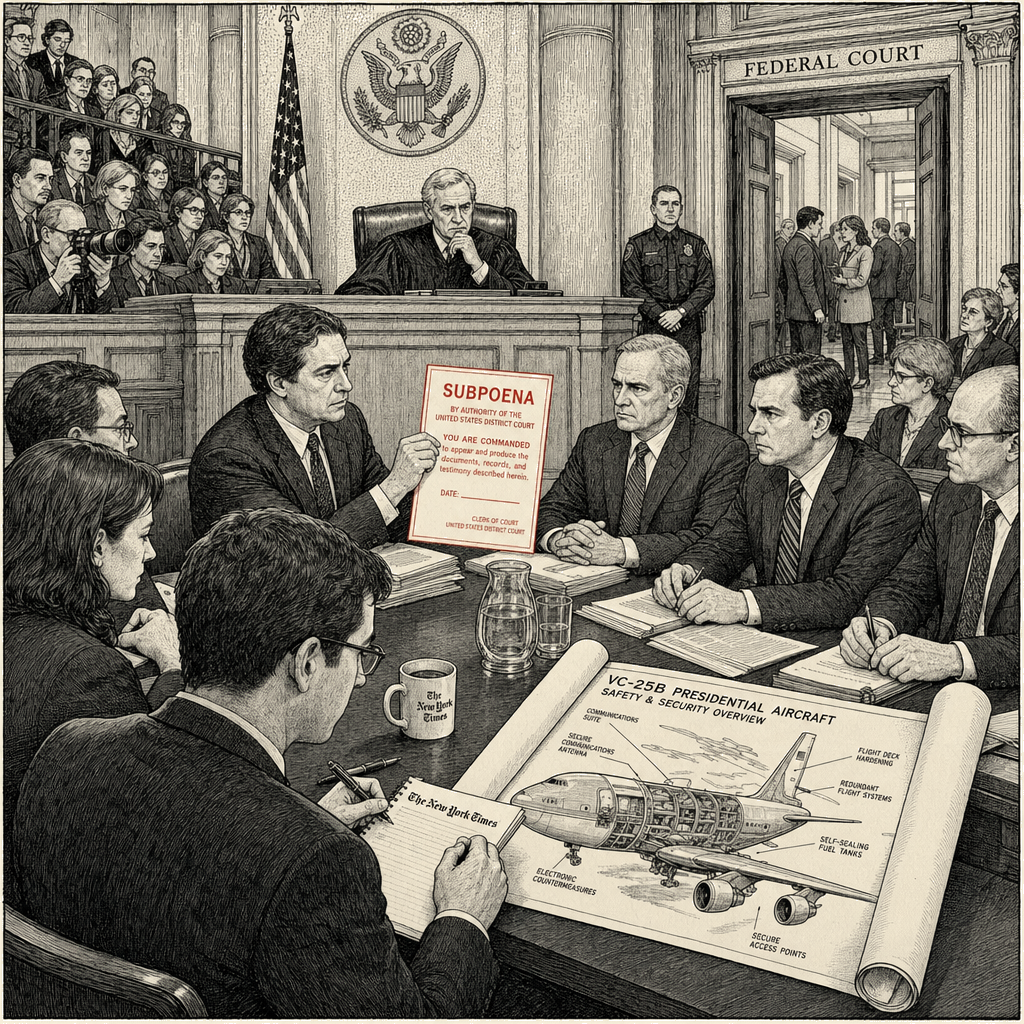
The New York Times is asking a federal judge to block the Justice Department from compelling five of its journalists to testify before a grand jury about the newspaper’s reporting on security concerns surrounding President Trump’s new Qatari-donated Air Force One.
In court filings this week, the Times’ legal team argued that the government’s actions “represent the latest salvo in an escalating series of attacks on journalists to intimidate them from engaging in reporting that the Trump Administration openly detests.” The newspaper said the subpoenas were motivated by “glaring indications of bad faith.”
The reporting that prompted the subpoenas, published July 8 and July 9, detailed Secret Service concerns about the Boeing 747, a gift from Qatar that Trump has praised publicly. The first story reported that Trump flew home from a NATO summit in Turkey on an older Air Force One because of security worries; the second story listed specific technical concerns.
FBI agents delivered subpoenas to reporters’ homes on the evening of July 10, bypassing the customary practice of notifying news organizations first so they can challenge the demands in court. The FBI also sought telephone records of the five journalists, two reporters’ spouses, and the mother of one reporter without initially informing the Times, the newspaper said in legal documents.
“When something like this happens, it’s very frightening,” Katherine Marsh, the wife of Times reporter Julian E. Barnes, told NPR. “You almost feel like you’re being treated as an enemy of the state and we’re just reporters and reporters’ families.”
The Times pointed to its own subsequent reporting that FBI Director Kash Patel personally oversaw the issuance of the subpoenas while at the White House. The newspaper argued this showed the subpoenas were driven by administration concerns rather than an independent investigation.
The Justice Department has defended its actions, saying it followed proper procedures to pursue a national security leak. U.S. Attorney Jay Clayton, the chief federal prosecutor for the Southern District of New York, told the Senate last week that the department sought to “limit to the greatest extent possible any intrusion into the operation of the free press.”
In a memo filed Tuesday, Clayton acknowledged that the government waited until July 17 — days after the phone record subpoenas were issued — to inform the Times’ legal team, saying the delay was due to “additional case law” the government identified after issuing the subpoenas. The memo did not explain why the government was unaware of that case law earlier.
The hearing before Judge Subramanian in Manhattan federal court is the latest chapter in a wider legal confrontation. Trump has sued the Times for $15 billion over its business coverage, and the Times has sued the Pentagon over press restrictions. Trump has denied any security issues with the Qatari-donated plane and has said it will be taken off duty to be “maxed out” for additional upgrades.