Iran’s Pickaxe Mountain site is described as difficult to destroy
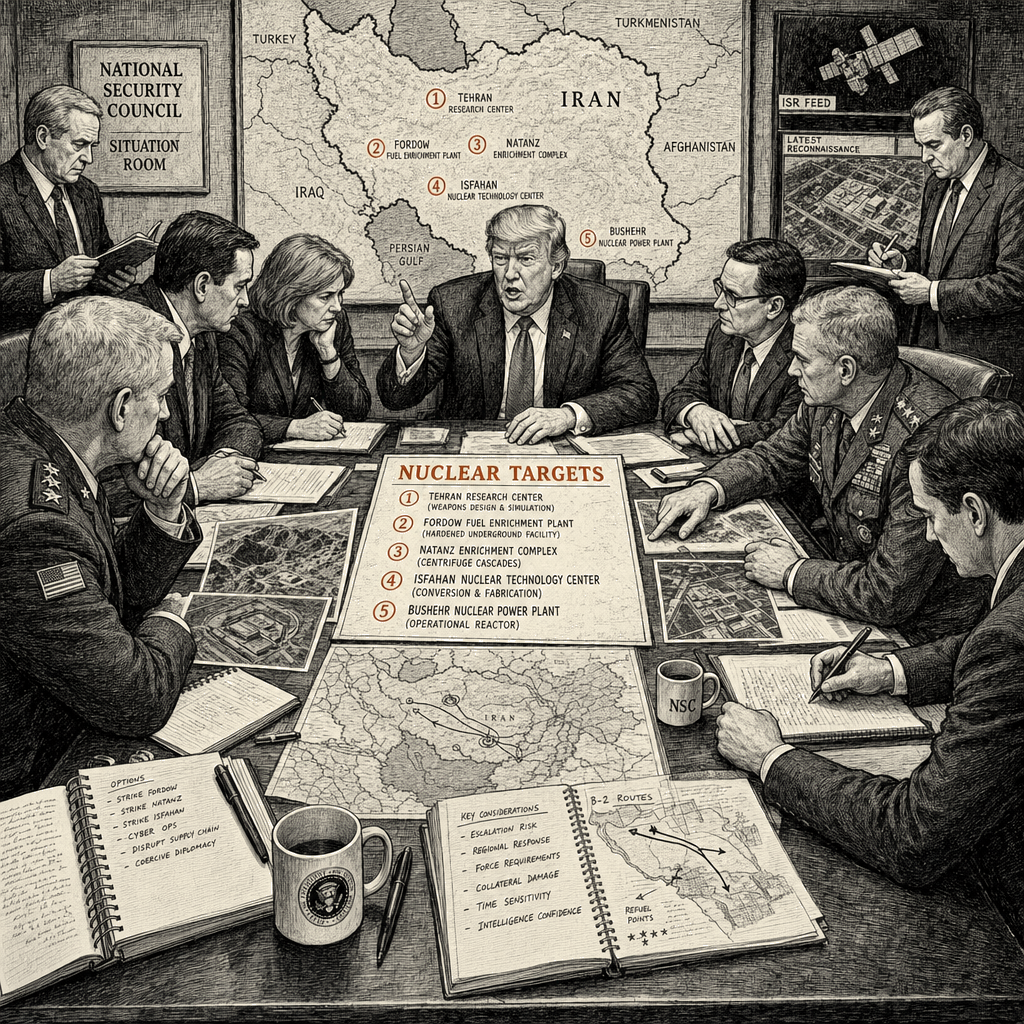
President Donald Trump has threatened to launch a massive new attack on Iran’s nuclear program, raising the prospect of strikes beyond the underground Pickaxe Mountain complex, according to experts and officials cited by the Wall Street Journal.
Tehran’s nuclear infrastructure has already been heavily damaged by Israeli airstrikes and the U.S. Midnight Hammer bombing operation in June 2025 against its three main enrichment sites. However, Trump’s repeated threats to strike Pickaxe Mountain — where Israeli intelligence believes Iran moved thousands of centrifuges last fall — signal the administration’s concern that Tehran may retain the ability to reconstitute its program.
Known in Iran as Mount Kolang, Pickaxe Mountain sits near the Natanz uranium enrichment site, which was targeted in the June 2025 U.S. bombing. The Institute for Science and International Security, a nonproliferation research group, said work on the site has continued for the past 15 months, including truck traffic, tunnel reinforcements and a new security perimeter. Experts estimate the underground complex reaches 300 to 450 feet deep beneath solid granite, which would make it difficult to destroy even with the U.S. military’s largest conventional penetrating bombs.
“It appears that the bulk of the sites that were needed to make nuclear weapons have been hit,” said David Albright, president of ISIS and a former U.N. weapons inspector. “But Israel may know of new sites through intelligence, and there may be reason to strike old sites that are being rebuilt.”
Additional targets the U.S. could strike include the Taleghan 2 site within the Parchin military complex southeast of Tehran, which Iran has been quietly rebuilding for several months after being hit by Israeli airstrikes in October 2024 and again last March. The site was part of Iran’s earlier efforts to develop high-explosive charges needed for a nuclear weapon. Andrea Stricker of the Foundation for Defense of Democracies said it is possible a chamber for conducting high-explosive tests survived the Israeli strikes.
The Fordow Fuel Enrichment Plant, about 60 miles southwest of Tehran and buried 300 feet underground, was severely damaged in June 2025 when six U.S. B-2 bombers dropped two massive bombs each on its ventilation shafts. Experts said the aboveground support facilities at Fordow, which include centrifuges for making isotopes that could be repurposed to enrich uranium, could be targeted.
The Isfahan Nuclear Technology Center, Iran’s largest nuclear research complex, was struck by submarine-launched cruise missiles during the Midnight Hammer operation. Satellite images show tunnel complexes at the site remain sealed, though there is activity at the main aboveground facility. Experts outside government said that activity may pertain more to recovering material than rebuilding the site’s capabilities. The U.S. might carry out strikes to disrupt access.
The Natanz Uranium Enrichment Plant was struck by the U.S. and Israel in 2025 and again this March, and satellite photos indicated damage. Some remaining buildings at the site could be struck, the Journal reported.
Behnam Ben Taleblu of the Foundation for Defense of Democracies said Washington’s clearest nonproliferation wins so far were stopping uranium enrichment at declared facilities and entombing enriched uranium stockpiles. “The more time elapses, however, the more crucial Pickaxe mountain appears to Iran’s reconstitution effort,” he said.