Spain reports sixfold increase in burned land over last year
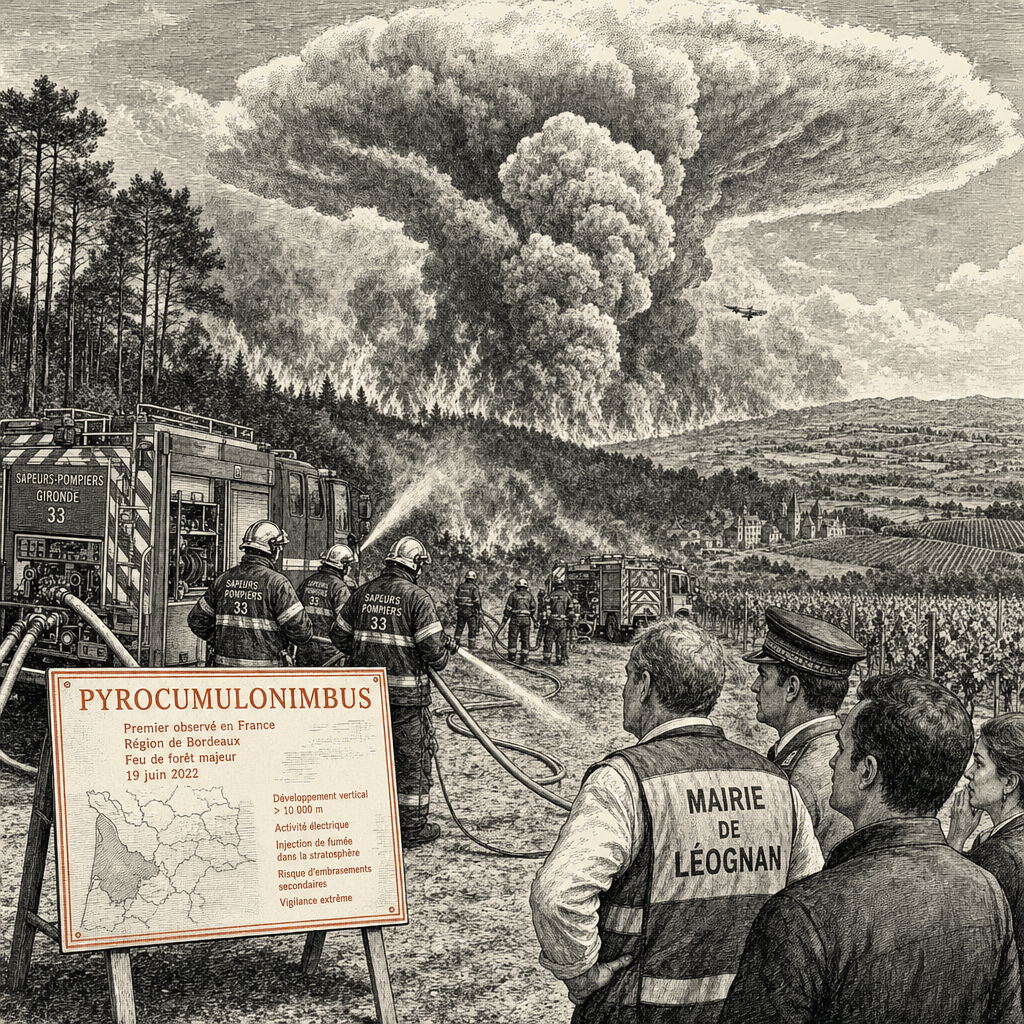
Firefighters in France reported a pyrocumulonimbus, a thunderstorm generated by intense wildfire heat that can produce unpredictable winds, in the Bordeaux region, The Guardian reported Monday. The newspaper said firefighters believe it is the first such phenomenon recorded in France, though it is known in North America and Australia.
The wildfires sweeping through southwestern France have forced more than 220,000 people to evacuate the Gironde department, according to The Guardian. The newspaper reported that a far greater expanse of French land has burned so far this year compared with the 30,000 hectares destroyed during all of 2025.
In Spain, the environment ministry calculated that over 170,000 hectares have been affected this fire season, according to The Guardian, compared with 29,000 hectares last year. More than 100,000 people have been forced to flee.
Spanish Prime Minister Pedro Sánchez attributed the crisis to the effects of the climate emergency, The Guardian reported. The newspaper said Sánchez has been among the few European leaders arguing that the EU’s green transition should be accelerated.
The Guardian editorial board reported that President Emmanuel Macron’s government in June announced steep cuts to a Green Fund designed to help local authorities address climate and environmental challenges. The board said the European Commission, under pressure from countries including Italy, has proposed weakening the EU’s emissions trading system — its flagship climate policy — by allowing heavy industry to receive free pollution permits for longer and at lower cost.
A fourth heatwave has hit Europe, with temperatures in southwestern France predicted to reach 40 degrees Celsius (104 Fahrenheit) on Wednesday, The Guardian reported. The newspaper also cited a recent study finding that if the warming rate of the last decade continues, the 1.5-degree-Celsius limit set by the Paris Agreement will be exceeded by 2030.
The Guardian editorial board wrote that too many governments are seeking to slow climate policies amid persistent low growth and geopolitical uncertainty, calling the approach a “dereliction of duty.”