Over 5,000 dead, $19.6 billion in damage from June 24 quakes
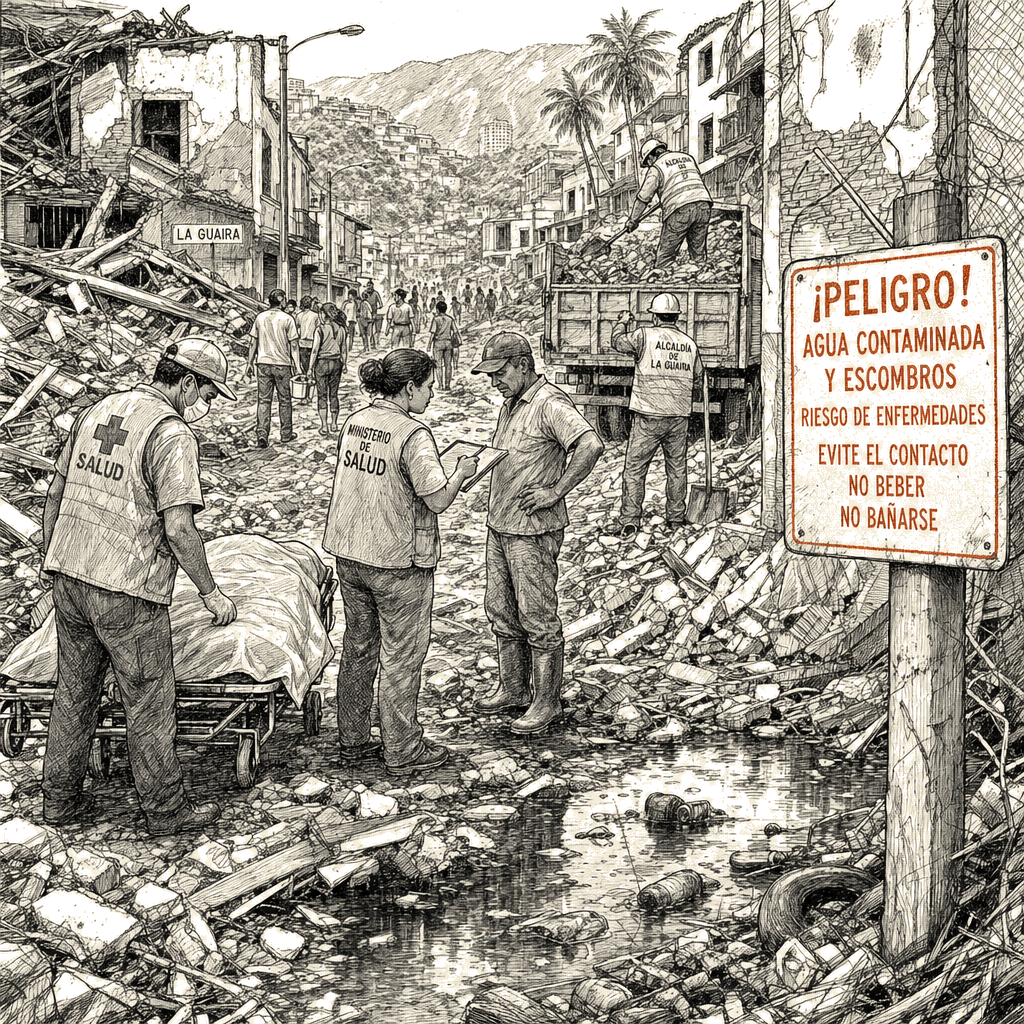
More than a month after twin earthquakes struck Venezuela’s northern coast, public health and environmental experts warn that accumulated rubble, decomposing remains, and contaminated water in the hardest-hit neighborhoods threaten to spark secondary health crises.
The 7.2 and 7.5 magnitude quakes on June 24 killed over 5,000 people, injured nearly 17,000, and left almost 18,000 homeless, according to government figures. Authorities have not disclosed how many people remain missing, though estimates put the figure in the tens of thousands. The World Bank estimates the quakes caused $19.6 billion in direct physical damage.
In La Guaira, the constant sound of heavy machinery still echoes through damaged neighborhoods more than five weeks after the disaster. Dust from collapsed buildings hangs in the humid air. Garbage has piled up. Families camp outside homes deemed too dangerous to enter. Water trucks weave through damaged streets.
“The smell of corpses is very strong” in some neighborhoods, said Carolina de Jesús, Venezuela project director for the humanitarian organization Project HOPE, who has spent nearly every day in the region since the quakes.
Experts told the AP the coming weeks are critical to preventing secondary crises from contaminants in the rubble. Survivors are now experiencing these environmental costs in a region where Venezuela’s health system was already weakened by years of economic crisis.
“There is hope, but also enormous pressure over what will happen tomorrow,” de Jesús said.
The environmental risks documented here build on earlier phases of the earthquake aftermath: Venezuela earthquake survivors confront healthcare crisis after 3,535 deaths reported disease outbreaks among displaced residents in early July, and U.S. faces $37 billion cleanup after Venezuela quakes detailed the scale of destruction that continues to generate contamination.