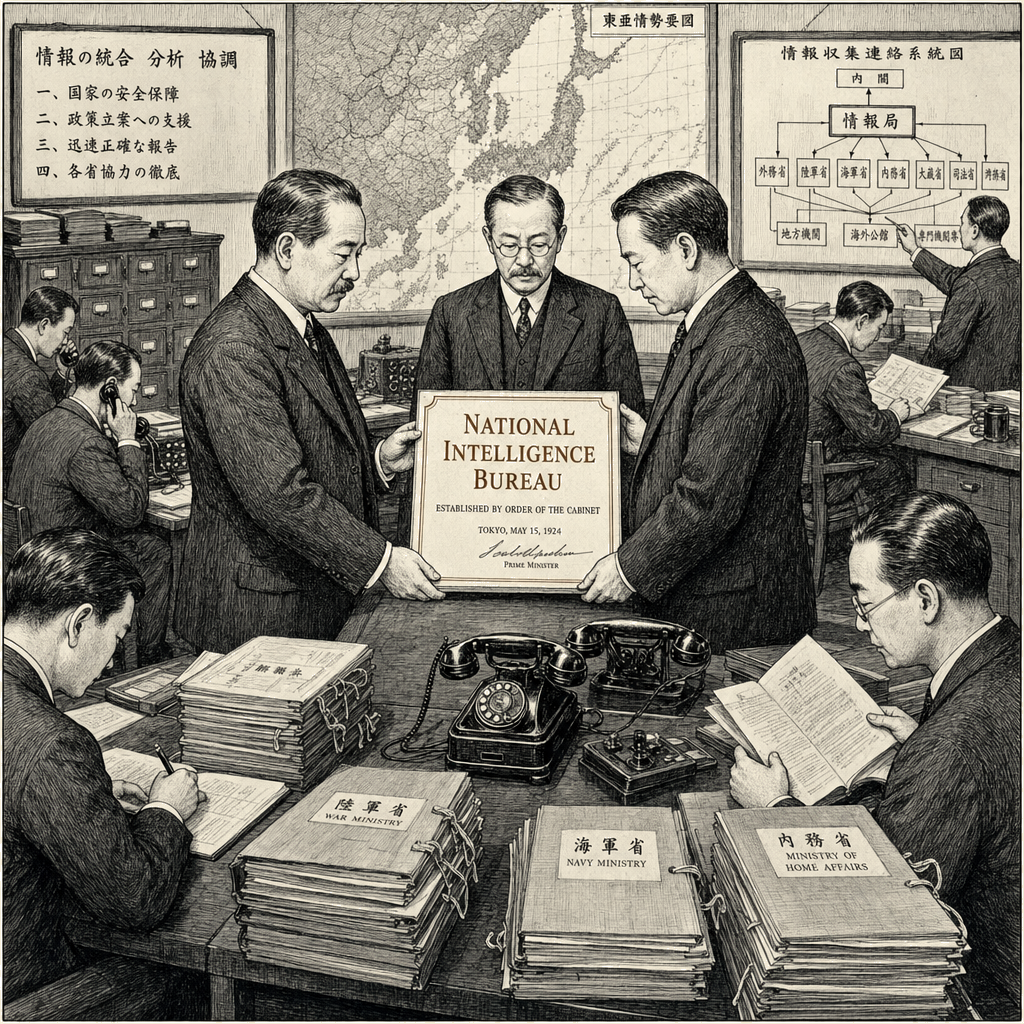
New agency consolidates 730 personnel but lacks foreign spy network
Japan launched its National Intelligence Bureau on Friday, creating a central command to collect government intelligence, coordinate analysis and determine national intelligence priorities, according to an Asia Today report translated by UPI. The bureau reports directly to Prime Minister Sanae Takaichi and was created by upgrading the Cabinet Intelligence and Research Office.
The bureau has about 730 personnel and is headed by Kazuya Hara, a former National Police Agency official who served as director of Cabinet intelligence, the report said. Hara’s career has included assignments at Japanese embassies in Russia and the United States as well as positions in the Defense Intelligence Headquarters and the National Police Agency’s foreign affairs division.
Japan also launched a National Intelligence Council chaired by Takaichi. Its members include Chief Cabinet Secretary Minoru Kihara, the foreign and defense ministers, the chair of the National Public Safety Commission and other relevant Cabinet members, according to Asia Today. The National Intelligence Bureau will serve as the council’s secretariat.
The government is expected to begin drafting Japan’s first national intelligence strategy, setting basic principles and priorities for intelligence activities, the report said. It is also considering legislation intended to counter foreign espionage. The council will deliberate on foreign intelligence operations and information considered important to national security.
Despite its name, the National Intelligence Bureau is not designed to operate like the U.S. Central Intelligence Agency, the report stated. Its central function is to ensure that ministries and agencies provide information in a timely manner and to integrate that material into assessments for policymakers.
The bureau will coordinate the government’s intelligence activities and provide analysis to the prime minister, according to Asia Today. It has not been granted new authority to establish independent overseas stations, recruit and manage foreign agents or conduct covert operations.
Japan already possesses extensive intelligence capabilities, but they remain divided among several government organizations, the report said. The Foreign Ministry gathers diplomatic intelligence through Japanese missions overseas. The Defense Intelligence Headquarters handles signals, satellite and imagery intelligence. The Public Security Intelligence Agency and the National Police Agency monitor international terrorism, foreign intelligence services and counterintelligence threats.
The new bureau will bring information collected by those organizations together, but it will not operate its own overseas human intelligence network, the report said. Its role is therefore closer to that of the U.S. Office of the Director of National Intelligence than the CIA, which collects foreign human intelligence, conducts analysis and may carry out covert operations under presidential authorization.
The governing Liberal Democratic Party and the Japan Innovation Party have proposed establishing a separate foreign intelligence agency by the end of fiscal 2027, according to Asia Today. The report said a second agency would not be necessary if the new bureau already possessed capabilities comparable to those of the CIA or Britain’s Secret Intelligence Service, commonly known as MI6.
What Japan established Friday was essentially an intelligence command center, the report said. Combining diplomatic reports, satellite and signals intelligence, information supplied by allies and publicly available material could improve the speed and accuracy of government assessments. However, detecting changes in the intentions of foreign leaders before they become visible often requires human sources inside foreign governments and institutions, according to Asia Today.
The bureau’s expanded authority has also raised questions about oversight, the report said. During legislative deliberations, lawmakers raised concerns about privacy, political neutrality and mechanisms allowing the Diet or independent institutions to review intelligence activities after they occur. Those questions will become more significant if Japan adopts anti-espionage legislation or establishes a foreign intelligence service, according to Asia Today. The government would need to define who may be monitored, what information may be collected and how citizens’ rights will be protected.
The launch of the National Intelligence Bureau strengthens the central leadership of Japan’s intelligence system, the report said. Its effectiveness, however, will still depend largely on information collected by existing ministries, agencies and allied countries. As the report summarized, Japan has created a larger brain for its intelligence system, but it has not yet given that system independent arms and legs capable of gathering secrets overseas.