Voters cast about a third of 2024 ballots by mail, Census shows
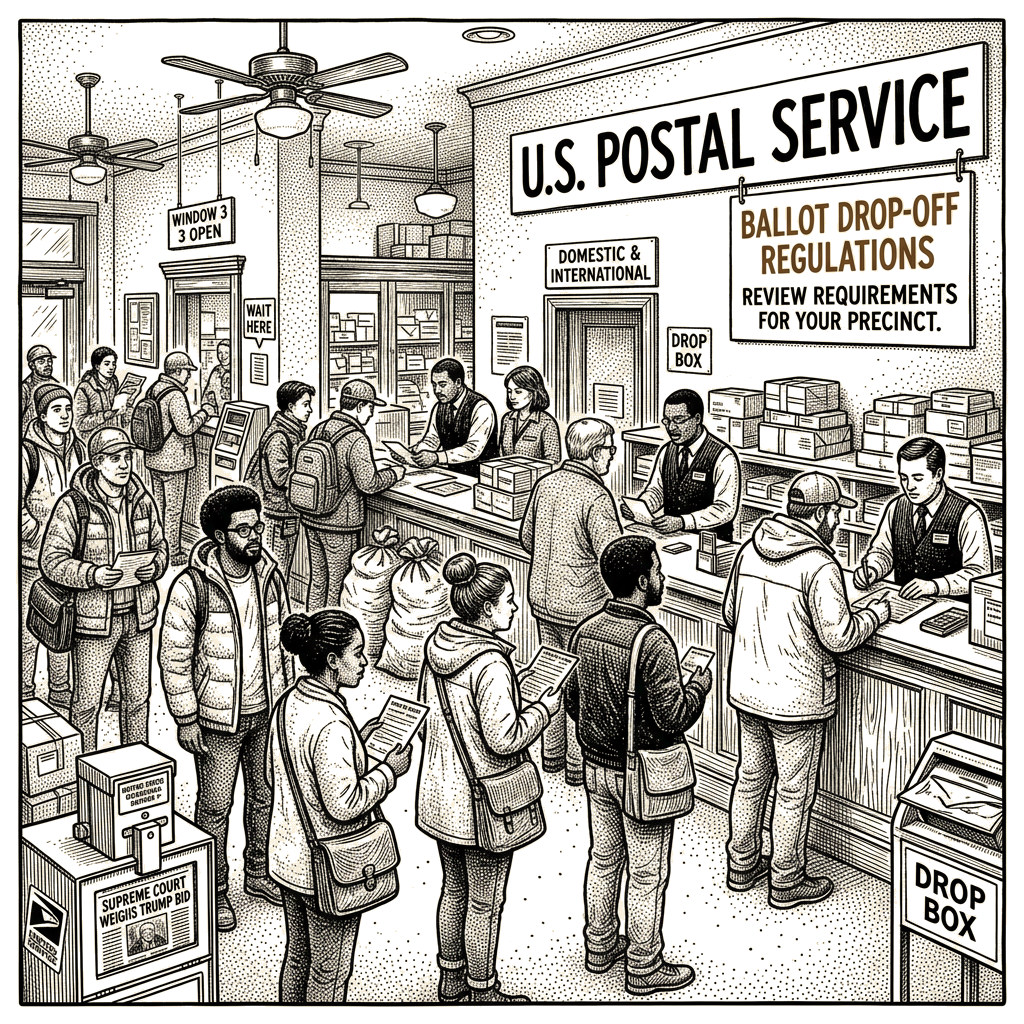
The U.S. Supreme Court is expected to decide soon on a Justice Department request to lift an injunction blocking the Trump administration’s executive order restricting mail-in voting. The department asked the high court to rule by mid-August on its bid to allow the restrictions to take effect.
The March executive order requires states to share their voter rolls with the federal government and calls for the U.S. Postal Service to issue a rule refusing mail-in ballots to voters who do not meet the administration’s narrowed requirements. The Justice Department is asking the court to lift the injunction that is blocking the order.
Aaron Blacksberg, federal policy counsel with the Institute for Responsive Government, said the ruling could determine whether any new restrictions take effect this year. “If the Supreme Court, probably any day now, says that the current lower court ruling stands, there won’t be a rule at all this year,” Blacksberg told UPI. “If the Supreme Court says that the Postal Service can continue issuing that final rule, there will still be more lawsuit action.”
Even absent a ruling allowing greater restrictions, Blacksberg said the administration’s public push adds to voter confusion. “What we hear from elections administrators is just the announcement of proposals has an impact,” he said. “It gets out there in the discourse and then folks don’t fully understand the ins and outs of an administrative procedure like a rule making or an executive order. As of right now, nothing has changed.”
Mail-in voting remains widely used and popular across party lines, according to the data cited in the case. Among 32 states that share data on votes cast by mail, about one-third of voters used mail-in voting in the 2024 election, and about two-thirds either voted early or cast ballots by mail, the U.S. Census Bureau reported. A Pew Research Center survey last year found that 58% of respondents were supportive of expanding access to mail-in voting.
“The data tells us that mail-in voting is something that is enjoyed across the political spectrum,” said Molly McGrath, national director of democracy campaigns at the American Civil Liberties Union. “It’s the preferred method of some voters in city centers and some voters in rural areas. Mail-in voting is an essential option for many people with disabilities and older Americans.”
McGrath pointed to the Constitution as the foremost legal barrier to the administration’s effort. “What the Constitution tells us is that no president can unilaterally write election laws, period,” she said. The Constitution grants states the authority to determine the time, manner and place of elections and gives Congress oversight and the authority to pre-empt state laws through legislation, so long as that legislation does not infringe upon states’ rights; the president has no direct role in election rules.
To work around those limits, the administration has directed federal agencies to restrict mail-in voting. Beyond the Postal Service rulemaking, the order directs the Department of Homeland Security to screen all foreign nationals for voter eligibility and review the security of all election systems.
In June, Postmaster General David Steiner told the Senate Homeland Security and Governmental Affairs Committee that the USPS would refuse to deliver ballots in states that refused to share their voter rolls with the administration under a proposed regulation. More than 30 states have refused to share voter rolls, and the administration has entered lawsuits against a number of them, so far without winning any of the cases; eight of the lawsuits have been dismissed.
The Postal Service faces a legal constraint on any such refusal, Blacksberg said: the Universal Service Obligation, which requires the agency to provide mail services to all and deliver all types of mail unless Congress has prohibited delivery. “There are laws requiring the delivery of mail that individual people in the Postal Service can face criminal liability if they don’t do the right thing and follow the law,” he said. “The Postal Service has its own lawyers who can advise on their legal obligations but it’s not so simple that they could flip that on the drop of a dime and have everyone from letter carriers up through processing center employees who are the ones moving mail through the different stages of the process to stop doing what they’ve done.”
Barbara Smith Warner, a former Oregon state legislator and senior adviser to the Institute for Responsive Government, said she remains confident in the Postal Service despite the administration’s push. Oregon is one of eight states that conduct universal vote-by-mail, along with Washington, D.C., meaning voters are automatically given mail-in ballots without needing to request them. “I have the highest praise for the Postal Service. They do their very best, broadly, organizationally, to maximize the safety and security and prompt delivery,” Smith Warner said. “I have great faith in the Postal Service and they’re being put into an untenable situation where they’re being asked to do things that they don’t have the capacity to do, they don’t have the experience of doing.”
Since the 2024 general election, several states have reconsidered their vote-by-mail policies but few have made changes, according to Smith Warner. “There have been a couple states that have talked about going from no excuse required back to excuse required and none of them have been successful,” she said. “There have been a lot of conversations about it but honestly there have not been a lot of significant changes.”
The partisan divide over mail-in voting is a relatively new phenomenon, Blacksberg and Smith Warner said. Absentee voting records have long shown that Republican voters have cast absentee ballots more often than Democratic voters, and Republican lawmakers in the 1990s pushed for broadening access to mail-in ballots by implementing no-excuse-required policies. “A lot of voting by mail was pioneered in what were then heavily-Republican areas and used by more Republican voters,” Blacksberg said. “The partisan breakdown has changed a lot.”