Oregon faces worst wildfire year on record with 3,671 sq miles scorched
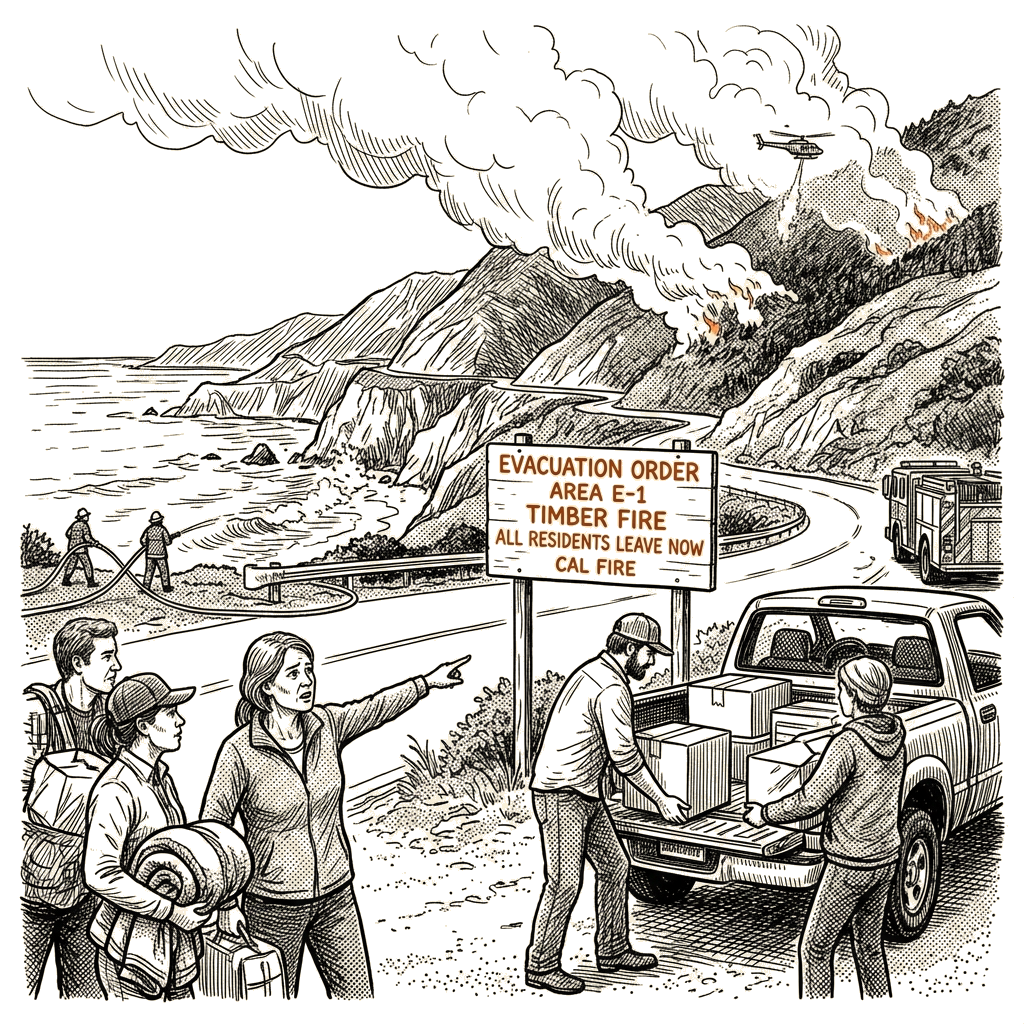
Evacuation orders spread along California’s Big Sur coast on Monday as the Timber fire burned in the steep, rugged mountains east of the shoreline. The fire in Monterey County started Sunday and grew to more than 1,700 acres by Monday, according to Cal Fire, the state’s fire agency.
The evacuation orders covered some of the region’s best-known destinations, including the Nepenthe restaurant, the Henry Miller Memorial Library and the Alila Ventana resort. Part of the Pacific Coast Highway was closed to non-residents.
Firefighters worked to build containment lines along the Highway 1 corridor, Cal Fire said on Monday, with ground crews laboring to reach difficult terrain. The agency said the fire is moving slowly, burning primarily along the ground through grass, brush and oak woodland, and has not moved into the tree tops. The cause of the fire remains under investigation.
The Timber fire is burning amid ongoing wildfire activity across the American West and western Canada. Canada put its military on standby Monday to help battle deadly wildfires in British Columbia, where at least one woman has died and some 20,000 people have fled their homes. Nearly half of the fires in the region are burning out of control, according to authorities.
The mayor of Summerland — a town of about 12,000 people that was ordered evacuated Saturday night along with roughly 8,000 people in and around nearby Peachland — warned that the affected areas remained too dangerous to enter and that it was impossible to determine the scope of the destruction.
A quick-moving blaze just north of Reno, Nevada, forced about 5,500 people to evacuate. In Washington state, firefighters in Spokane strengthened containment lines around three destructive blazes, allowing some evacuated residents to return home.
Oregon is experiencing its worst year on record for land burned by large wildfires, with 3,671 square miles (9,508 sq km) scorched, said Jean Nelson-Dean, a spokesperson for the Northwest Interagency Coordination Center. The figure beats the state’s previous record set in 2024.