Iranian plots against Trump predate the war, court cases show
Trump, in a phone conversation with ABC correspondent Jonathan Karl the day after he launched the US military campaign against Iran in February, said, “I got him before he got me. They tried twice. Well, I got him first.” The observation came after an Israeli airstrike, conducted with US approval and co-ordination, killed Ayatollah Ali Khamenei and other top Iranian leaders. Trump drew a direct line from that attack to threats and alleged plots the Iranians had made against him in previous years.
Defense Secretary Pete Hegseth echoed the view in March. “Iran tried to kill President Trump, and President Trump got the last laugh,” Hegseth said, noting that an unnamed Iranian who he said led an assassination unit had been killed in US strikes.
Trump has refrained from similar remarks in the six months of warfare since, but concerns about the threat he faces were dramatized this week by reports that he secretly switched to an alternate aircraft on his flight back from the NATO summit in Turkey last month. He left the media and most of the White House staff to depart on the presidential Air Force One 747, which became, essentially, a decoy.
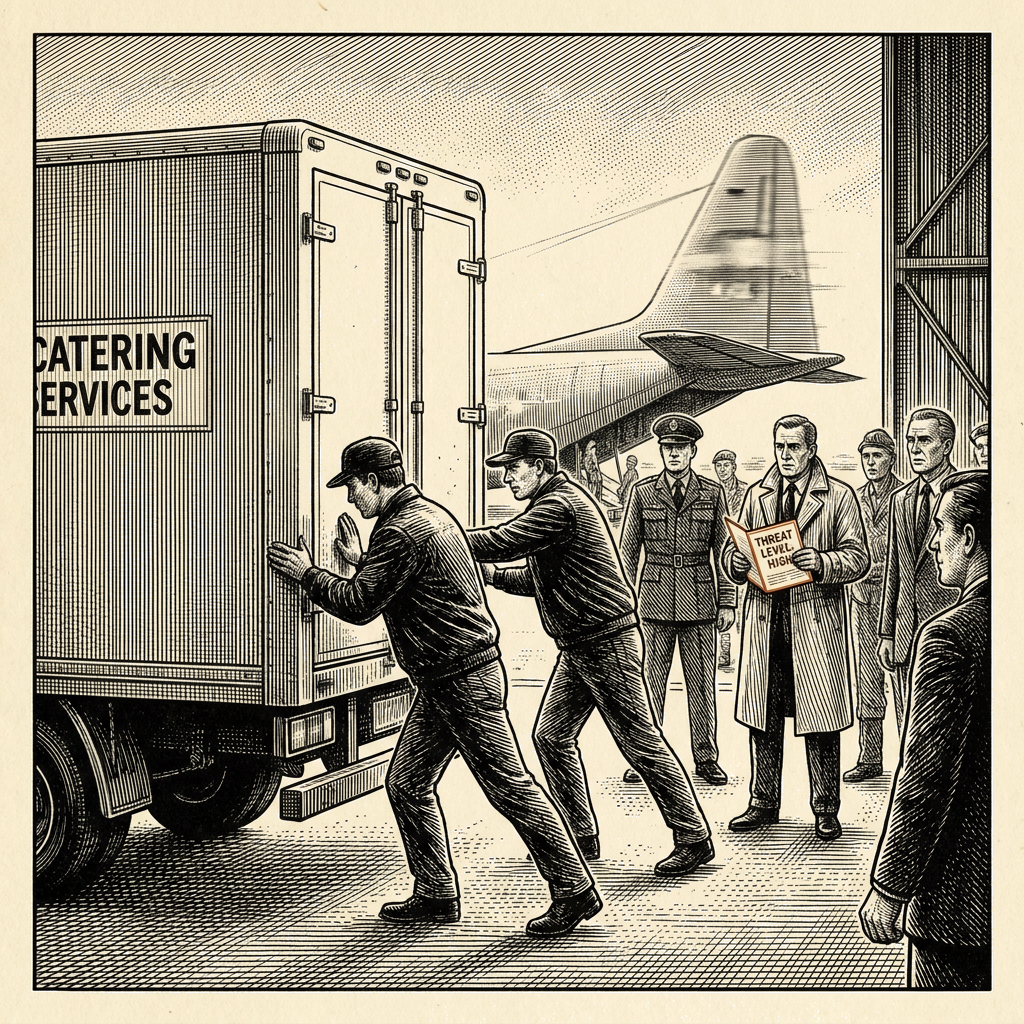
According to the reports, Trump was transported to and from the aircraft inside a catering truck, in response to what American officials reportedly believed was credible intelligence of an Iranian missile threat to Air Force One. The White House has given little detail about the threat. The operation took more than a month to come to light.
Government security experts said such measures are not unusual when a president travels in or near a warzone. Past presidents traveled to places like Afghanistan, Iraq and Ukraine under cover of secrecy, but never without at least some prior knowledge by media outlets, under agreements that they would not disclose the movement until after the fact.
The reported operation underscored the apparent threat Iran continues to present to US interests in a conflict that Trump asserts is all but wrapped up against an adversary he has said has been thoroughly defeated on the battlefield.
The reported threat is part of a longer record of Iranian warnings and plots against Trump. The Biden administration warned Iran in 2022 not to target any US citizens after unearthing a plan to target former Trump National Security Adviser John Bolton.
In July 2024, US law enforcement arrested Asif Merchant, a Pakistani man who allegedly had ties to the Islamic Revolutionary Guard Corps, for plotting to kill Trump. Four months later, Farhad Shakeri, an Afghan citizen, was charged with another assassination scheme against Trump. Merchant was convicted in March 2026; Shakeri, whom US prosecutors allege was directed by an IRGC official, is still at large.
Trump was also left bloodied in July 2024 after a gunman opened fire at a rally in Butler, Pennsylvania. Two months later, an armed man was arrested in Florida after US Secret Service agents spotted him hiding in the trees near where Trump was playing golf.
Maggie Haberman, a White House correspondent for the New York Times, said in a recent interview that the Iranian plots and the assassination attempts of 2024 loom together in Trump’s mind. “It was a galvanising moment for him,” she said. “All of that in his mind becomes one big blur.” “For Trump himself, Iran and this feeling of being under threat is constant,” Haberman said.
The president, according to the news website Semafor, often muses — and jokes — about becoming a target of assassination. “Nobody told me how dangerous it is to be president, and if they had told me, I probably wouldn’t have run,” one White House official recounted Trump as saying. “And he makes comments like that in jest, but there’s a reality behind that.”
Trump’s bombing of Iran’s nuclear research facilities in 2025, and this year’s expansive bombing campaign and naval blockade, prompted a new round of Iranian threats against him, and a direct warning in response from the president. In July, Trump wrote on Truth Social that Iran had made threats “to assassinate, or attempt to assassinate” him and said 1,000 “missiles are Locked and Loaded and aimed at the Islamic Republic of Iran, with thousands more to immediately follow, should the Iranian Government act on its threat.”
At the funeral service for Khamenei, held the day before Trump departed Turkey, participants carried a banner that read “#KillTrump.” The following week, in a square in central Tehran, a building featured a large mural of the president lying in a black coffin, with the words “We will kill Trump” and “Blood for blood” written below it.
Iran has denied involvement in any previous plots against Trump. The message, delivered after Khamenei’s death and reports of Iranian civilian casualties in US and Israeli strikes, has been clear, according to the BBC — the war, Iranians are saying, is far from over, and Trump is a target for revenge.
On the final leg of the journey back to the US, as Trump and his traveling media pool were reunited on the same aircraft, Trump came back to the press cabin to talk to reporters. They asked about the unusual journey, which included an order by the Secret Service that the window shades on the decoy plane be closed during takeoff from Ankara. “I have read all the time I’m number one on their list,” he told them. “But if I go, you go, right?”
MSI previously reported that the Washington Post said Trump left the NATO summit in Ankara on an alternate military aircraft and that US officials determined a credible Iranian proxy threat led Trump to switch aircraft before departing Turkey. The latest reporting adds that Trump was transported to and from the aircraft inside a catering truck and that the Secret Service ordered the window shades closed on the decoy plane during takeoff from Ankara.