Brazil’s reciprocity law permits proportional countermeasures
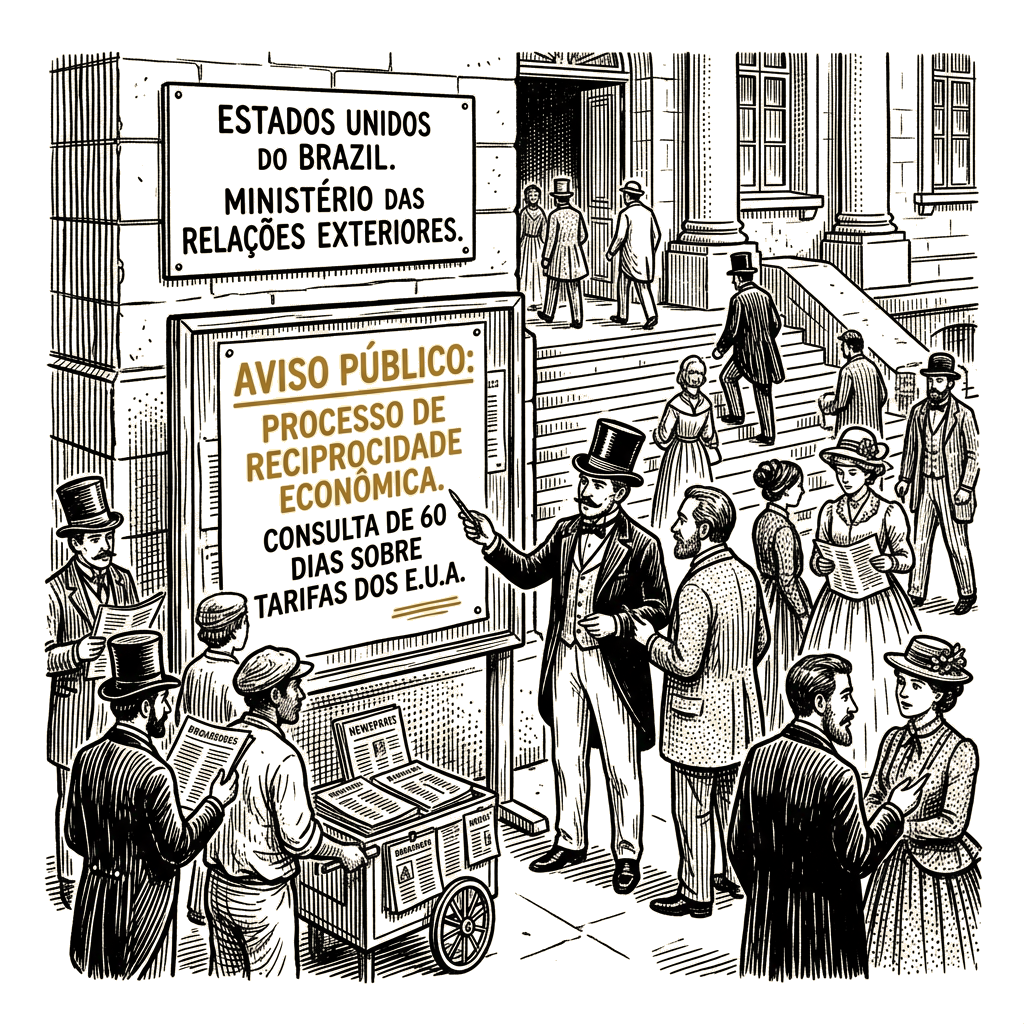
Brazil’s Foreign Ministry formally launched an economic reciprocity process on Thursday in response to U.S. tariffs on Brazilian exports, opening a 60-day window for bilateral consultations before the government decides whether to impose countermeasures on American goods and services. The procedure is the first formal action by President Luiz Inácio Lula da Silva’s government since the Trump administration imposed duties on Brazilian products.
In a statement, the ministry said it will notify the U.S. government of the decision and request direct diplomatic consultations, opening a 60-day period for bilateral negotiations. The goal is to mitigate or eliminate the effects of measures and potential countermeasures covered by Brazil’s Economic Reciprocity Law, according to Agência Brasil. Launching the process does not automatically trigger retaliatory tariffs or other measures; the government will first analyze which industries have been affected by the U.S. measures and estimate their economic impact before deciding whether to retaliate.
The dispute dates to July 15, when the Office of the U.S. Trade Representative imposed an additional 25% tariff on several Brazilian products, covering goods that account for 18% of Brazil’s exports to the United States and are valued at about $7.4 billion. The trade representative justified the tariffs by arguing that certain Brazilian practices were unreasonable and burdened or restricted commerce involving U.S. farmers, workers, innovators and exporters.
An additional 12.5% tariff was later imposed on more Brazilian products, with U.S. authorities alleging that Brazil had failed to adopt effective mechanisms to prevent imports of goods produced with forced labor. The two combined can raise tariffs to as much as 37.5% on specific product categories, including sugar, apparel, paper and steel. More than 2,200 goods considered strategic were exempted from the restrictions, including coffee, beef, fertilizer and aircraft manufactured by Embraer.
Brazil passed its Economic Reciprocity Law in response to the Trump administration’s initial tariff increase. The law establishes criteria for suspending trade concessions in response to unilateral actions, policies or practices by another country that negatively affect Brazil’s economic competitiveness. Possible measures include imposing taxes or fees, eliminating exemptions, reducing import tariff concessions or restricting imports of goods or services. Under the law, countermeasures should be, whenever possible, proportional to the economic damage another country or economic bloc causes Brazil.
Brazil has repeatedly described the U.S. tariffs as “arbitrary, unjustified and illegal” and said it submitted extensive technical evidence disputing U.S. claims of unfair trade practices. The United States has maintained a trade surplus with Brazil, which reached $1.5 billion in the first half of 2026.
The dispute carries a geopolitical dimension. President Donald Trump initially linked the trade measures to legal proceedings in Brazil against former President Jair Bolsonaro, his political ally. Lula denounced Trump’s position and accused the United States of interference ahead of Brazil’s October 2026 elections, in which Lula is seeking re-election. Flávio Bolsonaro, Jair Bolsonaro’s son, is Lula’s main challenger.
Tensions have escalated further, with Washington recently revoking the visa of Brazil’s ambassador to the United States.