Duties cover 99.4% of US imports, trade office says
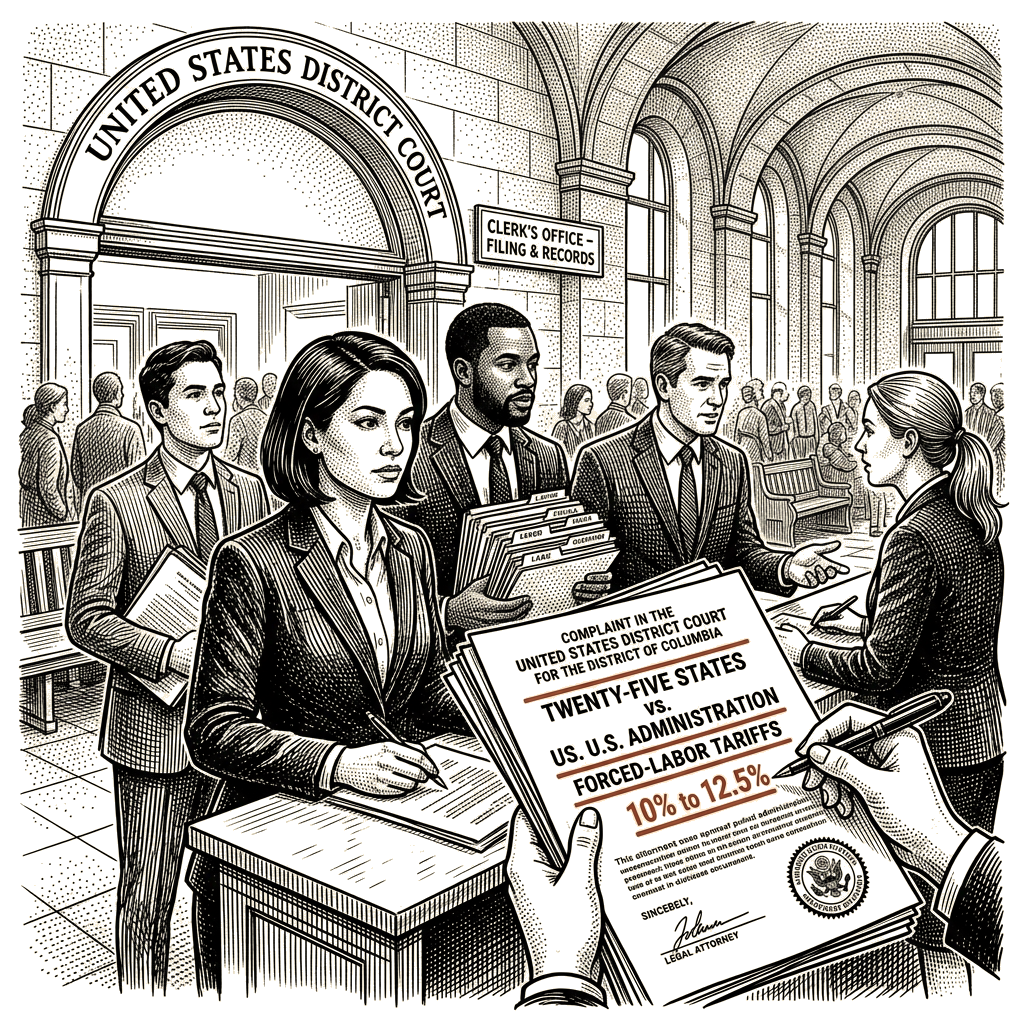
The coalition of 25 Democratic states sued the administration on Monday over tariffs of 10% to 12.5% on goods from 60 trading partners, arguing in a legal document seen by the BBC that the decision was “arbitrary, capricious, and contrary to law.” The tariffs came into effect in July, targeting countries including the United Kingdom, China, and the European Union over Washington’s contention that they have failed to properly tackle forced labor.
The duties cover 99.4% of US imports, according to the Office of the US Trade Representative. White House spokesman Kush Desai said the US is “using its lawful authority” to address practices that burden American businesses. He added that any foreign country’s failure to deal with the importation of goods produced with forced labor was “unreasonable” and must be addressed.
New York Governor Kathy Hochul said “President Trump’s illegal tariffs are nothing more than a tax on hardworking families.” She pointed to the Supreme Court’s decision to strike down the president’s earlier tariffs, saying the court “has made it clear that this administration cannot ignore the law to impose sweeping tariffs.” The court’s decision prompted tens of billions of dollars in refunds to companies that had paid the levies.
Several affected trading partners expressed disappointment over the new tariffs. The governments of Brazil and Japan separately called the measures “unjustified.” China’s foreign ministry spokesperson Mao Ning described the tariffs as an “excuse for political manipulation.” Washington and Beijing have been locked in a tit-for-tat tariffs war that is currently on hold.
Some analysts have questioned how countries would be able to show that they had properly addressed the forced-labor claims.
The tariffs mark the latest move in a slew of trade policies unveiled by Trump since he returned to office in January 2025. Wide-ranging duties Trump imposed on global trading partners in his so-called “Liberation Day” tariffs in April last year were struck down by the US Supreme Court. The tariffs that were struck down were replaced by a temporary 10% levy on all global imports, which expired in July. The president has long argued that tariffs protect American workers and boost the US economy.
More tariffs could also be on the horizon: the US is currently investigating 16 countries over claims of manufacturing overcapacity.